Your Bouquet Arrives Perfect: How We Protect Flowers in Transit
You order roses for someone three districts away, or peonies for a friend across the city, and the question that follows is always the same: will they still look beautiful when they arrive? In Russia, where temperatures can swing from minus twenty in winter to thirty-five in summer, and where city traffic can stretch a short drive into an unexpected wait, that question deserves a real answer. At Turboflora we think about flower survival from the moment a stem is cut to the second it is handed over at the door, and every step in between has a reason behind it.
Why Russian Conditions Make Flower Delivery Unusually Demanding
Russia's climate is not a single thing. Saint Petersburg in January sits at minus ten to minus fifteen degrees Celsius on an ordinary day, while the same city in July can push past thirty. A bouquet of garden roses that travels five minutes in the wrong conditions can arrive with petals that are either frost-burned and translucent or heat-wilted and limp. Neither is what you pictured when you placed the order.
Beyond temperature, Russian cities present their own challenges. Saint Petersburg's historic centre has cobblestones, narrow lanes and bridges that lift on a schedule, meaning a courier sometimes waits or reroutes. Moscow's ring roads can double a journey time. Flowers are living things that feel every bump and every delay, so the logistics plan has to treat them that way from the start.
Certain varieties are more forgiving than others. Chrysanthemums and alstroemeria handle short temperature stress reasonably well. Tulips, on the other hand, continue to grow after cutting and will bend toward any light source, so even a twenty-minute ride in a tilted box changes their shape. Delicate ranunculus and sweet peas are the most vulnerable of all: a single exposure to frost turns their thin petals to mush within minutes. Knowing which flowers travel confidently and which need extra protection is the first practical skill a working florist develops.
Bouquets we can deliver

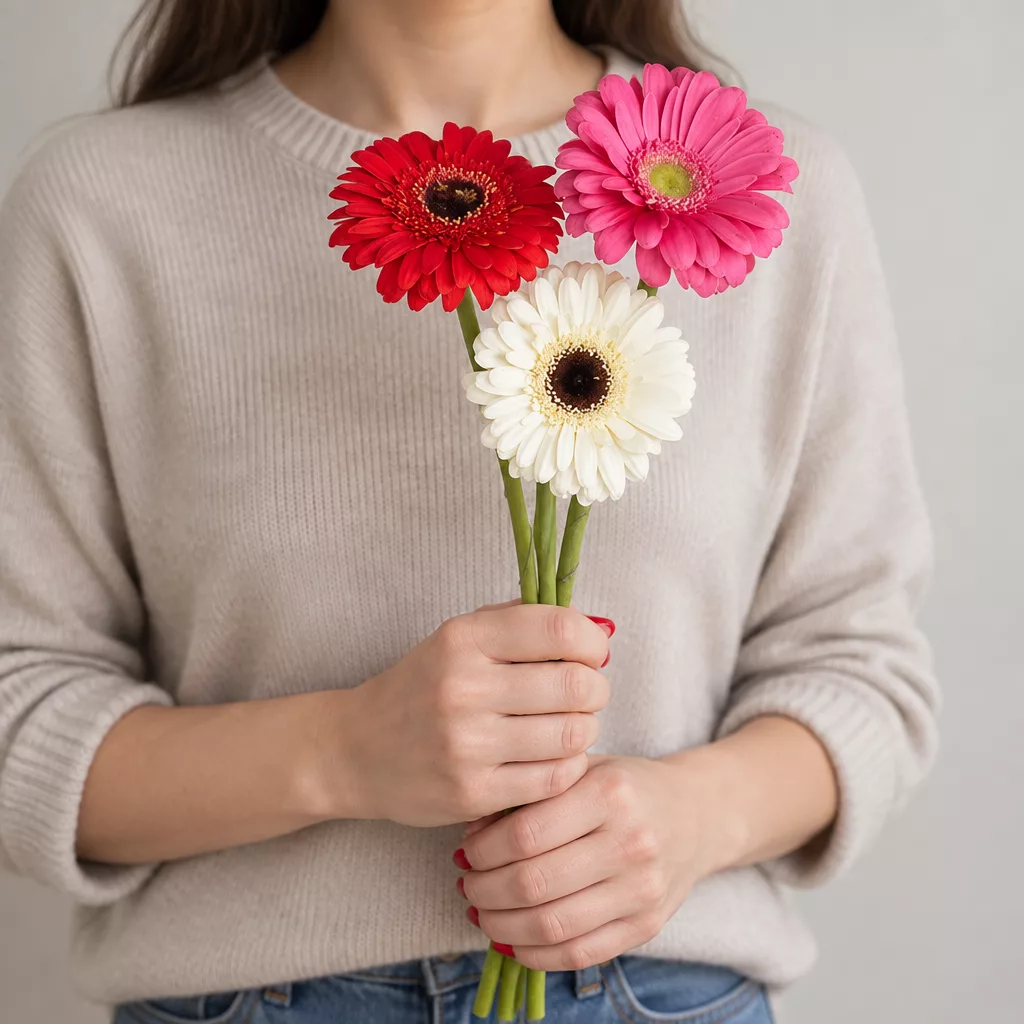

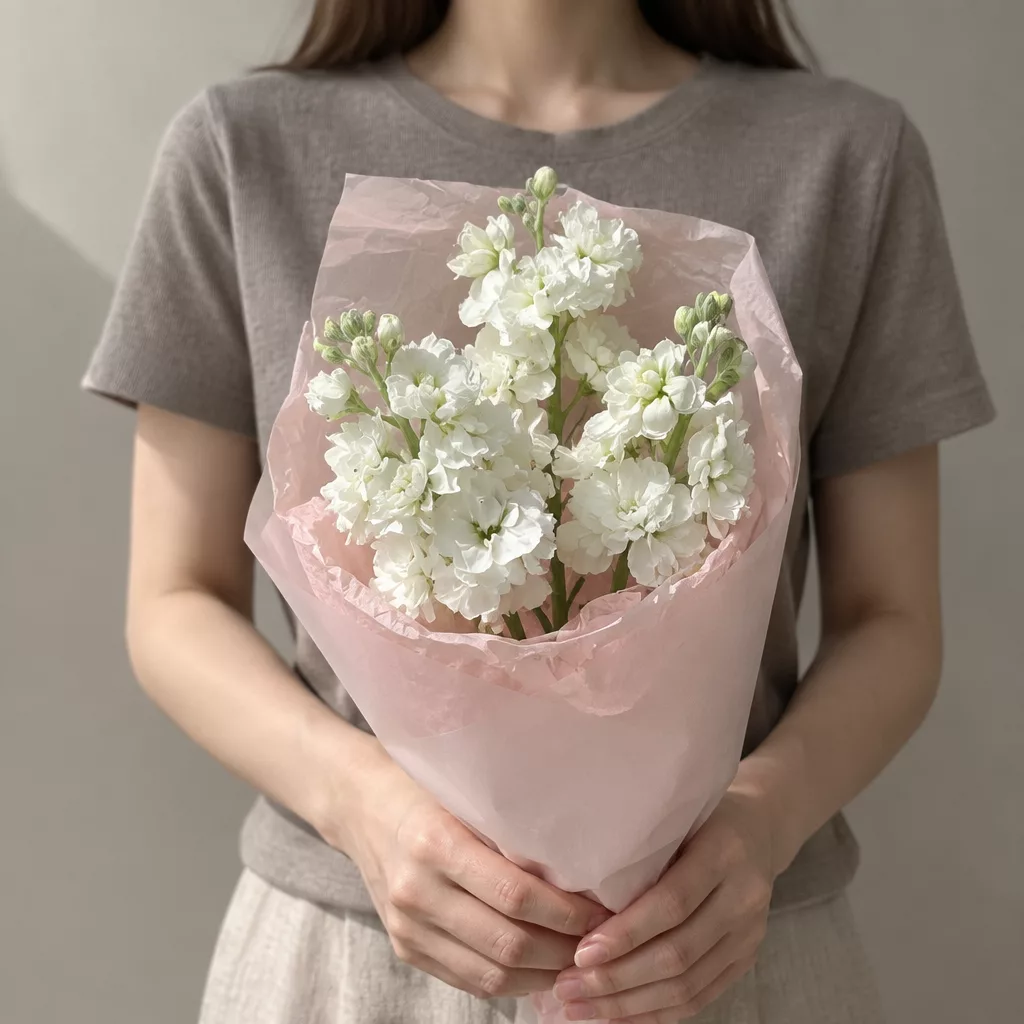
The First Step Is the Water: Conditioning Before the Bouquet Leaves
Everything that happens during delivery depends on what happened before the courier picks up the order. Flowers that have been properly conditioned hold their structure and colour through transit; flowers that have not will decline no matter how carefully they are packed afterward.
Conditioning starts with a clean, diagonal cut on every stem. The diagonal angle increases the surface area through which the flower drinks, and a fresh cut removes any dried or sealed tissue that would block water uptake. Stems go straight into clean, cool water mixed with a floral preservative, which typically contains a small amount of sugar for energy, a mild acidifier to keep the water at the right pH, and a bactericide to slow microbial growth in the vase.
The flowers then rest in a cool room, usually between two and eight degrees Celsius, for several hours before assembly. This hydration period is not optional: a rose that enters a bouquet already slightly thirsty will draw on its own reserves during the journey and arrive with a softened neck, that telltale droop just below the bloom that signals stress. For long-stemmed varieties like lisianthus or spray roses, this resting phase can make the difference between a bouquet that lasts ten days and one that starts declining on day three.
When the flowers move from the conditioning bucket to the bouquet, the florist works quickly and keeps the stems in water until the very last moment before wrapping. That small habit protects the air bubble that forms the instant a stem leaves water, which is the beginning of blockage.
Wrapping That Works: Layers, Materials and the Logic Behind Each One
The wrapping of a bouquet for delivery is not decoration, though it can be beautiful. Each layer has a functional purpose, and the order in which the layers are applied matters as much as the materials themselves.
The innermost layer touching the stems is a water-retaining element, usually a damp pad of floral foam or a small sealed water capsule clipped to the base of the stems. This keeps the stems hydrated for up to three hours without a vase, which comfortably covers any realistic delivery window. The pad is wrapped in a thin plastic film to prevent leaks, because water dripping through outer packaging can soften the structure and allow the bouquet to shift.
Around the flowers themselves, a soft tissue or kraft paper is shaped into a cone or collar. This layer serves two purposes: it prevents the petals from touching the outer packaging, which would cause bruising, and it creates a micro-environment around the blooms that slows moisture loss. In summer, a florist may add a second layer of tissue to buffer against heat absorbed by the outer box.
The outer layer is usually a rigid kraft or corrugated box sized to the bouquet so the flowers cannot move laterally. A bouquet that shifts from side to side during a car journey breaks its own stems and bruises its own petals. Proper sizing is a detail that looks invisible when it works and is very obvious when it does not. For particularly tall arrangements or wide garden-style bouquets, a custom-cut box insert holds the stems at the correct angle throughout the ride.
Temperature Management: Cold, Heat and the Windows In Between
The ideal transport temperature for most cut flowers is between eight and fourteen degrees Celsius. Below five degrees, cold damage begins on tropical varieties like anthuriums, orchids and bird of paradise, causing dark, water-soaked patches that appear hours after delivery. Below zero, almost any flower suffers irreversible cell damage in the petals, even if the stems and leaves look fine initially. Above twenty degrees, bacterial growth in the stem water accelerates sharply, and ethylene gas produced by the flowers themselves speeds petal drop.
In winter, the courier vehicle is pre-warmed before loading, not so warm that the flowers experience a sudden heat shock, but enough that the air inside sits between ten and fifteen degrees. The bouquet box is never placed directly against a cold metal surface, which would conduct heat away from the flowers faster than the surrounding air would. A thermal bag or insulated sleeve around the box creates a buffer zone.
In summer, the challenge reverses. A parked car in Saint Petersburg in July can reach fifty degrees inside within minutes, so the courier does not leave flowers unattended in a vehicle. Air conditioning in the delivery car is kept running, and for longer routes, a small cool pack may be placed near, but never directly against, the outer box. Direct contact with an ice pack creates a cold spot that can frost-burn petals just as effectively as outdoor winter air.
Spring and autumn present their own complication: the temperature outside may be fine, but a courier stepping in and out of heated buildings causes repeated thermal cycling, which stresses flowers even when no single temperature extreme is reached.
How the Courier Carries the Bouquet and Why Posture Matters
A courier who understands flowers carries a bouquet upright, or at the slight forward angle that mimics the way flowers naturally grow. This is not ceremony. Tulips, gerbera and sunflowers are phototropic, meaning they bend toward light, and they will also respond to gravity if held at a steep angle for more than a few minutes. A bouquet of tulips carried horizontally for a fifteen-minute ride can arrive with every stem curved downward at the tip.
The grip matters too. Holding a bouquet by squeezing the stems tightly compresses the water-conducting tissue, partially blocking the flow that keeps petals firm. A loose, supportive hold around the outer packaging, rather than the stems themselves, is the correct technique. It sounds like a small thing until you receive a bouquet of lisianthus with flat, compressed stems that will not take up water properly no matter how you cut them.
Elevators and stairwells present a specific challenge in Russian apartment buildings, many of which are Soviet-era high-rises where the lift is narrow and the hallways are tight. Turning a tall bouquet box through a small elevator door without tilting it requires practice. Our couriers learn the geometry of these buildings because the same move that feels natural, tipping the box forward to get through a door, is exactly what slides the flowers downward inside the packaging.
The final handover is done with both hands and a verbal note about keeping the bouquet upright until it reaches a vase. That thirty-second conversation is part of the delivery, not an afterthought.
What Happens When Delays Occur: Protocols for Waiting Time
Deliveries do not always run on schedule. A drawbridge in Saint Petersburg can hold a courier for twenty minutes. A recipient who is not at home adds another window of waiting. Traffic around a stadium after an event can extend a short route significantly. These situations are predictable enough that there should be a plan for each of them, and there is.
If the wait before handover extends beyond thirty minutes, the courier moves to a shaded or temperature-controlled spot rather than standing in direct sun or wind. In winter, this means staying inside a building lobby or returning to the vehicle with climate control running. The bouquet box is kept upright and not placed on a surface that is either very hot or very cold.
For a recipient who is not home, the protocol is a call, then a second call, then a message. Flowers are never left outside an apartment door in Russian winter: ten minutes in a corridor at minus five degrees is enough to damage roses and tulips beyond recovery. If the recipient cannot be reached within a reasonable window, the order is flagged and the situation is resolved with the sender directly.
Re-cutting stems after a delay is something the courier cannot do in the field, which is why the water capsule on the stem base is so important. A well-secured capsule keeps stems hydrated through an extra hour without meaningful decline in most varieties. Roses, carnations and alstroemeria are the most tolerant of extended transit. Anemones and sweet peas are the least tolerant and are prioritised for earliest delivery slots on the same day they are assembled.
What to Do the Moment the Flowers Arrive: First Steps for the Recipient
The journey ends at the door, but the life of the bouquet is only beginning. What the recipient does in the first ten minutes after unwrapping has more influence on vase life than almost anything that happened during delivery.
The first step is to cut the stems. Even with a water capsule attached, the cut surface has been exposed to air since the bouquet was assembled, and a fresh diagonal cut of about two centimetres removes any blocked tissue and opens a clean channel for water uptake. The cut should be made with a sharp knife rather than scissors, because scissors compress the stem tissue at the moment of cutting. Doing this under running water or while the stems are submerged prevents a new air bubble from forming.
The vase should be clean and filled with cool, not cold, water. Tap water in Saint Petersburg is treated and slightly alkaline, so adding the small sachet of floral food that comes with the bouquet makes a real difference: it adjusts the pH and slows bacterial growth. If no sachet was included, a teaspoon of sugar and a few drops of lemon juice in a litre of water is a reasonable substitute.
Leaves below the waterline should be removed immediately, because submerged foliage rots within a day and turns the water cloudy and bacterial. The bouquet should then go somewhere away from direct sunlight, radiators and fruit bowls. Ripening fruit releases ethylene gas, which accelerates petal drop in roses and tulips noticeably. A cool spot away from draughts gives most bouquets a vase life of seven to twelve days, depending on variety.
Every bouquet that leaves our workroom has already been thought about as a journey, not just as an arrangement. The conditioning, the wrapping, the temperature inside the vehicle, the way the courier holds the box on the stairs — these are not separate tasks but one continuous act of care that connects the moment we cut the stems to the moment the recipient opens the door. Russia's climate and cities make that chain longer and more demanding than in many places, but the result, flowers that arrive looking as though they were just assembled, is the only outcome we consider acceptable. We deliver bouquets across Russia in 1–2 hours.
Frequently asked questions
Can flowers really survive delivery in a Russian winter without being damaged by frost?
Yes, when the process is managed correctly. The key is a pre-warmed vehicle, insulated packaging around the box, and a courier who does not leave the bouquet in an unheated space. Most hardy varieties like roses, carnations and chrysanthemums travel safely in winter with these precautions. Tropical flowers such as orchids and anthuriums need extra insulation because they show cold damage at temperatures above freezing.
How long can a bouquet stay fresh inside its delivery packaging before being put in a vase?
With a water capsule attached to the stems and proper wrapping, most bouquets remain in good condition for two to three hours after assembly. Hardier varieties like alstroemeria and spray roses hold well toward the longer end of that window. Delicate flowers such as anemones and ranunculus are best placed in a vase within an hour of arrival for the best result.
What should I do if some petals look slightly wilted when the bouquet arrives?
Cut two centimetres from each stem at a diagonal angle, place them in cool water with floral food, and leave the bouquet in a cool room for an hour. Mild wilting caused by transit stress is often fully reversible once the flowers can drink freely again. If the petals are translucent or discoloured rather than simply soft, that is a sign of cold or heat damage, which is harder to reverse.
Does the type of flower affect how well it survives the delivery journey?
Significantly. Roses, carnations, alstroemeria and chrysanthemums are robust travellers and handle moderate delays well. Tulips and gerbera are sensitive to angle and light during transit. Sweet peas, anemones and ranunculus are the most fragile and need the shortest possible journey time. When you order these delicate varieties, we schedule them for same-day assembly and prioritise early delivery windows.
Is it safe to order flowers for delivery to a recipient who lives in a high-rise apartment building?
Completely. High-rise apartment buildings are the standard in most Russian cities, and our couriers are experienced with narrow lifts, corridor temperatures and the logistics of tall bouquet boxes in tight spaces. The courier will call ahead so the recipient is ready at the door, which keeps the bouquet upright and out of unheated stairwells for the shortest possible time.
Ready to send flowers?
Pick the city, choose the bouquet, and a local florist takes it from there.
Choose a city →