How Long Do Lilies Last? A Practical Guide to Their Lifespan
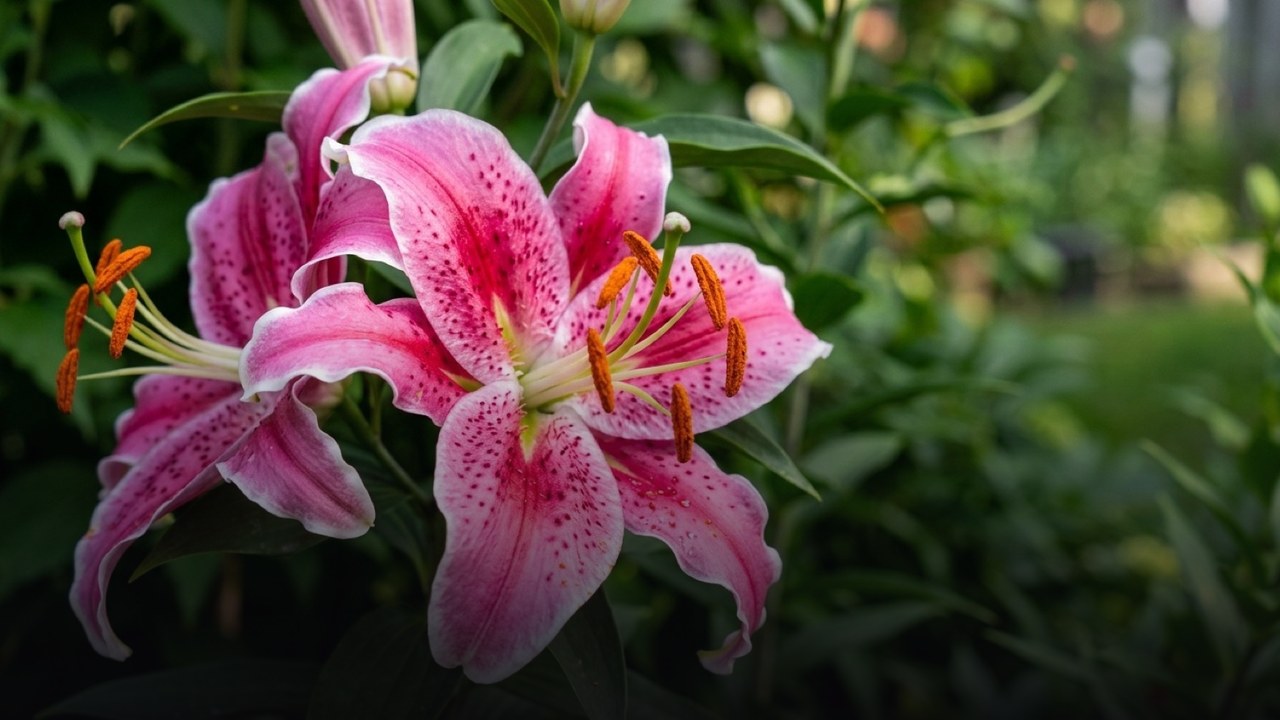
Cut lilies typically last about 7–14 days in a vase, depending on their freshness, variety and care. Each flower lasts only part of that time, but buds opening in succession can keep the stems attractive longer. In the garden, lilies are perennials: an individual flower fades, while a healthy bulb can grow and bloom again in later years.
For a bouquet, the useful question is how much life remains when you receive it. Look for firm stems, healthy leaves and a mixture of opening flowers and well-developed buds showing colour. A bouquet already in full bloom gives an immediate display, while one with several mature buds changes over the following days; very small, tight buds may never open.
What determines a lily bouquet’s vase life?
A stem carrying several flowers does not have one fixed expiry date. Its first bloom may begin to fade while another bud is opening higher up. Judge the whole stem rather than discarding it when the oldest flower loses its shape. Remove that flower carefully and keep caring for the remaining buds, provided the stem and leaves still look healthy.
Freshness before the bouquet reaches your vase matters as much as care afterwards. Time spent without water, damaged stems and prolonged warmth can shorten the display. You cannot reliably work out a lily’s remaining lifespan from its colour alone. When choosing, pay attention to the condition of the foliage, the firmness of the petals and the development of the buds.
Variety also affects the experience: flower size, scent and opening pattern differ between lily groups. Large flowers are not automatically longer lasting, and a strongly scented bouquet is not necessarily fresher. If scent matters to the recipient, our guide to Oriental and Asiatic lilies can help you compare their characteristics before choosing.
The first steps when you put lilies in water
Start with a thoroughly washed vase, rinsing away detergent and any residue from previous flowers. Choose one that supports the stems without squeezing them together. Fill it with fresh water and, if flower food is supplied, mix it according to the packet instructions. A concentrated dose is not better: use the stated amount for the volume of water.
Remove any leaves that would sit below the waterline, then use clean, sharp scissors or secateurs to trim roughly 1–2 cm from the stem ends. Make a clean cut without crushing the stem and place the flowers in water promptly. You do not need to strip away healthy upper leaves; concentrate on keeping foliage out of the water.
Check how the bouquet sits once it is in the vase. Crowded flowers can rub against one another, and a heavy open bloom may need more space than a closed bud. Adjust the stems gently instead of pulling at petals. If the wrapping holds the flowers tightly together, loosen or remove it so the stems fit comfortably and you can inspect the water.
Bouquets we can deliver




Daily care that helps lilies stay fresh
Check the water level every day, especially while several buds are opening. Top it up as needed and replace it every couple of days, or sooner if it becomes cloudy or develops an odour. When changing the water, wash the vase and remove fallen leaves or petals. Give the stems another small trim if their ends have become discoloured or slimy.
Keep the vase in a cool part of the room with indirect light, away from radiators, heating vents and strong sun through a window. Avoid a position beside ripening fruit, which releases ethylene that can accelerate ageing in susceptible flowers. There is no need to experiment with extreme cold: a domestic fridge may contain fruit and is not a controlled flower-storage space.
Remove fading blooms individually before their petals fall into the water. Cut off the spent flower without damaging unopened buds or the main stem. If one stem turns soft or starts to decay, take it out and refresh the vase. Do not add aspirin, coins or improvised household mixtures; clean water, suitable flower food and a sensible position are the practical priorities.
Opening buds, removing pollen and knowing when to stop
A mature bud showing colour is more likely to open than a small, hard green one. Give it water, space and normal room conditions, then allow time. Do not peel the petals apart or put the bouquet against a heater to force a display. If a bud shrivels or yellows without opening, remove it; forcing it will not restore its condition.
As a flower opens, you can gently remove the pollen-bearing anthers with a tissue before they shed loose pollen. Hold the anther rather than tugging at the petal, and protect nearby fabric. This mainly helps prevent stains; it does not guarantee extra vase life. If dry pollen lands on clothing, avoid rubbing it or wetting it immediately, which can spread the stain.
Watch the difference between normal ageing and a problem affecting the whole bouquet. One older bloom fading while the leaves remain firm is expected. Several flowers wilting together warrant a water-level check and an inspection of the stem ends. Fresh water and a new cut may help a thirsty stem, but transparent, browning or collapsing petals will not become fresh again.
Choosing lilies as a gift: pets, scent and the occasion
Before sending lilies, check whether the recipient has a cat. True lilies, including common Oriental and Asiatic bouquet lilies, are highly toxic to cats; pollen, plant material and vase water can all be dangerous. Choose a different flower for a home with cats. Removing anthers does not make the bouquet safe, and placing it on a high shelf is not a reliable precaution.
Scent deserves a separate check. Some lilies have a pronounced fragrance that can feel overwhelming in a small bedroom, at a desk or near someone sensitive to perfume. Ask about the recipient’s preferences rather than assuming that a larger or more fragrant bouquet is a better gift. For someone you do not know well, confirming their comfort with lilies is a considerate first step.
Lily meanings depend on the occasion and the recipient’s associations. White lilies can suggest elegance or remembrance, so they may feel solemn to someone expecting a light-hearted birthday gift. A short personal message helps make your intention clear. Think about where the flowers will stand, whether the recipient can care for them and whether they enjoy watching buds open over several days.
Timing a lily delivery to Russia from abroad
Turboflora delivers flowers across Russia. When choosing from the bouquets catalogue, consider whether you want an immediate display or a bouquet the recipient can watch develop. Explain that preference when discussing your order, but do not plan an event around every bud opening on a particular day: opening depends on the flowers and their conditions.
Use WhatsApp to get help choosing a bouquet and agree the address, delivery time and card text; you can also discuss a photo of the bouquet before delivery. Express delivery in large cities takes 1–2 hours after order confirmation. Other options include an exact time within ±30 minutes, windows of 09–12, 12–15, 15–18 or 18–21, and pre-ordering 1–30 days ahead.
City delivery costs 500 RUB; the operator confirms delivery prices for remote districts and suburbs when confirming the order. Delivery is anonymous by default, and a card with your text is free. Checkout uses CloudPayments: check the payment options displayed there rather than assuming a foreign card will be accepted. See delivery and payment when planning the order.
The courier calls the recipient about 15 minutes before arrival. If they are absent, we agree a second delivery that day or, with the sender’s consent, hand the flowers to a neighbour or concierge. Choose a time when the recipient can put the stems in water soon after arrival. A suitable vase and a few minutes of care on receipt give the bouquet a useful start.
Frequently asked questions
Can cut lilies last longer than two weeks?
Some stems may remain attractive beyond two weeks, especially when their buds open gradually, but this is not something to count on. Plan around a typical vase life of about 7–14 days, with freshness, variety and room conditions affecting the result.
Does removing lily pollen make the flowers last longer?
Removing the pollen-bearing anthers mainly reduces the risk of stains as the flowers open. It does not guarantee a longer display or make lilies safe around cats.
Why are my lily buds not opening?
Very immature buds, dehydration or damage can prevent opening. Keep the stems in clean water with any supplied flower food used as directed, but do not force the petals apart or heat the bouquet.
How long do lilies live in the garden?
Lilies are perennial bulbs and can return for many years when their growing conditions suit them. The individual flowers and the seasonal flowering period are much shorter than the life of the bulb.
Can I send lilies anonymously to someone in Russia?
Yes, Turboflora delivery is anonymous by default: the courier does not name the sender. A card with your text is free, so check whether your wording reveals your identity if you want to keep it private.
Ready to send flowers?
Pick the city, choose the bouquet, and a local florist takes it from there.
Choose a city →