How to Check Limonium in Your Bouquet for Damage
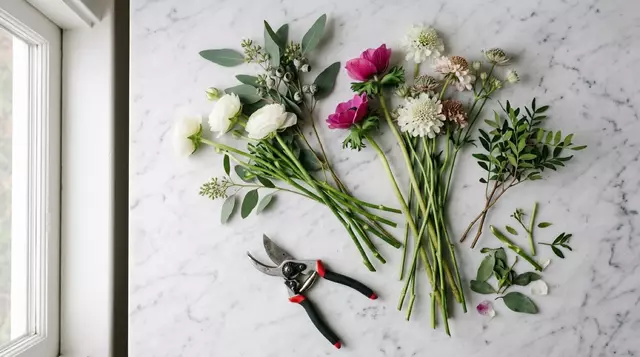
Limonium naturally has papery flower structures, so a dry feel alone does not mean it is damaged. Check instead for snapped branches, soft or slimy stems, fuzzy growth and damp brown patches, especially where the stems sit in water.
Also called statice or sea lavender, limonium can retain its colour as it dries. Judge its condition by several signs together, rather than expecting it to feel like a rose petal.
What is normal, and what suggests damage?
The coloured, papery parts are calyces that surround the tiny flowers. These can feel crisp even in a fresh arrangement, and a little loose material after handling is not enough on its own to establish damage.
Look closely at any flattened area. A branch pressed against wrapping may still be intact; a sharp crease, split or dangling flower spray indicates physical damage. Extensive crumbling when you gently move a stem suggests brittleness, although it does not establish when the flowers dried.
More concerning signs include soft, wet-looking brown tissue, slippery stem bases and fuzzy growth between tightly packed branches. A distinctly rotten smell alongside these changes supports concern about decay; smell alone is not a reliable freshness test.
Check the bouquet without pulling it apart
Start by photographing the whole bouquet as it arrived. Loosen the outer wrapping carefully, then inspect the flower sprays from several angles without tugging them through neighbouring stems. Our guide to unpacking a bouquet without damaging it explains how to avoid catching delicate branches.
Check the stem bases and vase water next. Cloudy water signals that the vase and water need attention, but does not by itself prove the limonium is spoiled. Check the other flowers too: limonium’s lasting colour can make an arrangement look better preserved than its softer blooms actually are.
Bouquets we can deliver




What to do after your inspection
For limonium supplied as fresh cut flowers, use a clean vase, recut the stem ends with clean, sharp tools and remove foliage below the waterline. Refresh the water regularly and keep the arrangement away from direct sun and heaters. Do not mist the papery flower sprays.
Remove stems showing mould or soft decay. Water will not repair a snapped branch or restore a dried flower spray. If the arrangement was supplied as dried flowers, keep it dry instead; ask for clarification if you are unsure which type you received.
If damage is visible on arrival, take close-up photographs of the affected areas and keep your order details ready. Follow the practical steps in what to do when a bouquet arrives damaged so you can describe the issue clearly.
Checking a bouquet you are sending to Russia
When ordering from abroad, you can contact a manager on WhatsApp for help choosing a bouquet, agreeing delivery details and arranging a photo before delivery. A photo can show the overall shape and visible breakage, but cannot confirm stem texture, smell or every concealed branch. Check our delivery information; confirm the timing for your order.
Frequently asked questions
Does brown limonium always mean it is rotten?
No. Dry browning can occur as flowers age, while damp brown patches with soft tissue or fuzzy growth are more concerning. Check the texture and stem bases before deciding what to remove.
Can I keep limonium after the other flowers fade?
You can keep sound stems and let them dry separately if you like their appearance. Remove any stems with mould or decay, and do not leave them standing in old bouquet water.
Ready to send flowers?
Pick the city, choose the bouquet, and a local florist takes it from there.
Choose a city →