What Do Different Numbers of Flowers Mean?
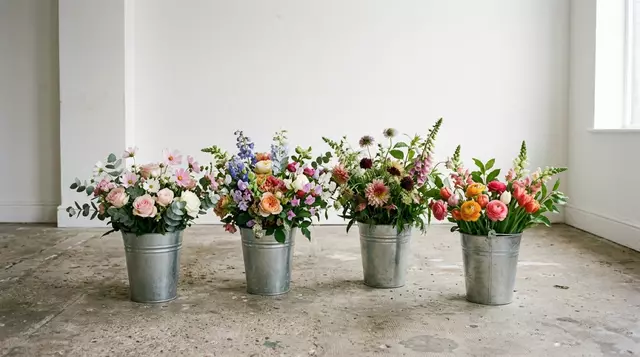
The meaning of flower numbers depends on the recipient’s culture and the occasion: there is no universal code that makes every bouquet count a fixed message. In Russia, the key convention is to give an odd number of flowers for happy occasions, while even numbers are traditionally associated with funerals and remembrance.
For a birthday, anniversary or thank-you gift to someone in Russia, an odd count is the safest starting point. Beyond that, choose for the person: their favourite flowers, the relationship you share and a bouquet they can comfortably display matter more than an elaborate numerical message. A short card makes your intention clearer than expecting the recipient to decode the stems.
Odd and even flower counts in Russian etiquette
When you give a clearly countable bouquet in Russia, choose an odd number for a celebration. This applies to romantic gifts, birthdays, congratulations and ordinary gestures of affection. Five, seven or nine single-flower stems are straightforward examples. The custom concerns the number of flowers presented together; it does not mean that an odd birthday or anniversary year has a special status.
Even-numbered bouquets are traditionally connected with mourning, particularly when the arrangement contains a small, obvious number of blooms. Two or four flowers can therefore send an unintended signal at a happy occasion. Individual attitudes vary, but if you do not know the recipient’s preferences, respecting the convention avoids asking them to overlook something that may feel uncomfortable.
Do not assume that a familiar custom from your own country will carry the same meaning abroad. An even count may be perfectly ordinary where you live, yet feel inappropriate to someone raised with Russian flower etiquette. For related questions about colour and gift customs, read our guide to Russian flower superstitions.
What one, three, five, seven or nine flowers can suggest
One flower creates a focused gesture: a single rose or another substantial bloom can feel personal without being elaborate. It is suitable when you want a modest gift or when the recipient enjoys a simple vase arrangement. It does not automatically mean “love at first sight”; that interpretation belongs to popular symbolism lists rather than a rule everyone recognises.
Three flowers make a compact gift, while five or seven can give a bouquet more presence, depending on the variety and arrangement. Nine may suit someone who enjoys a fuller display. These are useful differences in scale, not reliable translations into phrases such as “I love you” or “forever yours”. Avoid relying on a numbered message unless you and the recipient already share that meaning.
Flower size changes the impression as much as the count. Five large-headed blooms may look more substantial than nine slender stems, while branching flowers can create a generous outline with fewer stems. When browsing the bouquets catalogue, consider the overall shape, flower types and available description together instead of treating the number alone as a measure of generosity.
Bouquets we can deliver




Larger bouquets, dozens and birthday numbers
A dozen roses is a familiar romantic gift in some countries, but twelve is still an even number. If you are sending roses to Russia for a happy occasion and have no specific guidance from the recipient, choose an odd count instead. A convention that feels romantic to the sender can carry a different association for the person receiving it.
There is no dependable threshold at which a large bouquet stops being subject to the odd-number custom. Some people pay less attention when there are too many flowers to count easily; others still care about the stated total. An odd count remains a sensible choice for a large celebratory bouquet, especially if the number appears prominently in its description.
Matching the number of flowers to someone’s age is optional, not an obligation. An even birthday age need not become an even flower count: you can acknowledge the milestone in the card and choose an odd-numbered bouquet. The same approach works for wedding anniversaries. It preserves the personal reference without making the flowers carry two potentially conflicting messages.
Counting flowers in mixed and branching bouquets
Counting is easiest when each stem carries one main bloom, as with a simple bouquet of single-headed roses. Spray roses, chrysanthemums and other branching flowers complicate the picture because one stem can carry several flower heads and buds. A stem total and a visible bloom total are different measurements, so check which one a bouquet description gives you.
For a mixed arrangement, do not try to calculate a symbolic total from every open flower, unopened bud and small filler bloom. That produces a number that may change as the bouquet opens. If the recipient follows the odd-number tradition closely, a clearly countable arrangement of single-headed flowers is easier to choose and explain than a complex mixture.
Use the description alongside the photograph, and ask for clarification when the count matters. A photograph helps you assess the design, but overlapping stems or hidden buds can make an exact total difficult to establish. Tell the manager that the bouquet is for a happy occasion in Russia and that you want the flower count to respect the odd-number custom.
Choosing a meaningful bouquet and caring for it
Start with the occasion and the recipient’s taste, then settle the count. A romantic anniversary, a professional thank-you and a family birthday call for different levels of intimacy, even when all three bouquets contain seven flowers. If you know which varieties or colours the person enjoys, that knowledge gives you a firmer basis for choosing than an online chart assigning a separate emotion to every number.
Put the essential message in the card: “Thinking of you on your birthday” or “Thank you for everything you did” leaves little room for confusion. If a number has private significance, explain it briefly. Delivery is anonymous by default, so the courier does not name the sender; include your name in the card text if you want the recipient to know immediately who sent the flowers.
Once the bouquet arrives, good care matters more than preserving its symbolic arithmetic. Use a clean vase, remove foliage that would sit below the waterline and recut the stems with a clean, sharp tool. Follow any flower-food instructions, refresh the water regularly and keep the bouquet away from direct heat and ripening fruit. Remove deteriorating flowers without worrying that the remaining count changes your original message.
How to send an appropriate bouquet to Russia
We deliver flowers across Russia. Before ordering, decide the occasion, your preferred flowers and whether an odd count is important to the recipient. Contact a manager on WhatsApp for help choosing a bouquet and agreeing the delivery time, address and card text; you can also discuss a photo of the bouquet before delivery. A card with your text is free.
City delivery costs 500 RUB; for remote districts and suburbs, the operator confirms the delivery price when confirming the order. In large cities, express delivery takes 1–2 hours after order confirmation. You can also arrange delivery at an exact time within ±30 minutes, choose a 09–12, 12–15, 15–18 or 18–21 window, or pre-order 1–30 days ahead. Check the delivery and payment details when planning your gift.
The courier calls the recipient about 15 minutes before arrival, so provide a reachable number and accurate address. If the recipient is absent, we agree a second delivery that day or, with your consent, hand the flowers to a neighbour or concierge. Online checkout uses CloudPayments: check the payment options displayed there rather than assuming every foreign card will be accepted.
Frequently asked questions
What is the most important rule about flower numbers in Russia?
Choose an odd number for a happy occasion, especially in a bouquet whose flowers are easy to count. Even counts are traditionally associated with funerals and remembrance.
Do three flowers always mean “I love you”?
No: number-to-message charts are not a universal language, and the recipient may not recognise that interpretation. If you want to express love, say it in the card rather than relying on the count.
Can I send twelve roses for a birthday in Russia?
An odd count is the safer choice unless you know the recipient is comfortable with twelve. The familiar dozen-rose tradition elsewhere does not remove the Russian association between even counts and mourning.
Should I count every bud in a mixed bouquet?
Counting every bud is not a useful way to establish a lasting symbolic number, because flowers open at different times. If the count matters, choose clearly countable single-headed flowers and confirm the total before ordering.
How can I make sure the recipient knows who sent the flowers?
Include your name in the text for the free card. Delivery is anonymous by default, and the courier does not name the sender.
Ready to send flowers?
Pick the city, choose the bouquet, and a local florist takes it from there.
Choose a city →