Why Your Roses Are Drooping in the Vase—and What to Do
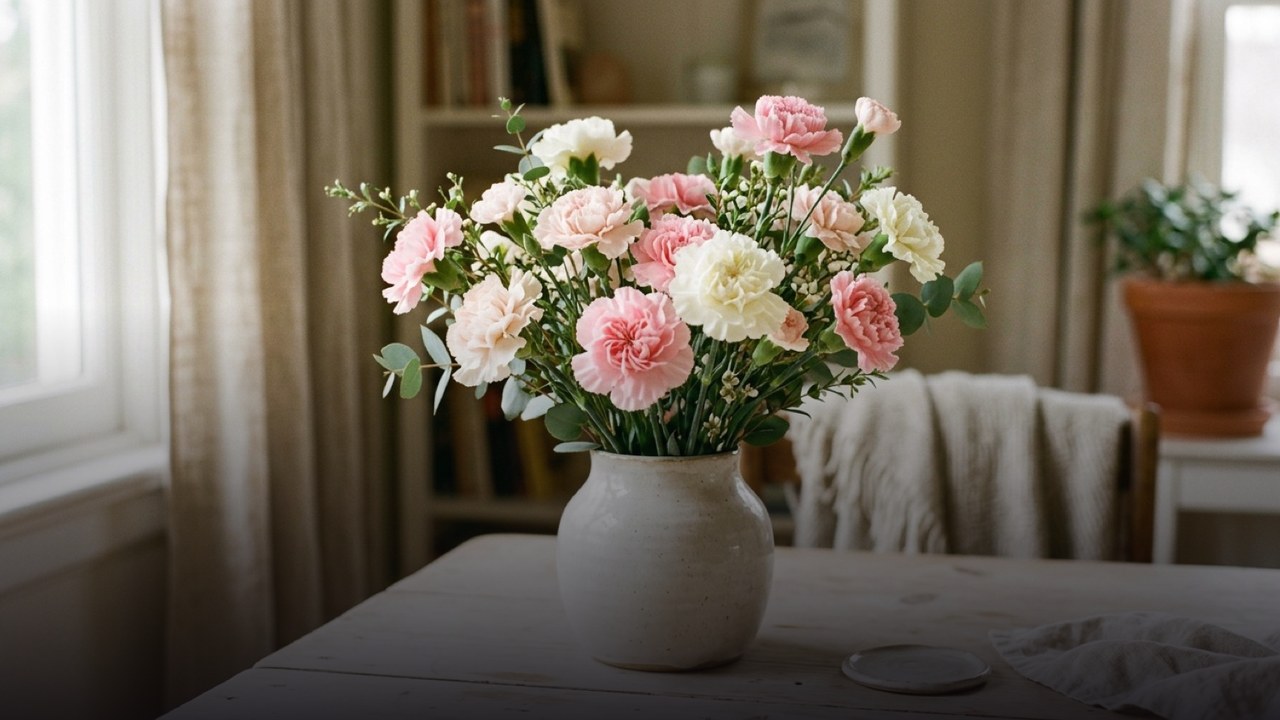
Roses in a vase usually droop when water uptake cannot keep pace with water loss, often because the water is low, the stem ends are blocked or the room is warm. Clean the vase, recut the stems and return them promptly to fresh water with properly diluted cut-flower food. This may help dehydrated roses recover, but it cannot reverse a broken stem or natural ageing.
Before you try a rescue method, look at how the roses are drooping: a whole stem leaning sideways needs a different response from a flower head hanging below a bent neck. Check the water, stems and petals together rather than judging by one curled outer petal. The steps below help you identify the likely problem, give recoverable flowers a better chance and avoid treatments that can damage them.
Read the signs before you treat the bouquet
A rose head hanging sharply just below the bloom is often called bent neck. The tissue in that area has lost firmness, which can happen when the flower is not receiving enough water. If several roses develop it after standing in a nearly empty vase, dehydration is a reasonable first suspicion. A visible crease, split or crushed patch suggests physical damage as well.
If the stems remain upright but petals are becoming limp, brown at the edges or loose enough to fall with a light touch, the flowers may be ageing. Petal damage alone does not tell you whether the stems can still take up water. Look for a pattern across the bouquet: several limp leaves and heads point more strongly towards a water problem than one marked outer petal.
A whole rose leaning against the rim may simply be poorly supported. Check whether the vase is too wide, the stems are unusually long or neighbouring stems are pushing it aside. A narrower vase or a small adjustment to stem length can improve the arrangement. Support helps the display, but it will not restore firmness to a dehydrated flower head.
Give drooping roses a clean-water reset
Take the roses out and empty the vase completely. Wash it with detergent, paying attention to residue around the waterline, then rinse thoroughly. A top-up leaves old water and debris in place, so use a full water change when tackling drooping. While the vase is empty, inspect each stem and set aside any that are broken, mouldy or soft and decaying.
With clean, sharp secateurs or a suitable sharp knife, remove about 1–2 cm from the bottom of each sound stem. Make a clean angled cut without crushing the tissue, and put the stem promptly into fresh water. If the bottom section is discoloured or damaged, cut above that area where practical, while retaining enough length for the rose to sit securely in its vase.
Use fresh, room-temperature water and cut-flower food if you have it, following the packet's dilution instructions. Keep every cut end submerged and remove leaves that would sit below the waterline. Place the bouquet somewhere cool, away from direct sunlight and moving warm air, then leave it undisturbed for a few hours. Some roses regain firmness; badly damaged or ageing blooms may not.
Bouquets we can deliver




Check the waterline, leaves and crowded stems
A vase can appear to contain plenty of water while one shorter stem sits above it. Lift the bouquet slightly and check the actual position of every cut end, especially after rearranging flowers or removing a damaged section. Inspect the level daily and top it up as needed. Thirsty flowers and evaporation can lower the level enough to leave individual roses without access to water.
Strip off leaves that would be submerged, keeping healthy foliage above the water where possible. Underwater leaves deteriorate and add organic material that encourages microbial growth, which can interfere with water uptake. You do not need to bare the entire stem. Our guide to which rose leaves to remove explains how to prepare the stems without unnecessary stripping.
Give the stems enough space to sit without being squeezed tightly into the neck of the vase. Separate tangled stems gently; forcing them apart can scrape or snap them. If the vase is visibly dirty or the water becomes cloudy or develops an unpleasant smell, wash it and replace the water promptly. Follow the flower-food instructions for subsequent water changes and dosing.
Improve the setting and avoid harsh rescue tricks
Move the vase away from radiators, sunny windows, ovens and strong draughts. A bright table can be a good place to admire roses, but direct sun and nearby heat increase water loss and can shorten their useful display life. Choose a cooler position with enough room around the flowers. Keep the arrangement away from ripening fruit, which can release ethylene that accelerates ageing in susceptible flowers.
Avoid boiling-water treatments, scalding the stem ends or putting the bouquet into a freezer. These methods are difficult to control at home and can injure flower tissue. Submerging entire heads in a bath also wets delicate petals and may encourage spotting or decay. Start with the stem ends, clean water and a suitable room position; these address common causes without soaking the blooms.
Do not add a spoonful of sugar, a splash of bleach or a crushed tablet as a substitute for correctly mixed flower food. Household recipes have uncertain concentrations and may encourage microbial growth or damage stems. If you have no flower food, use clean water and maintain the vase carefully. For ongoing care, see our guide to rose vase life.
Know when to wait, shorten a stem or remove a rose
After the clean-water reset, allow a few hours before deciding whether the treatment helped. Look for firmer leaves and a head that holds itself more upright. Avoid repeatedly lifting, squeezing or bending the neck to check it. Recovery depends on the cause and condition of the flower, so there is no reliable deadline by which every drooping rose should stand straight again.
If a stem has a damaged section, cutting above it may leave a shorter flower that still works in a small vase. Keep its head above water and make sure the vessel supports the remaining stem. Where the damage is immediately beneath the bloom, there may be too little sound stem left for a practical arrangement. Wiring or propping up the head changes its position without restoring water uptake.
Remove roses with spreading mould, soft decaying tissue or badly deteriorated petals, and clean away fallen material. You can keep sound flowers from the same bouquet while discarding those that have finished. A fading arrangement does not need to be thrown away all at once: regroup the remaining stems in a smaller clean vase and continue checking their water and condition.
Sending roses to Russia: plan the handover and care
If you are sending flowers to someone in Russia, choose a delivery time when they can receive the bouquet and put it into water promptly. Turboflora delivers across Russia. City delivery costs 500 RUB; for remote districts and suburbs, the operator confirms the price when confirming the order. You can browse the bouquets catalogue and consider the recipient's available space for a vase.
In large cities, express delivery is available 1–2 hours after order confirmation. You can also choose an exact time with a ±30-minute allowance, a window of 09–12, 12–15, 15–18 or 18–21, or preorder 1–30 days ahead. Contact a manager on WhatsApp for help choosing a bouquet, agreeing the address and timing, writing the card text or arranging a photo before delivery.
The courier calls the recipient about 15 minutes before arrival. If they are absent, we agree a second delivery that day or a handover to a neighbour or concierge with the sender's consent. Delivery is anonymous by default, and a card with your text is free; add your name there if you want the recipient to recognise the sender. Online checkout uses CloudPayments: check the payment options shown there, as acceptance of every foreign card is not guaranteed. We deliver bouquets across Russia in 1–2 hours.
Frequently asked questions
Why are my roses drooping even though the vase has water?
Water in the vase does not guarantee that each rose can absorb it: a stem end may be above the waterline, blocked or damaged. Check every cut end, clean the vase and recut sound stems before returning them to fresh water.
Can roses with bent neck recover?
They may recover if the loss of firmness is caused by a reversible water-uptake problem. A clean-water reset can help, but a crushed neck or advanced ageing is unlikely to respond.
Should I use hot or cold water for drooping roses?
Fresh, room-temperature water is a practical starting point for home care. Follow any instructions supplied with your cut-flower food, and avoid boiling water or extreme cooling.
How long should I wait after recutting drooping roses?
Give them a few hours in a cool position and check for firmer leaves and better head support. If they continue to deteriorate, inspect for damage or decay rather than repeatedly recutting otherwise sound stems.
Should I remove all the leaves to stop roses drooping?
Remove leaves below the waterline and any that are decaying. Healthy foliage above the water can remain; stripping every leaf does not solve a blocked or damaged stem.
Ready to send flowers?
Pick the city, choose the bouquet, and a local florist takes it from there.
Choose a city →