Russian New Year Flowers: What to Send on January 1
New Year in Russia is bigger than Christmas. Families gather on the night of December 31, the president speaks at midnight, champagne is poured, and flowers are everywhere — on tables, in hands, at the door. If you want to send something beautiful to someone in Russia for January 1, knowing which flowers belong to that moment, and why, will help you choose something that actually feels right rather than something that merely arrives.
Why New Year Is the Biggest Flower Holiday in Russia
In Russia, New Year's Eve carries the emotional weight that many other cultures place on Christmas. It is the night for family, gifts, long dinners, and celebration. Flowers are a natural part of that ritual — they dress the table, they come with the guests, they are sent to people you cannot be with in person.
The tradition runs deep. During the Soviet period, Christmas was not publicly celebrated, so all the warmth of winter holidays was concentrated into New Year. Decorated fir trees, called yolka, gift-giving, and festive flowers all belong to this single night. That history means Russians associate certain flowers and colours very specifically with January 1, not with any other date.
For someone sending from outside the country, this context matters. A bouquet that looks generic in another setting can feel exactly right here if it uses the colours and textures that Russians connect with this particular celebration. Conversely, a beautiful spring arrangement can feel oddly out of place if it carries none of that winter warmth. Understanding the occasion first is the only way to choose well. The good news is that the palette is rich, the combinations are striking, and the flowers available in January are genuinely lovely.
Bouquets we can deliver

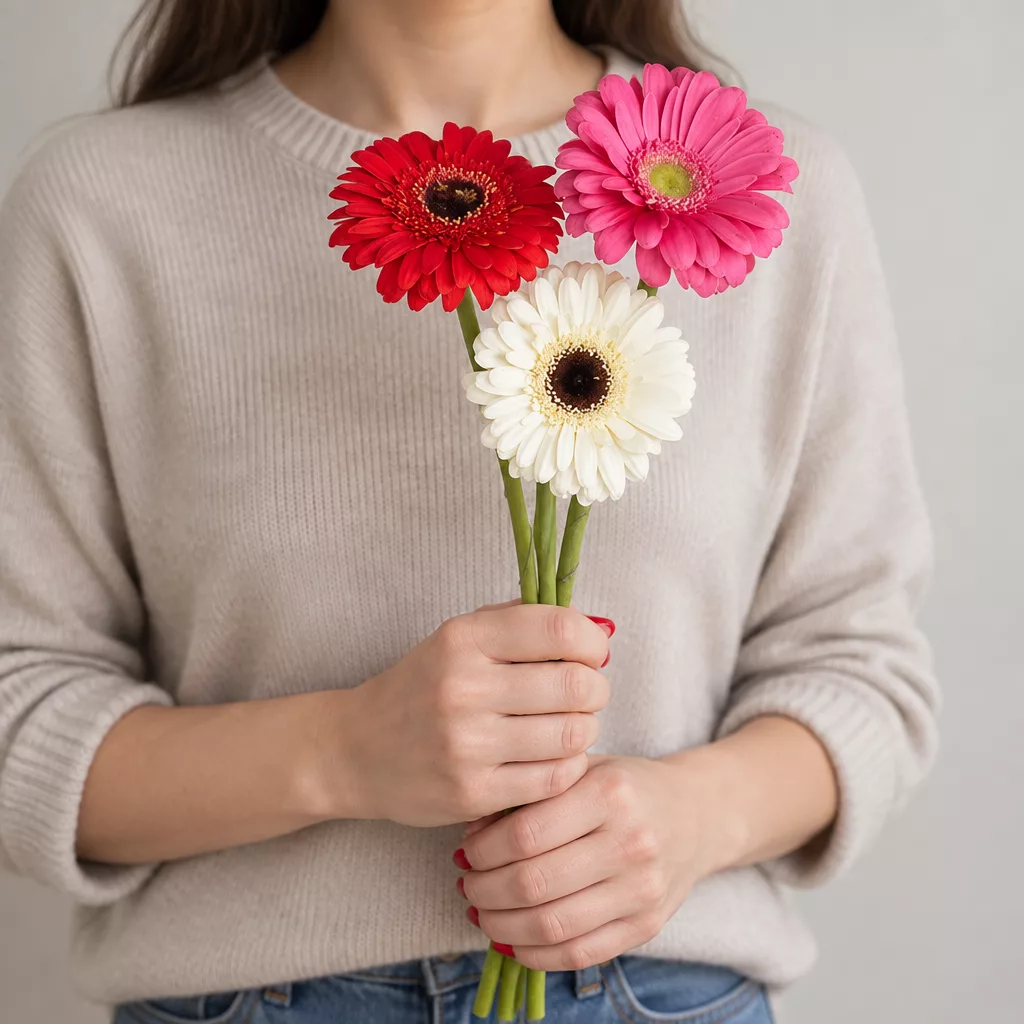
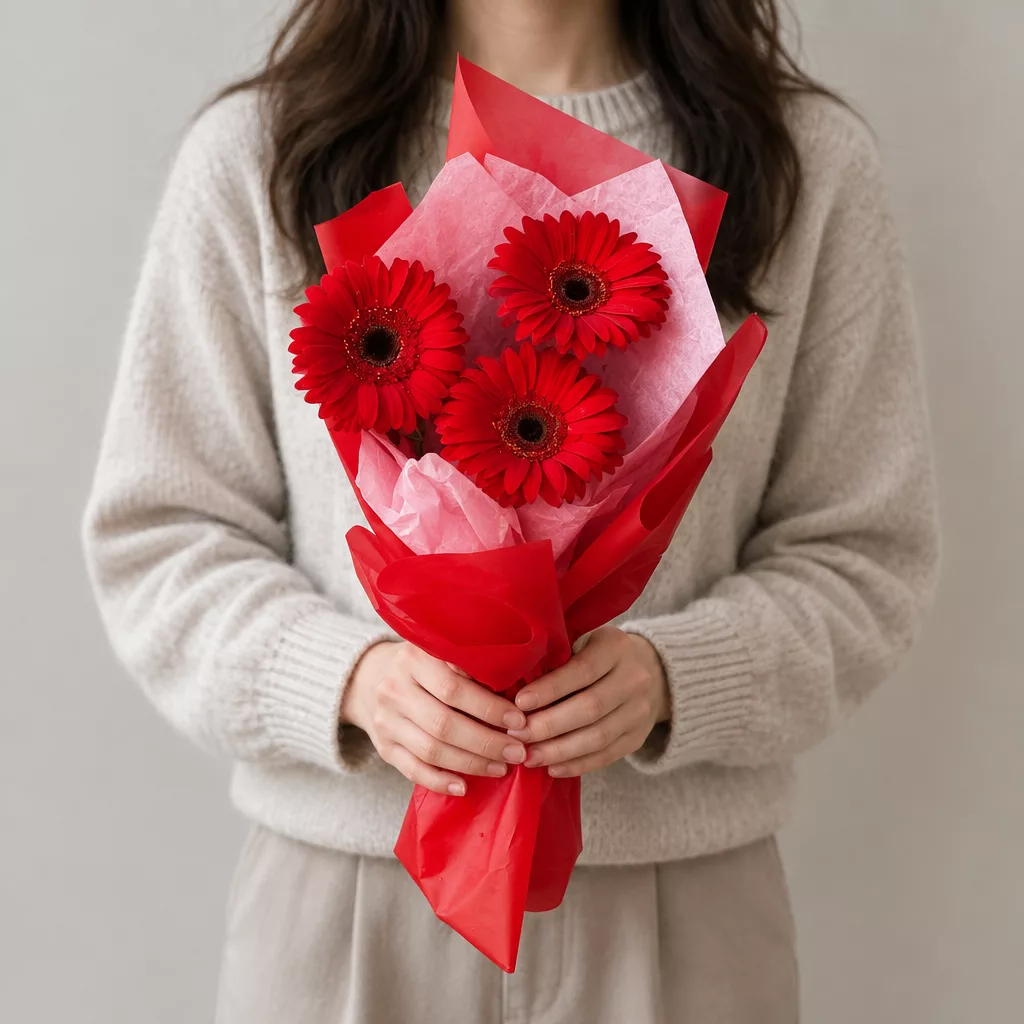
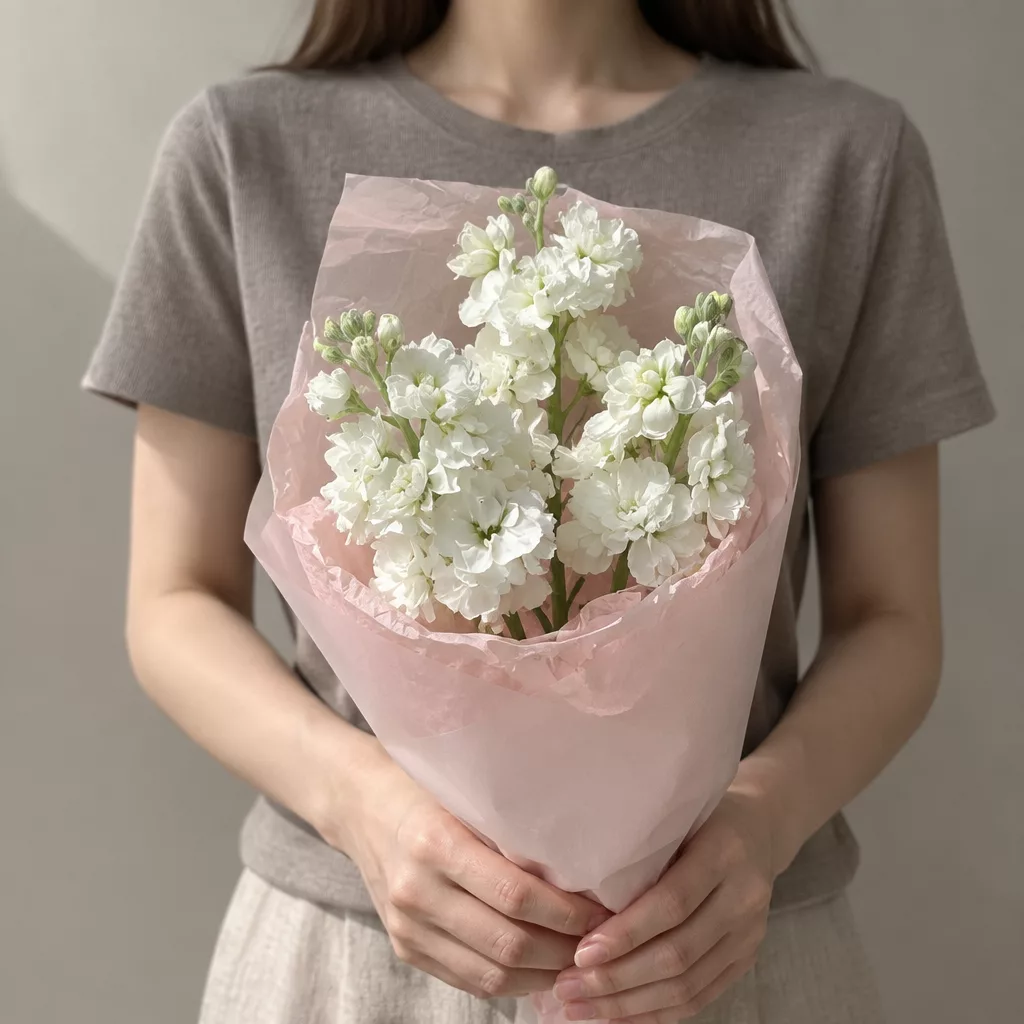
The Flowers Russians Actually Choose at New Year
Red roses are the most classic New Year flower in Russia, and they remain popular for a reason: against a dark winter evening, they read as festive, warm, and unambiguously celebratory. Long-stemmed varieties such as Explorer or Freedom are typical choices, often sold in round numbers — 11, 15, or 25 stems — because odd numbers are the Russian standard for gifting.
Beyond roses, white and cream flowers carry enormous appeal at New Year because they echo the snow outside. Eustoma, also called lisianthus, is a favourite for its ruffled petals and long vase life. White chrysanthemums, particularly the large-headed varieties, are widely used in table arrangements. Alstroemeria in white or pale pink adds texture and stays fresh for up to two weeks, which makes it practical when the recipient will have a busy few days of celebration.
Spruce branches and other evergreen elements are woven into many New Year arrangements, bridging the floral gift and the yolka tradition. A bouquet that includes a few spruce tips or a sprig of holly immediately reads as seasonal rather than generic. Hypericum berries in red or white add a similar effect. Florists in Russia often combine these elements with the main flowers rather than treating them as filler, so the result feels composed and intentional rather than padded.
Choosing by the Relationship: Who Are You Sending To?
The person receiving the flowers shapes the choice more than any trend. For a mother or grandmother, warm tones work best — deep red roses, burgundy alstroemeria, or a mixed arrangement that includes carnations, which carry no negative connotation in Russia and are genuinely loved by older generations. Adding a few spruce branches and some white gypsophila gives the bouquet a festive, full appearance that feels generous.
For a partner or spouse, the choice can be more dramatic. A single-variety bouquet of 25 red roses, tightly packed and wrapped in kraft paper, is a classic that never reads as lazy in this context — it reads as deliberate and romantic. Alternatively, a mix of white eustoma and red roses in a hat box is a popular format that photographs well and sits beautifully on a New Year table.
For a friend or colleague, something lighter and more playful works well. Mixed bouquets with yellow and white flowers — sunflowers are available year-round from greenhouse growers and are genuinely cheerful — or a compact arrangement of spray roses in peach or coral tones feel appropriate without being overly formal. If the recipient is a man, which is less common but not unusual in Russia, a structured arrangement with darker tones and minimal greenery tends to land better than something soft and pastel. The key in every case is that the bouquet feels considered for the person, not simply ordered in a hurry.
Arrangements by Budget: From a Single Bouquet to a Full Table
At the entry level, a well-made mono-bouquet — one flower type, good stems, clean wrapping — is always a stronger choice than a mixed arrangement assembled carelessly. Fifteen stems of white eustoma or eleven red roses, wrapped simply with a satin ribbon, look polished and feel intentional. The mistake at this level is trying to add too many elements to justify the price; restraint reads as confidence.
In the mid range, combination bouquets open up. A popular format is roses paired with complementary textures: red roses with white gypsophila and a few spruce tips, or cream roses with eucalyptus and hypericum berries. The eucalyptus adds fragrance, which matters — a bouquet that smells of the forest on New Year's Eve is genuinely evocative. Hat boxes and round arrangements in low vases are also available at this level and work well as table centrepieces.
At a higher budget, the shift is toward volume and composition rather than just flower variety. A large arrangement of 51 roses is a statement that is understood immediately in Russia. Alternatively, a designer arrangement combining premium roses such as Mondial or Avalanche with seasonal branches, amaryllis stems, and ribbon detailing creates something that feels genuinely bespoke. Amaryllis, with its large trumpet-shaped blooms in red or white, is particularly striking in winter and holds well in a warm apartment. For a household hosting a New Year dinner, a coordinated pair of arrangements — one for the entrance and one for the table — is a thoughtful and memorable gift.
Ordering from Outside Russia: Timing and What to Expect
Ordering flowers for delivery in Russia from another country is straightforward when you understand the timeline. The most important thing is to place the order before December 31, ideally by midday Saint Petersburg time if you want same-day or early January 1 delivery. New Year's Eve is the single busiest delivery window of the year, and demand peaks sharply in the hours before midnight.
If you are sending for January 1 itself rather than the eve, morning delivery — between 9 and 12 — is the most welcome. Russian families are often up late on the 31st and appreciate flowers arriving when the celebration mood is still present, not at the end of a tired afternoon. Specify a delivery window when you order rather than leaving it open.
For addresses outside Saint Petersburg, Turboflora delivers across Russia within one to two hours of the specified time. Providing a precise address including the apartment number, entry code, and a working phone number for the recipient is essential — many Russian apartment buildings have entry intercoms, and a driver who cannot reach the recipient cannot complete the delivery. If you want the delivery to be a surprise, include a secondary contact number. Payment from abroad is accepted by card. The order confirmation and tracking come by email, so you can follow the delivery in real time even from a different time zone.
Winter Care: Keeping New Year Flowers Fresh in a Russian Apartment
Russian apartments in January are warm — central heating runs at full capacity, and indoor temperatures of 22 to 25 degrees Celsius are typical. This is the single biggest challenge for cut flowers delivered in winter. A bouquet that looks perfect on arrival can droop within 24 hours if it is placed near a radiator or in direct heat.
The first step when flowers arrive is to re-cut the stems at a 45-degree angle under running water and place them in a clean vase with fresh, cool water. Tap water in Saint Petersburg is fine for most flowers. Adding a small amount of flower food — usually included with the bouquet — extends vase life noticeably. Change the water every two days and re-trim the stems each time.
Roses and eustoma last longest when kept away from fruit bowls, which release ethylene gas that accelerates wilting. At night, moving the vase to a cooler room — a hallway or a room with a slightly open window — can add two or three days to the arrangement's life. Spruce branches hold well in water and stay green for up to two weeks. Chrysanthemums are the most durable of all common New Year flowers and can last 14 days or more with basic care. Amaryllis needs a deep vase and benefits from being kept upright; the hollow stems can be filled with water and plugged with a small piece of cotton wool to extend their freshness.
What to Write: Messages That Feel Right for Russian New Year
The message card matters as much as the flowers. In Russia, New Year greetings follow certain warm conventions, and knowing them helps you write something that feels genuine rather than translated. The standard wish is for health, happiness, and success in the coming year — these three together are so established that omitting one can feel slightly incomplete to a Russian reader.
A simple, warm message works far better than something elaborate. Something like: 'Wishing you health, joy, and everything you hope for in the new year' lands naturally. If you know the person well, add something specific — a reference to a shared memory, a wish tied to something they are working toward, or simply warmth about missing them. Personalisation is always noticed.
If you are writing in Russian but are not a native speaker, keep it short and correct rather than long and uncertain. A brief 'S Novym Godom' — Happy New Year — followed by one genuine sentence is better than a long message full of errors. Turboflora can include your message exactly as you write it on the card. If you write in English for a recipient who reads English, that is perfectly fine too — what matters is sincerity, not language. Avoid overly formal phrasing; New Year in Russia is warm and familial, and the message should match that register. Think of what you would say if you were standing in the room with them, and write that.
Sending flowers to Russia for New Year is one of the most meaningful gestures you can make from a distance. The holiday carries genuine emotional weight, the flower traditions are specific and beautiful, and a well-chosen bouquet arriving on January 1 tells the person that you thought about them carefully — not just that you clicked a button. Choose for the person first, let the season guide the palette, and get the timing right. The rest takes care of itself. We deliver bouquets across Russia in 1–2 hours.
Frequently asked questions
Is it appropriate to send flowers to a man in Russia for New Year?
Yes, though it is less common than sending to women. For a male recipient, choose structured arrangements with darker tones — deep red roses, burgundy and green combinations, or a compact mono-bouquet. Avoid pastel palettes. A bottle of something alongside a small arrangement is also a well-understood gesture in Russia for male recipients at New Year.
Can I order flowers for delivery in Russia if I am paying from a foreign bank card?
Yes. Turboflora accepts international card payments. Place your order on turboflora.com, enter the Russian delivery address in full including apartment number and entry code, and provide a contact phone number for the recipient. You will receive an email confirmation and can track the delivery from wherever you are.
What flowers should I avoid sending for New Year in Russia?
Yellow flowers carry a superstition of separation or bad luck for some older Russians, so they are best avoided if you are unsure of the recipient's views. Even numbers of flowers are traditionally associated with mourning and should not be used for celebratory gifts — always choose an odd number of stems. Otherwise, the seasonal palette is wide and forgiving.
How far in advance should I order for January 1 delivery?
Place your order by midday on December 31 at the latest for same-day or January 1 morning delivery. New Year's Eve is the highest-demand period of the year for flower delivery in Russia. Ordering a day or two earlier gives you more flexibility over the delivery window and ensures the arrangement you want is available.
How long will New Year flowers last in a Russian apartment?
Expect seven to ten days for roses and eustoma with proper care, and up to fourteen days for chrysanthemums and alstroemeria. Russian apartments are warm in winter, so keep flowers away from radiators, change the water every two days, and re-trim stems each time. Moving the vase to a cooler spot overnight extends freshness significantly.
Ready to send flowers?
Pick the city, choose the bouquet, and a local florist takes it from there.
Choose a city →