How to Keep Flowers Fresh When Travelling by Car
You picked up a stunning bouquet — peonies at their peak, roses just beginning to open, ranunculus in that soft papery bloom — and now you have a forty-minute drive ahead. Everything that happens in that car between the shop and the door will determine whether the flowers look like a gift or an apology. The good news is that a few simple habits protect almost any arrangement, and none of them require special equipment.
Why the Car Environment Is Harder on Flowers Than You Think
A car interior is one of the most hostile environments a fresh bouquet can meet. In summer, a closed vehicle parked in direct sun can reach fifty degrees Celsius within minutes, and even a moving car with the air conditioning running creates uneven temperature zones — cold near the vents, warm near the windows. Heat accelerates respiration in cut stems, burning through the sugars that keep petals firm and hydrated. Flowers that looked perfect at the shop begin to droop within twenty minutes of serious heat exposure.
In winter the opposite problem appears. Frost damages cell walls in petals, and even a brief walk from a warm shop to a cold car can bruise delicate varieties like anemones, sweet peas, or garden roses. The transition itself — warm to freezing to warm again — is often more damaging than sustained cold.
Wind is the third factor people rarely consider. An open window feels pleasant for the driver but creates a desiccating airflow that pulls moisture from petals rapidly. Tulips and gerberas are especially sensitive to this. Lilies and alstroemeria hold up better, but even they show stress on a long motorway journey with windows down. Understanding these three forces — heat, frost, and airflow — is the foundation of everything else in this article.
Bouquets we can deliver


The Right Position in the Car Makes a Bigger Difference Than Anything Else
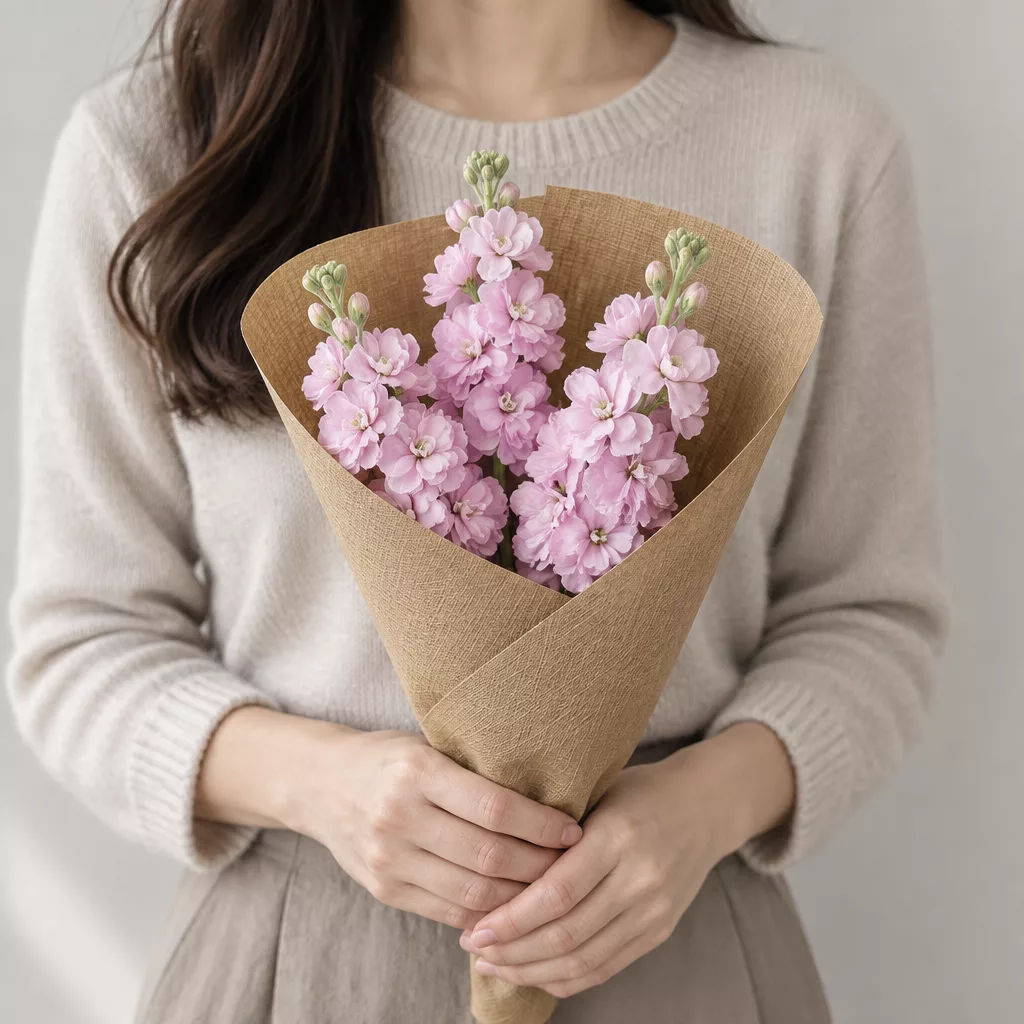
Lay the bouquet flat or stand it upright — that is the first decision, and it depends on the wrapping. A tightly wrapped cone of kraft paper or cellophane can lie at an angle on the back seat without the stems touching anything, as long as the head of the bouquet rests slightly elevated. Prop the stem end against the back of the seat and let the flowers lean toward the middle. This stops the bouquet rolling and keeps the heads from pressing against fabric or glass.
For arrangements in a box or a water-filled bag, upright is always better. Wedge the box between the back of the front seat and a bag or folded jacket on the floor. The goal is zero lateral movement. A box that slides even twenty centimetres across a smooth back seat during a turn will arrive with snapped stems and bruised petals.
Never put flowers in the boot unless it is a short journey in cool weather and the arrangement is fully enclosed in a box. The boot gets no temperature regulation, receives vibration directly from the road, and gives you no way to check on the bouquet during the drive. The footwell behind the passenger seat is actually a better choice — it is low, relatively cool, and naturally wedged on three sides. Place a non-slip mat under the box and the arrangement will barely move even on rough city roads.
Temperature Control During the Journey: Practical Numbers
The ideal transport temperature for most cut flowers sits between eight and fourteen degrees Celsius. That is cooler than a comfortable passenger cabin, which typically runs at twenty to twenty-two degrees. You do not need to make the car uncomfortable, but you do need to think about where the flowers sit relative to the vents.
In summer, turn the air conditioning on ten minutes before you collect the bouquet so the car is already cool when the flowers enter. Direct the vents toward the front seats and away from the back, then set the temperature to around eighteen degrees. This is warm enough for the driver but significantly cooler than an unconditioned interior. Avoid pointing cold air directly at roses or peonies — rapid chilling of already-open blooms can cause the outer petals to go translucent and limp.
In winter, do not pre-heat the car aggressively before placing the bouquet inside. A car at ten degrees is fine for flowers; a car at twenty-five degrees is not. Wrap the bouquet in an extra layer of paper before the walk from shop to vehicle, and unwrap it once you are moving and the temperature has stabilised. For journeys longer than thirty minutes in hard frost, a cool bag — not an ice bag — around the lower half of the stems adds useful insulation without freezing them. Chrysanthemums, carnations, and spray roses tolerate cold transport best; tropical varieties like anthuriums and birds of paradise need the most protection.
Securing the Bouquet So It Does Not Move or Tip
Movement is cumulative damage. Each small jolt bruises a petal, each slow corner bends a stem slightly, and by the time you arrive the bouquet has absorbed dozens of small injuries that add up to visible wilting and snapped flower necks. Securing the arrangement properly takes two minutes and prevents all of it.
For a wrapped bouquet, the seatbelt trick genuinely works. Place the bouquet on the back seat with the stems toward the door and loop the seatbelt around the lower third of the wrapping, then click it in. The flowers lean slightly inward, which is fine. They will not slide, roll, or tip regardless of braking. Do not belt the bouquet at the head — pressure on petals causes bruising faster than any road vibration.
For boxed arrangements, use the footwell method described earlier and add a rolled towel or spare jacket pressed against the side of the box facing the centre of the car. This creates a firm lateral stop without any pressure on the flowers themselves. If you are transporting multiple arrangements — for a wedding table, for instance, or a large birthday delivery — stack flat boxes horizontally with the heaviest on the bottom and a non-slip layer between each. Never stack more than two boxes of mixed-height arrangements; the upper box will press down on any stems that protrude above the lower one. Soft foam sheets cut from packaging material make excellent separators and cost almost nothing.
Timing Your Journey and Handling Stops Along the Way
The single most useful thing you can do for a bouquet in a car is to keep the journey short and direct. Every extra fifteen minutes in a warm vehicle shortens vase life noticeably, particularly for hydrangeas, which are among the most water-dependent flowers used in bouquets and can show stress within half an hour of heat exposure. If you have a choice between routes, take the faster one even if it is less scenic.
If you must stop — to run an errand, to collect someone, to wait at a crossing — park in shade and leave the air conditioning running if the engine stays on. If you switch off the engine, open a window slightly to prevent the interior heating up. Do not leave flowers in a parked, closed car in summer for more than five minutes. The temperature inside a stationary vehicle rises extremely fast, and what felt like a cool interior when you parked becomes genuinely dangerous for flowers within a few minutes of direct sun.
For journeys over an hour, bring a small spray bottle of plain water and mist the petals lightly at any stop. This is especially helpful for roses, lisianthus, and stocks, which lose moisture from petals quickly in dry heated air. Do not soak the wrapping paper — wet paper weakens and can tear, leaving the arrangement unsupported. A fine mist on the heads only is enough. Avoid misting open lilies, as water marks on lily petals are difficult to remove and spoil the presentation.
What to Do the Moment You Arrive at the Destination
Getting the bouquet safely to the destination is only half the task. What happens in the first ten minutes after arrival determines how long the flowers will last in the vase. If you are delivering the bouquet yourself, carry it upright and out of direct sunlight from the car to the door. Resist the urge to hold it sideways for a better photograph on the doorstep — even thirty seconds at an awkward angle can bend a stem that was already slightly stressed from the journey.
If the flowers will be unwrapped immediately, have a vase of cool water ready. Recut the stems at a forty-five-degree angle — this reopens the water uptake channels that begin to seal within minutes of the original cut — and place them in water without delay. This single step extends vase life more than almost anything else, including flower food, which works best when the stems can actually absorb it.
If the bouquet will be presented still wrapped, store it somewhere cool and away from direct light until the moment of giving. A hallway, a shaded corner, or a cool kitchen counter is ideal. Avoid placing it near a radiator, on a sunny windowsill, or next to a bowl of fruit — ethylene gas from ripening fruit, particularly apples and bananas, accelerates ageing in cut flowers noticeably. Roses, carnations, and sweet peas are the most sensitive to ethylene; sunflowers and tropical blooms are more tolerant.
Mistakes That Seem Harmless but Shorten Flower Life Significantly
Experienced florists see the same transport mistakes repeatedly, and most of them come from good intentions rather than carelessness. Wrapping flowers too tightly in plastic to protect them is one of the most common. Plastic traps humidity around the heads, encourages mould on petals, and blocks the air circulation that keeps flowers firm. Kraft paper, tissue, or a breathable fabric wrap is always preferable for the heads, even if the stems are in a sealed water bag.
Another frequent mistake is buying flowers too far in advance of the journey. Roses purchased fully open in the morning and transported in the afternoon of a hot day are already at peak bloom and will decline quickly in a warm car. If you are collecting flowers to transport yourself, ask for them at a slightly earlier stage of opening than you would normally choose — they will reach their best by the time they are in the vase.
Placing the bouquet on the parcel shelf under the rear window is a mistake that surprises people when they learn how damaging it is. That shelf receives direct sunlight amplified by the glass and is one of the hottest surfaces in the car. Even a ten-minute journey in summer sun can cause irreversible wilting in tulips or ranunculus placed there.
Finally, do not remove the wrapping paper during the journey to check on the flowers. The paper provides structure, reduces airflow across petals, and keeps the arrangement together. Unwrapping and rewrapping in a moving car almost always results in bent stems or crushed heads. Trust the wrap and check only when you arrive.
Transporting flowers well is not complicated, but it is deliberate. Cool the car before the flowers enter, keep the arrangement secured and upright, avoid stops in the sun, and recut the stems the moment you reach your destination. Those four habits cover almost every situation, whether you are carrying a simple hand-tied bouquet across town or moving a set of table arrangements for a celebration. Flowers are more resilient than people assume when they are treated thoughtfully, and more fragile than people realise when they are not. We deliver bouquets across Russia in 1–2 hours.
Frequently asked questions
Can I transport flowers in the boot of my car?
Only for short journeys in cool weather, and only if the arrangement is fully enclosed in a rigid box. The boot receives no temperature control, no ventilation, and transfers road vibration directly to the stems. For anything longer than fifteen minutes or in temperatures above fifteen degrees, keep flowers in the passenger cabin where you can monitor conditions.
How long can flowers safely stay in a car?
In a temperature-controlled car set to around eighteen degrees, most bouquets are fine for up to ninety minutes. In an uncooled car in summer, damage begins within twenty to thirty minutes. In winter frost without wrapping, surface petal damage can appear in under ten minutes. Shorter is always better — plan your route to minimise time in the vehicle.
Should I put the stems in water during a long car journey?
Yes, for journeys over an hour. A sealed water bag or a small container with a few centimetres of cool water around the stem ends makes a meaningful difference. Secure the container so it cannot tip. Avoid filling it too full — sloshing water wets the wrapping and weakens it, which can leave the arrangement unsupported on arrival.
Which flowers travel best by car and which are most fragile?
Chrysanthemums, carnations, alstroemeria, and spray roses are among the most resilient for car transport. Hydrangeas, sweet peas, anemones, and open garden roses are the most sensitive to heat and movement. Tulips and ranunculus fall in the middle — they tolerate cool conditions well but wilt quickly if the car is warm.
Does wrapping flowers in newspaper or plastic help during transport?
Newspaper is fine as a temporary outer layer for insulation in cold weather but should not touch wet petals. Plastic wrapped tightly around the heads traps moisture and encourages mould — avoid it. Kraft paper or tissue around the heads with a secure outer cone gives the best combination of structure, breathability, and protection from physical damage during the journey.
Ready to send flowers?
Pick the city, choose the bouquet, and a local florist takes it from there.
Choose a city →