Vase Care: A Practical Guide to Looking After Cut Flowers
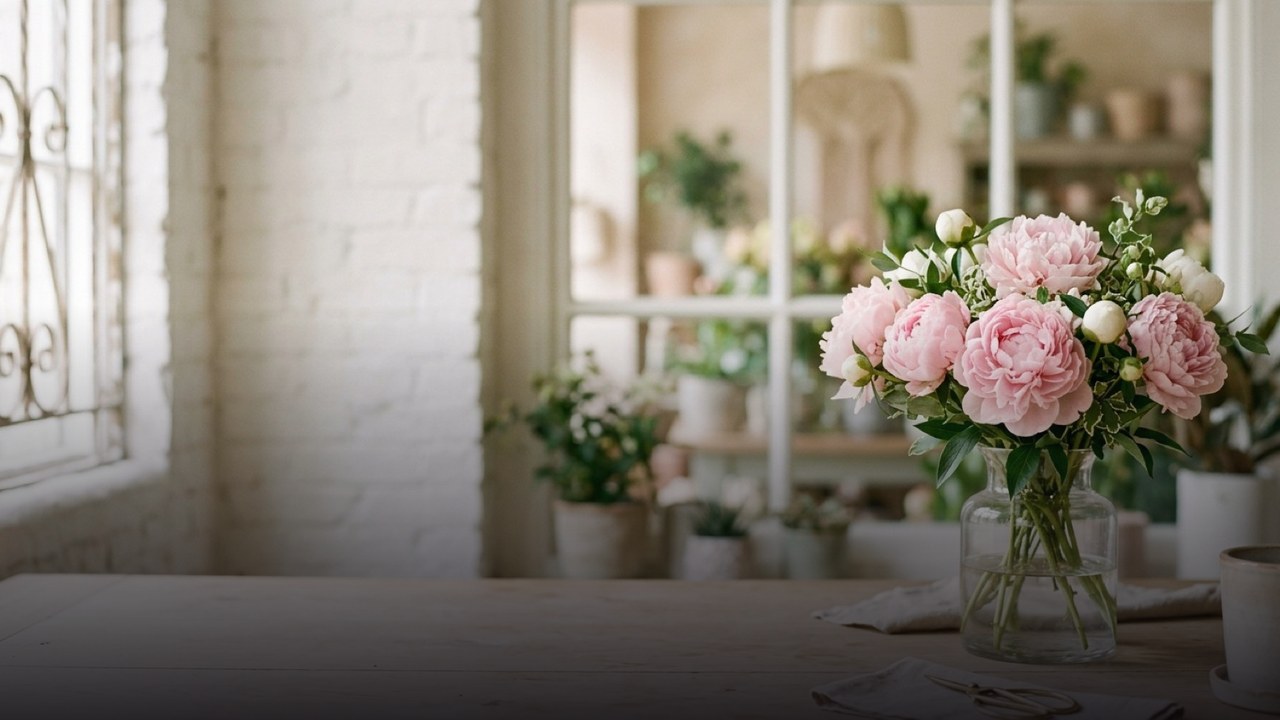
Good vase care starts with a thoroughly clean container, fresh water and freshly trimmed stems, with every leaf kept above the waterline. Add cut-flower food according to its packet, check the water daily and keep the arrangement away from direct sunlight, heaters and ripening fruit.
The useful routine is simple, but the details matter: a narrow vase can hide dirty water, crowded stems are difficult to inspect, and different flowers do not always fade together. Whether you are caring for your own bouquet or sending flowers to someone in Russia, this guide helps you prepare the vase, recognise problems and give the arrangement sensible daily attention.
Start with a clean vase and a suitable shape
Wash the vase before each new bouquet, even if it looks clean. Use washing-up liquid, warm water and a bottle brush to reach the base, corners and any ring left by the previous arrangement. Rinse thoroughly so no detergent remains. A quick swirl of water may remove loose debris, but it will not reliably shift the slippery film that can collect inside.
Choose an opening that supports the stems without squeezing them into a tight bundle. The flower heads should sit comfortably above the rim, while the stems reach well into the water. A heavy arrangement needs a stable base; if the vase rocks or tips as you position the flowers, change the container before adding more water or trying to balance the heads.
Clear glass makes the water level and loose leaves easy to see. With an opaque vase, lift the arrangement gently each day to inspect the water and stems. For a narrow neck, use a brush that reaches the bottom; if you cannot clean the inside properly, choose a different container. Do not mix household cleaning products when tackling stubborn deposits.
Prepare the stems before arranging your flowers
Unwrap the bouquet carefully and remove any material that would sit in the vase water. Set out your clean vase and cutting tool before you begin, so the stems can go straight into water after trimming. If decorative wrapping is wet, take it away from the flower heads and foliage rather than leaving moisture trapped around the arrangement.
Use sharp, clean secateurs or a florist’s knife to remove roughly 1–2 cm from each stem. A slight angle helps prevent the cut end from resting flat against the base. Avoid blunt scissors that crush tougher stems, and do not hammer or split the ends as a general treatment. Handle the stems gently, especially where they bend beneath a heavy flower head.
Remove leaves that would fall below the waterline, including small pieces caught between stems. Keep healthy foliage higher up: there is no need to strip the whole bouquet bare. Fill with fresh water and use any supplied flower food at the stated dilution. Do not divide a sachet by guesswork or make the mixture stronger in the hope of getting better results.
Bouquets we can deliver




Build a daily water and placement routine
Check the water level every day, particularly during the first day after arranging the bouquet. Some flowers take up water quickly, and a deep vase can still leave shorter stems dry. Make sure every cut end remains submerged. Top up as needed, but remember that adding fresh water does not remove debris or contamination already in the container.
Change the water every one to two days, or sooner if it becomes cloudy, smells unpleasant or contains fallen leaves. If your flower-food packet gives specific water-change instructions, follow those. When changing the water, set the flowers on a clean surface, wash and rinse the vase, and remove any soft or decaying material before refilling.
Place the vase somewhere cool within your home, away from direct sun, radiators, warm appliances and strong draughts. Keep it separate from a fruit bowl, since ripening fruit releases ethylene, which can hasten ageing in sensitive flowers. Avoid putting the arrangement in a domestic fridge: food, limited space and unsuitable conditions make this an unreliable everyday solution.
Adjust vase care to the flowers in your bouquet
In a mixed bouquet, look at each stem rather than treating the arrangement as a single object. A rose, a chrysanthemum and a delicate filler flower may decline at different rates. Remove individual flowers as they fade, keeping the healthy stems in clean water. You can move the remaining flowers into a smaller vase once the original container no longer supports them well.
Hydrangeas need particular attention to water availability: their large heads can look tired when hydration is interrupted. Check the water and stem ends promptly if they begin to droop, but do not assume every wilted head can recover. Our hydrangea care guide explains care for this flower in more detail.
With roses, keep foliage out of the water and avoid bruising petals while handling the bouquet. A bending neck deserves a check of the water level and stem condition, rather than an automatic promise of revival. For more specific guidance, see vase care for Ecuadorian roses. Whatever the variety, no care routine can reverse normal ageing indefinitely.
Read the warning signs and avoid common remedies
Cloudy water, an unpleasant smell and slippery stems are reasons to clean the vase immediately. Take out the bouquet, discard the old water and rinse away loose debris. Remove affected leaves and recut sound stems with a clean tool. A stem that is soft and rotting should be removed rather than returned to the arrangement, where it will continue to break down.
If flowers droop while the water still looks clear, check whether every stem actually reaches it. A short stem can sit above the surface, or a crowded arrangement can hold a cut end against the vase wall. Recut and reposition stems where appropriate, then allow time to assess them. Drooping can also reflect age or damage, so recovery is uncertain.
Avoid improvised mixtures of sugar, aspirin, coins, vinegar or household bleach. They are difficult to dose appropriately and do not provide the balanced treatment of a purpose-made flower-food packet. If you have no flower food, concentrate on clean water, a clean vase and regular checks. Do not spray petals routinely, since trapped moisture can encourage spotting and decay.
Do not remove a flower simply because one outer petal looks marked. Inspect it first: a dry, damaged outer petal can sometimes be eased away without disturbing the rest of the head. By contrast, spreading softness or visible mould calls for removing the affected flower. Use a light touch and avoid repeatedly pulling at petals to make a bloom appear more open.
Sending flowers to Russia: plan arrival and share the essentials
When choosing from our bouquets catalogue, think about the recipient’s space and whether they will be available to put the flowers in water. A compact arrangement may be easier to accommodate on a desk, while taller stems need a suitable vase. If you are unsure what to choose, contact a manager on WhatsApp for help with the bouquet, time, address and card text, or a photo of the bouquet before delivery.
We deliver flowers across Russia. City delivery costs 500 RUB; for remote districts and suburbs, the operator confirms the price when confirming the order. Express delivery in large cities is available in 1–2 hours after confirmation. You can also arrange an exact time with a tolerance of plus or minus 30 minutes, choose a 09–12, 12–15, 15–18 or 18–21 window, or pre-order 1–30 days ahead.
The courier calls the recipient about 15 minutes before arrival. If they are absent, we agree a second delivery that day or, with the sender’s consent, hand the flowers to a neighbour or concierge. Delivery is anonymous by default: the courier does not name the sender. A card with your text is free, so sign it if you want the recipient to know who sent the flowers.
Share a brief care message with the recipient: use a clean vase, trim the stems, remove submerged leaves and check the water daily. For ordering details, see delivery and payment. Online checkout uses CloudPayments; check the payment options displayed there rather than assuming a particular foreign card will be accepted.
Frequently asked questions
How often should I change the water in a flower vase?
As a general routine, change it every one to two days, and sooner if it becomes cloudy or smells unpleasant. Follow any specific instructions on your flower-food packet, and check the water level daily between changes.
Can I use tap water for cut flowers?
Clean tap water is suitable for many cut flowers. Use a clean vase and follow any water or dilution instructions supplied with the bouquet’s flower food.
Should I add sugar to vase water?
Use purpose-made cut-flower food at its stated dilution instead of adding sugar alone. Sugar by itself does not provide a balanced care solution and can encourage microbial growth.
Can wilted flowers recover after I recut the stems?
Some flowers may recover if interrupted water uptake caused the wilting. Recut sound stems, place them in fresh water and reassess, but flowers affected by ageing, rot or damage may not recover.
What vase care advice should I send with a gift bouquet?
Keep it short: wash the vase, trim the stems, remove leaves below the waterline and check the water each day. Add a reminder to keep the flowers away from direct sunlight, heaters and ripening fruit.
Ready to send flowers?
Pick the city, choose the bouquet, and a local florist takes it from there.
Choose a city →