Wax Flower (Chamelaucium) in Russia: Filler With Real Character
Most people walk past wax flower without a second glance. It sits quietly at the edge of a bouquet, tiny bells of white or pink clustered along wiry stems, and the eye goes straight to the roses or peonies in the centre. That is exactly what makes it so useful — and so underrated. Once you understand what wax flower actually does for a bouquet, both in terms of beauty and longevity, you start to see it everywhere and wonder how you ever arranged flowers without it.
What Wax Flower Actually Is and Why Florists Reach for It
Wax flower, known botanically as Chamelaucium, is a flowering shrub native to Western Australia. The name comes from the texture of the petals: they have a slightly waxy, almost porcelain feel that gives each tiny bloom an unusual resilience. The most widely used species in the cut flower trade is Chamelaucium uncinatum, sometimes called Geraldton waxflower after the Australian town near which it grows wild. In florist coolers across Russia, you will typically find it in white, pale pink, deep rose, and occasionally lilac, depending on the season and the supplier.
What sets wax flower apart from other fillers — statice, gypsophila, limonium — is its combination of delicacy and toughness. The stems are woody, which means they drink water efficiently and do not collapse the way soft-stemmed fillers sometimes do in warm rooms. The individual flowers are small, roughly the size of a shirt button, but they appear in generous clusters that create a soft, airy halo around the focal blooms in a bouquet.
For a working florist, wax flower solves a specific problem: how do you add visual texture and volume without competing with the main flowers? A stem of gypsophila can feel bridal and formal; a stem of wax flower feels effortless and a little wild. It suits everything from a simple market bunch to a carefully composed arrangement for a birthday or anniversary. Russian florists have been using it with growing confidence over the past decade as supply from Dutch auctions has become more consistent.
Bouquets we can deliver


Three to Four Weeks in the Vase: Why the Numbers Matter
When someone receives a bouquet, the flowers that fade first define how the whole gift is remembered. A rose that droops after five days takes the joy of the arrangement with it, even if other flowers are still standing. This is where wax flower becomes genuinely valuable: properly conditioned, it holds for three to four weeks in a vase, which is extraordinary compared to most cut flowers.
The reason for this longevity lies in those woody stems and waxy petals. The stems lose moisture slowly, and the flowers themselves are protected by their surface texture from the rapid dehydration that shortens the life of thin-petalled blooms like anemones or sweet peas. In a room kept at normal indoor temperature — around 20 to 22 degrees Celsius, which is typical in a Russian apartment in winter — wax flower will outlast almost everything it was arranged with.
This matters practically when you are sending flowers to someone who travels, works long hours, or simply forgets to tend their vase. Wax flower is forgiving. It tolerates a missed water change better than most. It does not drop petals dramatically when it dries; instead, it gradually transitions into a dried state that many people find attractive in its own right, keeping shape and a softer version of its colour for weeks beyond the fresh stage.
For florists building bouquets meant to last — for a housewarming, a long hospital stay, or a gift to someone living alone who deserves flowers that keep them company — wax flower is not a filler in the dismissive sense. It is a structural decision about how long the arrangement will bring pleasure.
Choosing Wax Flower for the Occasion and the Person
The right filler changes the mood of a bouquet more than most people realise. Wax flower reads as relaxed, generous, and slightly romantic without being heavy. It is not the choice for a very formal corporate arrangement where clean lines matter, but it is ideal for almost every personal occasion: a birthday, a thank-you, a congratulations, a first date, or simply flowers sent because someone deserves them.
For a woman who has a personal style that leans towards the natural and unfussy, wax flower is an excellent pairing with garden roses, ranunculus, or tulips. The soft clusters echo the fullness of those blooms without mimicking them. For a man receiving flowers — which is increasingly common in Russia, particularly among younger generations in Moscow and Saint Petersburg — wax flower alongside protea, leucadendron, or textured foliage creates an arrangement that feels considered rather than conventionally feminine.
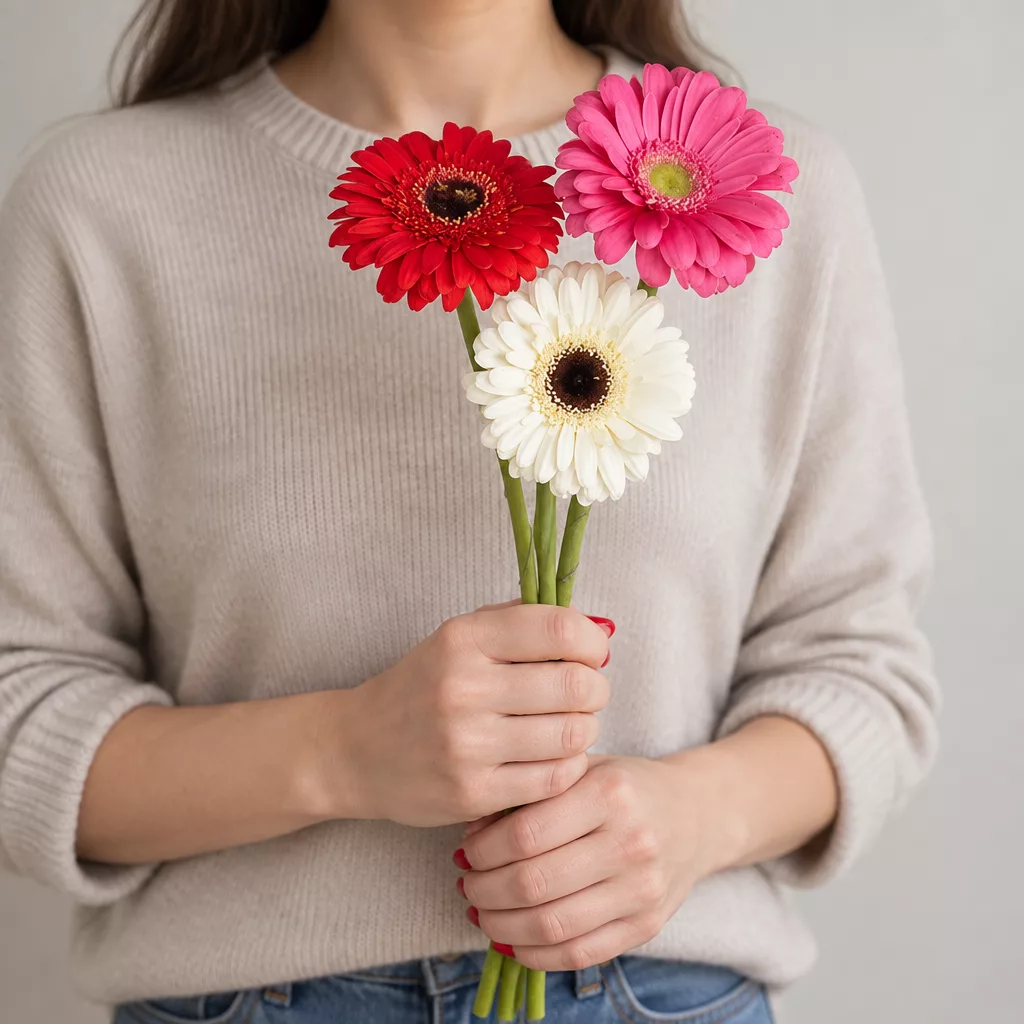
Children's birthdays and school celebrations often call for bright, cheerful colours, and here wax flower in deep rose or hot pink works well alongside sunflowers or gerberas. The small scale of the individual flowers adds detail without overwhelming the boldness of the larger blooms.
If you are sending flowers to someone who is not familiar with elaborate arrangements — perhaps an older relative in a smaller city outside Saint Petersburg — wax flower helps the bouquet feel full and cared-for without requiring the recipient to do anything special. It holds its shape without complicated care, which is a kindness in itself. Think of the person first, the occasion second, and the flowers will follow naturally.
Pairing Wax Flower: Combinations That Work and Why
Wax flower is at its best when it is given a strong partner rather than used as background noise. The most successful pairings share a logic: the main bloom provides drama or colour mass, and the wax flower provides movement, airiness, and a softening of hard edges.
With white or cream roses, white wax flower creates a classic combination that photographs beautifully and suits almost any recipient. The slight texture difference between the smooth rose petals and the clustered wax flower bells adds visual interest without colour contrast. This is a reliable choice for anniversaries and for occasions where you want the bouquet to feel elegant rather than exuberant.
Pink wax flower with peonies is a pairing that many Saint Petersburg florists return to in late spring and early summer when both are available and in good condition. The wax flower echoes the pink of the peonies while staying small enough not to compete. It also helps the bouquet stay looking full as the peonies open wide, filling the spaces that appear between the blooms.
For something more unexpected, deep rose or magenta wax flower alongside blue or purple delphiniums creates a colour contrast that is striking without being harsh. The small scale of the wax flower flowers prevents the combination from feeling busy. Eucalyptus as a foliage addition to either of these pairings brings a herbal, clean scent that complements the faint honey-like fragrance of the wax flower itself.
Avoid pairing wax flower with very delicate, thin-petalled blooms like sweet peas or anemones in warm weather. The contrast in longevity will become obvious within days, and the arrangement will look unbalanced as the softer flowers fade first.
Care at Home: What to Tell the Person Receiving the Flowers
Wax flower is low-maintenance, but a few habits at the start will make a real difference to how long it lasts. When the bouquet arrives, the stems should be cut at an angle under running water — about two centimetres from the bottom — before placing them in a clean vase. Because the stems are woody, a sharp knife works better than scissors, which can crush the stem and reduce water uptake. This single step adds days to the vase life.
The vase water should be cool and changed every two to three days. Wax flower does not need flower food packets, though they do not harm it either. What it does not tolerate well is warm water or a warm room — temperatures above 24 or 25 degrees Celsius will shorten its life noticeably. In a Russian apartment in winter, where central heating can make rooms quite warm, placing the vase away from radiators and in a cooler spot, perhaps near a window but not in direct sunlight, helps considerably.
Strip any leaves or small stems that fall below the waterline in the vase. Wax flower has many small lateral branches, and leaving them in the water encourages bacteria that cloud the water and shorten the life of every flower in the arrangement. This is the most common mistake people make with it, and it is easy to avoid.
If the wax flower starts to feel dry before the other blooms have faded, a light misting of the flower clusters with cool water can revive them temporarily. This is not a long-term solution, but it buys time and keeps the arrangement looking fresh for a few more days.
Wax Flower in Russian Floristry: Context and Growing Popularity
Russia has a strong and specific flower culture that surprises many visitors. Flowers are given frequently and for a wide range of occasions — school events, professional milestones, first meetings, and informal gatherings as well as the more predictable celebrations. The tradition of giving an odd number of flowers, which is widely observed, means that bouquet construction often involves careful counting, and fillers play a role in making the spacing between stems feel intentional rather than sparse.
For most of the Soviet period, flower culture in Russia centred on a relatively small range of available blooms: carnations, roses, gladioli, and chrysanthemums dominated what was available. The variety now accessible through international supply chains — particularly through Dutch flower auctions, which supply much of what Russian florists work with — has expanded enormously over the past twenty years. Wax flower is part of this expansion.
In Saint Petersburg specifically, there is a growing appetite for what might be called the garden aesthetic: arrangements that look as though they were gathered rather than constructed, with a mix of textures, scales, and informal shapes. Wax flower fits this aesthetic naturally. Its slightly wild, branching habit reads as organic in a way that more uniform fillers do not.
Younger florists in the city have embraced it enthusiastically, and it now appears regularly in arrangements for birthdays, new home celebrations, and professional occasions where the sender wants something that feels personal rather than generic. It has moved from a background role to something closer to a signature element in certain styles of arrangement, which is a significant shift for a bloom that most customers still cannot name.
Ordering Bouquets With Wax Flower: What to Ask For
If you are ordering flowers and you want wax flower included, the simplest approach is to mention it by name and indicate the colour direction you prefer. Most florists will understand immediately and will incorporate it naturally. If you are not sure about colour, describing the main flower you have in mind — or the colours the recipient tends to wear or decorate with — gives a florist enough to make a good decision on your behalf.
Wax flower works at almost every budget level because it is priced as a filler rather than a focal flower. A bouquet that might otherwise feel thin at a modest price point becomes full and generous with the addition of two or three stems of wax flower. Conversely, in a larger arrangement, it can be used more heavily to create that soft, cloud-like texture around roses or peonies without a dramatic increase in cost.
If you are ordering for delivery across a long distance — say, from Saint Petersburg to a recipient in another Russian city — wax flower is a sensible choice to request specifically because of its travel resilience. Its woody stems and waxy petals handle the stress of transit better than many softer blooms. It arrives looking much as it left, which matters when you cannot be there to hand the flowers over in person.
When the arrangement is for a special occasion where the flowers need to look their best for a specific day — a birthday dinner, a celebration evening — it is worth mentioning this when you order. A florist who knows the timing can choose wax flower stems that are at the right stage of opening to look full and fresh on the day that matters most.
Wax flower earns its place in a bouquet not by drawing attention to itself but by making every other flower look better and last longer. It is the kind of ingredient that experienced florists rely on quietly and that recipients benefit from without always knowing why the arrangement still looks beautiful three weeks after it arrived. If you have been thinking of flowers as a brief pleasure — something that brightens a room for a few days and then fades — wax flower is worth reconsidering. It extends the life of a gift and, with it, the feeling behind the gesture. We deliver bouquets across Russia in 1–2 hours.
Frequently asked questions
How long does wax flower actually last in a vase at home?
With clean water changed every two to three days and stems cut at an angle, wax flower typically lasts three to four weeks in a vase kept at normal room temperature. Keeping it away from radiators and direct sunlight extends this further. It is one of the longest-lasting cut flowers available, which is part of why florists value it so consistently.
Does wax flower have a scent, and is it strong enough to notice?
Wax flower has a light, faintly honey-like fragrance that is pleasant rather than overpowering. It is noticeable when you hold a stem close but does not fill a room the way hyacinth or oriental lily does. This makes it a good choice for recipients who are sensitive to strong floral scents but still want a bouquet that feels alive and fresh.
Can wax flower be used on its own, without other flowers?
Yes, and the result is often more striking than people expect. A bunch of wax flower stems in a single colour — particularly white or deep rose — arranged in a simple vase has a relaxed, botanical quality that works well in modern interiors. It is an underused option for situations where you want something that looks considered without being elaborate or expensive.
Is wax flower available year-round in Russia, or only in certain seasons?
Supply through Dutch auction channels means wax flower is available in Russia throughout most of the year, though availability can fluctuate. White and pale pink are the most consistently available. Deeper rose and lilac shades appear more reliably in spring and early summer. If a specific colour matters to you, it is worth checking availability when you order rather than assuming.
Will wax flower survive being delivered across Russia in winter temperatures?
Wax flower handles cold transit well because its woody stems and waxy petals protect it from the rapid moisture loss that damages softer blooms. Properly packaged for winter delivery, it arrives in good condition even after long distances. It is one of the more travel-resilient options available, which is a practical advantage when sending flowers to recipients in cities far from the point of origin.
Ready to send flowers?
Pick the city, choose the bouquet, and a local florist takes it from there.
Choose a city →