What Is in the Plant Food Packets That Come with Flowers?
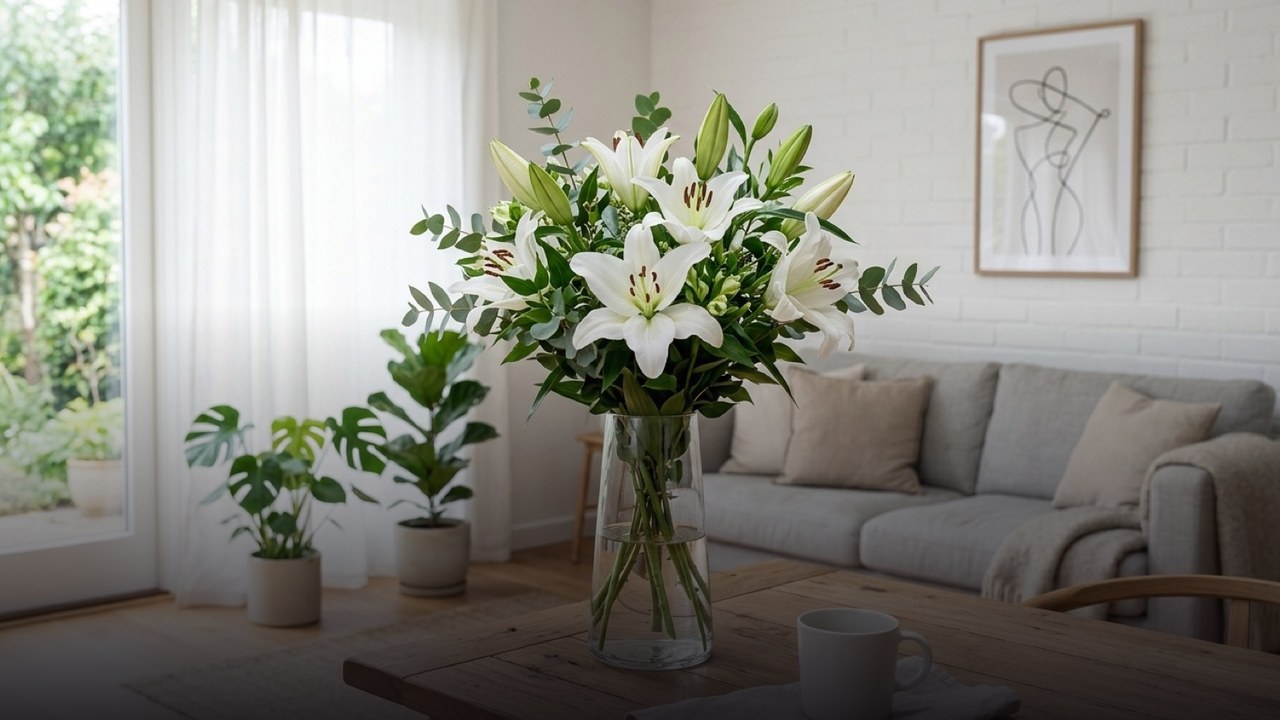
The small plant food packets supplied with bouquets usually contain three main components: sugar, an acidifier and an ingredient that limits microbial growth in vase water. These work together to support cut flowers, help them take up water and keep the solution cleaner; the exact ingredients vary by product.
Despite the everyday name, a bouquet sachet is generally cut-flower food, not fertiliser for a growing houseplant. That distinction matters: flowers standing in a vase have different needs from plants with roots in soil. Before opening a packet, check what it is intended for and how much water the label specifies.
What each ingredient does in the vase
Sugar supplies carbohydrates that cut stems can no longer obtain from the parent plant. Those carbohydrates can support the opening of buds and the maintenance of flower tissues. Sugar alone, however, is not a complete treatment: it can also feed microorganisms in the water, which is why a balanced flower-food formula contains other ingredients.
An acidifier lowers the pH of the solution. This can make the water more suitable for uptake through cut stems and help the formulation work as intended. Citric acid is one possible ingredient, but you cannot identify a packet's precise acidifier by looking at the powder. Different manufacturers use different formulations, so treat ingredient examples as possibilities.
An antimicrobial ingredient helps limit the growth of bacteria and other microorganisms. Microbial growth can contribute to blocked water-conducting tissues and deteriorating vase water. Some products also contain ingredients that help the powder dissolve or support the formula's stability. The label or manufacturer's product information is the place to check the contents of your particular sachet.
Flower food and houseplant fertiliser are different products
A rooted plant takes up mineral nutrients through its roots and makes sugars through photosynthesis. Houseplant fertilisers therefore usually focus on nutrients such as nitrogen, phosphorus and potassium, sometimes with additional elements. A cut-flower packet has a different purpose: supporting detached stems during their limited time in a vase.
Do not use the products interchangeably unless their instructions explicitly allow it. A bouquet sachet is not a routine feed for an orchid, succulent or leafy houseplant. Equally, adding ordinary houseplant fertiliser to a bouquet vase does not reproduce a cut-flower preservative. The word 'food' on both packages does not mean their contents or doses are equivalent.
If you find an unmarked packet in a drawer, avoid guessing from its colour, texture or smell. Look for the original packaging, product name and directions. For an unidentified sachet, clean water and careful vase hygiene are a more sensible choice than experimenting. If your gift is a living plant, our guide to potted plants and cut flowers explains the practical differences.
Bouquets we can deliver




How to mix a flower food packet correctly
Start with a clean vase, washed to remove residue from previous flowers, and rinse it thoroughly. Measure the amount of fresh water stated on the packet before adding the powder. Sachets are made for different water volumes, so 'one packet per vase' is not a reliable rule. A narrow vase and a large jug can hold very different amounts.
Mix according to the directions, allowing the powder to dissolve before arranging the stems. Do not assume that extra powder makes the flowers last longer: changing the concentration also changes the balance of sugar, acidity and antimicrobial ingredients. If the packet specifies a larger volume than your vase holds, prepare that measured amount in a clean jug and use what you need.
Remove leaves that would sit below the waterline, then make a fresh cut at the base of each stem with a clean, sharp tool. Put the stems into the prepared solution promptly. Keep the sachet or a photograph of its instructions so you can check the dose again when refreshing the water, rather than relying on memory or copying directions from a different brand.
Daily care still matters when you use flower food
Check the water level every day, especially during the first days after arranging a bouquet. Several stems sharing a vase can use water surprisingly quickly, and the cut ends must remain submerged. For topping up, follow the product's instructions; where fresh food solution is required, mix it at the same stated concentration instead of adding powder directly to the vase.
If the water becomes cloudy, develops an unpleasant smell or contains decaying material, empty the vase and clean it before refilling. Remove fallen petals and damaged foliage, and refresh the stem ends with clean tools as needed. Flower food helps manage the vase environment, but it cannot compensate for a dirty container or leaves left rotting beneath the surface.
Position the bouquet away from direct sunlight, radiators, draughts and ripening fruit. Heat encourages water loss, while some fruit releases ethylene, which can hasten ageing in sensitive flowers. Different stems age at different rates, so remove individual flowers as they deteriorate. Our guide to whether flower food packets work explains what these products can realistically contribute.
What to do if the packet is missing or runs out
You can still care for a bouquet without a sachet. Use a clean vase, fresh water, clean stem cuts and no submerged leaves, then monitor the water closely and refresh it regularly. Commercial flower food offers a measured formulation; its absence does not mean you should leave the flowers dry while searching for a substitute.
Avoid adding spoonfuls of sugar on its own. Without the other components of a formulated product, sugar can encourage microbial growth. Aspirin, coins and improvised mixtures of household products are not equivalent to a labelled preservative. Never mix cleaning chemicals, and do not add bleach to water containing vinegar or another acid: that combination can release dangerous gas.
If you want more flower food, choose a product specifically labelled for cut flowers and follow its own dose. Keep packets and mixed solution away from children and pets, and do not use them in drinking vessels that could cause confusion. For a practical routine using water and hygiene alone, see how to keep a bouquet fresh without flower food.
Sending flowers to Russia with useful care advice
When you send a bouquet to someone in Russia, a short care note can be more useful than a long list of household remedies. Suggest a clean vase, removal of submerged leaves and checking any flower-food label before mixing. You can browse our bouquets catalogue and choose flowers with the recipient's preferences and occasion in mind.
We deliver flowers across Russia. City delivery costs 500 RUB; for remote districts and suburbs, the operator confirms the price when confirming the order. In large cities, express delivery is available in 1–2 hours after order confirmation. You can also choose an exact time within a plus-or-minus 30-minute tolerance, a 09–12, 12–15, 15–18 or 18–21 window, or pre-order 1–30 days ahead.
Contact a manager on WhatsApp for help choosing a bouquet, agreeing the time, address and free card text, or arranging a photo before delivery. Delivery is anonymous by default: the courier does not name the sender and calls the recipient about 15 minutes before arrival. Online checkout uses CloudPayments; check the payment options displayed there rather than assuming a particular foreign card will be accepted. We deliver bouquets across Russia in 1–2 hours.
Frequently asked questions
Are flower food packets just sugar?
No. They usually combine sugar with an acidifier and an ingredient that limits microbial growth, although the exact formulation varies by product. Adding sugar alone does not provide the same balanced solution.
Can I put a bouquet food packet in a houseplant pot?
Do not use it on a potted plant unless the label specifically permits that use. Cut-flower food is designed for detached stems in water; a rooted houseplant needs care and fertiliser suited to that plant.
How much water should I use for one packet?
Use the volume printed on that particular packet. Sachets vary in size and concentration, so there is no single water quantity that applies to every product.
Can I use two packets to make my flowers last longer?
Use two packets only if the amount of water requires two according to the label. Making a stronger solution changes the intended concentration and is not a reliable way to extend vase life.
Is flower food safe to drink?
Flower food and vase water are not intended for drinking. If someone swallows the product or solution, seek advice from a poison information service or medical professional and keep the packaging available.
Ready to send flowers?
Pick the city, choose the bouquet, and a local florist takes it from there.
Choose a city →