Why Roses Grown at High Elevation Can Have Larger Heads
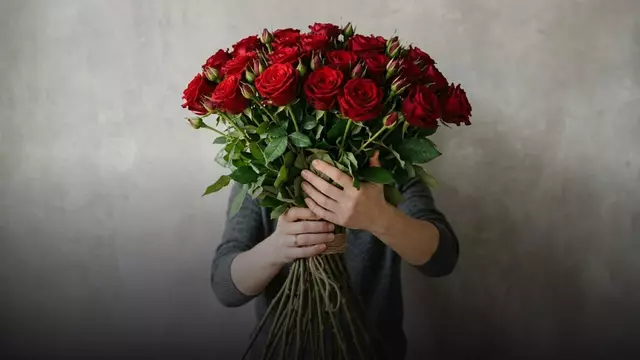
Roses grown at high elevation can have larger heads because cooler growing conditions may slow flower development, while sufficient light supports the sugars needed for growth. This can give suitable varieties more time to develop substantial blooms before harvest. Altitude itself does not enlarge a rose: genetics, greenhouse conditions and cultivation all influence the result.
For you as a bouquet buyer, the useful distinction is between where a rose grew and what that particular stem offers. A highland origin can help explain its appearance, but it does not tell you its exact diameter, fragrance or vase life. Look at the variety, the stage of opening and the condition of the flower before deciding whether a larger head is the feature you want.
Cooler conditions can give the flower more time to develop
Rose development responds to temperature. Within a suitable growing range, cooler conditions generally slow the progress from a developing bud to a flower ready for cutting. In a variety capable of producing a large head, that longer development period can contribute to a fuller bloom, provided the plant also receives enough light, water and nutrients.
Cool nights can also reduce respiration, the process through which a plant uses some of its stored sugars. Those sugars are produced through photosynthesis and support growth. The balance matters: a crop needs enough usable light during the day and suitable temperatures throughout its development. Simply making a greenhouse colder will not reliably produce a bigger flower.
Avoid picturing altitude as an extra ingredient absorbed by the rose. Higher locations often have different growing conditions from nearby lowlands, and growers manage those conditions for their crop. A well-grown rose at a lower elevation can still have a large head, while a high-altitude rose can remain relatively small because of its variety or cultivation.
Light helps growth, but stronger sunshine is not the whole answer
Light supplies the energy for photosynthesis, allowing leaves to make the carbohydrates used in stems, leaves and flowers. Where a highland growing area combines adequate light with moderate temperatures, that combination can favour substantial blooms. The amount of useful light reaching the plant matters more than a simple claim that mountain sunshine makes petals bigger.
Elevation alone does not tell you how much light a crop receives. Cloud cover, season, greenhouse coverings, shading and the spacing between plants all affect exposure. Excessive heat or light can also create stress. Growers therefore balance the environment; maximum sunshine and maximum flower size are not interchangeable goals.
Some highland rose-growing regions are also close to the equator, but elevation and latitude describe different things. Latitude influences seasonal day length, while elevation often influences temperature. If you want that geographical context, our guide to equatorial roses explains the term without treating every rose from those regions as identical.
Bouquets we can deliver




Variety sets the potential; growing and cutting shape the result
Genetics is central to head size. Rose varieties differ in petal number, petal length, flower shape and how widely they open. A densely petalled cup can look deep and substantial, while another rose spreads into a broad, flatter bloom. Both may be described as large, although they create quite different effects when you see them together in a bouquet.
Cultivation determines how well a plant expresses that potential. Water supply, nutrition, plant health, pruning and the number of developing shoots all affect growth. These factors work together, so neither a country name nor an elevation claim is enough to explain a particular stem. There is no useful universal rule that each increase in altitude adds a fixed amount to head size.
The stage at cutting changes what you see, too. A relatively closed head may widen as it opens, while a more advanced flower already displays much of its spread. Do not compare two roses only by their width in a photograph if one is tightly closed and the other is open. Ask about the intended appearance of the finished bouquet and allow for natural variation.
Choose large heads for their effect in the bouquet
Large-headed roses create bold areas of colour and make individual flowers easy to distinguish. That can suit a bouquet intended to feel generous and visually simple. Smaller heads can produce a finer texture, while branching spray roses give a different distribution of flowers. Head size is a design choice, rather than a complete measure of quality.
Consider the recipient's space as well as the flowers. A bouquet with broad, heavy heads needs a vase that supports the stems and keeps the arrangement stable. If the recipient has a narrow vase or limited table space, a compact arrangement may be easier to enjoy. More width is useful only when it fits the setting and the shape you have in mind.
When browsing the bouquets catalogue, describe the feature you actually want: prominent individual blooms, a rounded outline or a softer cluster of flowers. If large rose heads are important, say so when agreeing the details. A photograph can help communicate the look, but it cannot establish an exact bloom diameter or show how every flower will open.
Care for the stems that support those large flowers
A large head places weight on its stem, so good support and a steady water supply matter. Start with a clean vase, remove leaves that would sit below the waterline and recut the stem ends with a clean, sharp tool. Use cut-flower food according to its instructions if you have it. Choose a vase tall enough to support the arrangement without crowding the heads.
Keep the bouquet away from radiators, direct sun and strong draughts. Check the water level daily, because several leafy rose stems can use it quickly, and change the water if it becomes cloudy. Remove deteriorating leaves or petals from the water. These steps address hydration and hygiene; a high-altitude origin does not remove the need for ordinary rose care.
Do not use head size to predict how many days a rose will last. Variety, maturity, handling and conditions in the room all influence vase life. A bent neck can indicate a water-uptake problem, but it is not proof that the head was too large. Our rose vase-life guide explains the care decisions that matter after the bouquet reaches home.
Ordering a rose bouquet for someone in Russia
If you are choosing from abroad, begin with the recipient's city, address, occasion and preferred delivery time, then explain the bouquet style you want. Turboflora delivers flowers across Russia. City delivery costs 500 RUB; for remote districts and suburbs, the operator confirms the delivery price when confirming the order. Discuss the importance of large heads before finalising your choice.
Use WhatsApp to get help choosing a bouquet and agree the address, timing and card text; you can also arrange a photo of the bouquet before delivery. In large cities, express delivery is available 1–2 hours after order confirmation. Other options are an exact time with a tolerance of 30 minutes, windows of 09–12, 12–15, 15–18 or 18–21, and pre-ordering 1–30 days ahead.
Delivery is anonymous by default: the courier does not name the sender, and a card with your text is free. Sign the card if you want the recipient to know who sent it. The courier calls about 15 minutes before arrival. If the recipient is absent, we agree a second delivery that day or a handover to a neighbour or concierge with the sender's consent. Online payment uses CloudPayments; check the options displayed at checkout for your card. Availability and timing of delivery across Russia are confirmed for the chosen city, address, date and bouquet.
Frequently asked questions
Does higher elevation always produce a larger rose head?
No. Cooler conditions at elevation can contribute to larger heads in suitable varieties, but genetics, light and cultivation also matter. Altitude alone cannot predict the size of an individual flower.
Are large-headed roses guaranteed to last longer?
Head size does not guarantee vase life. The variety, condition at delivery, maturity and care at home all affect how long you can enjoy the flowers.
Will a tightly closed rose necessarily become a huge bloom?
No; its eventual shape and spread depend partly on the variety and its ability to open after cutting. A very tight head is not, by itself, proof of freshness or future size.
Does high-altitude growing make roses more fragrant?
You cannot infer fragrance from elevation or head size. Scent varies between rose varieties, so discuss fragrance specifically if it is important to your gift.
Can I order flowers to Russia with a foreign bank card?
Online checkout uses CloudPayments. Check the payment options displayed at checkout, because acceptance of every foreign card cannot be guaranteed.
Ready to send flowers?
Pick the city, choose the bouquet, and a local florist takes it from there.
Choose a city →