Flower Bouquet: How to Choose the Right One and Make It Last
A flower bouquet is a composed arrangement of cut flowers and greenery, tied or wrapped so it can be handed over and placed straight into a vase. A good one is chosen for the person and the occasion, built around one or two main flowers, and sized so it is a pleasure to hold rather than a burden. If you want to send one to someone in Russia, you can pick it in our bouquets catalogue and we deliver it ourselves.
Behind that simple definition there is a lot of craft. Florists think about structure, colour, the number of stems, the season and even how the bouquet will travel home on the metro. Below, I explain how a bouquet is put together, how to match it to the recipient, which customs matter if you are sending flowers to Russia, and what to do in the first hour after the bouquet arrives so it lasts as long as possible.
How a good bouquet is put together
Most bouquets are built in three layers. The focal flowers are the ones you notice first: roses, peonies, hydrangeas, ranunculus or lilies. Then come the secondary flowers, which add texture and fill the gaps: spray roses, eustoma, alstroemeria, chrysanthemums or carnations. Finally there is greenery and filler, such as eucalyptus, pistacia, ruscus or sprigs of gypsophila, which give the bouquet air and make the colours easier on the eye.
Florists usually build a hand-tied bouquet in a spiral, adding stems at a slight angle so they fan out evenly. This technique makes the bouquet stable, lets every flower show its face and means the stems sit neatly in a vase once the wrapping comes off. A bouquet that has been tied straight, with all the stems parallel, tends to look flat and collapses as soon as it is untied.
There are other formats too. Mono bouquets use a single type of flower, typically roses or tulips, and look clean and modern. Arrangements in a box or a basket stand on their own and are handy for offices or for recipients who do not have a large vase. Mixed bouquets combine several flowers and colours; done well they feel generous and seasonal, and our piece on whether mixed bouquets are tasteful or tacky explains how to tell a balanced mix from a cluttered one.
Matching the bouquet to the person and the occasion
Start with the recipient, not the flower. A partner can receive anything bold and romantic, and red roses still say exactly what they are meant to say. A mother or grandmother usually appreciates soft pinks, creams and peach tones, with a scent that is pleasant but not overwhelming. A colleague or a teacher calls for something neat and restrained: a compact bouquet in fresh colours, without obvious romantic symbolism.
Then think about the occasion. Birthdays suit cheerful, bright mixes or the recipient's favourite flower. Anniversaries suit roses or peonies in a colour that means something to the two of you. For a new baby, choose gentle colours and avoid strongly scented flowers, since the bouquet will stand near a newborn. For graduations and the first day of school, a tidy bouquet that a young person can easily carry is better than a heavy one; our guide to graduation and diploma bouquets goes through the details.
Colour does a lot of the talking. White reads as pure and festive, pink as tender, red as passionate, orange and yellow as joyful. In Russia, some older people still link yellow flowers with parting, so if you are not sure how the recipient feels about it, choose another palette for a grandmother or a formal occasion.
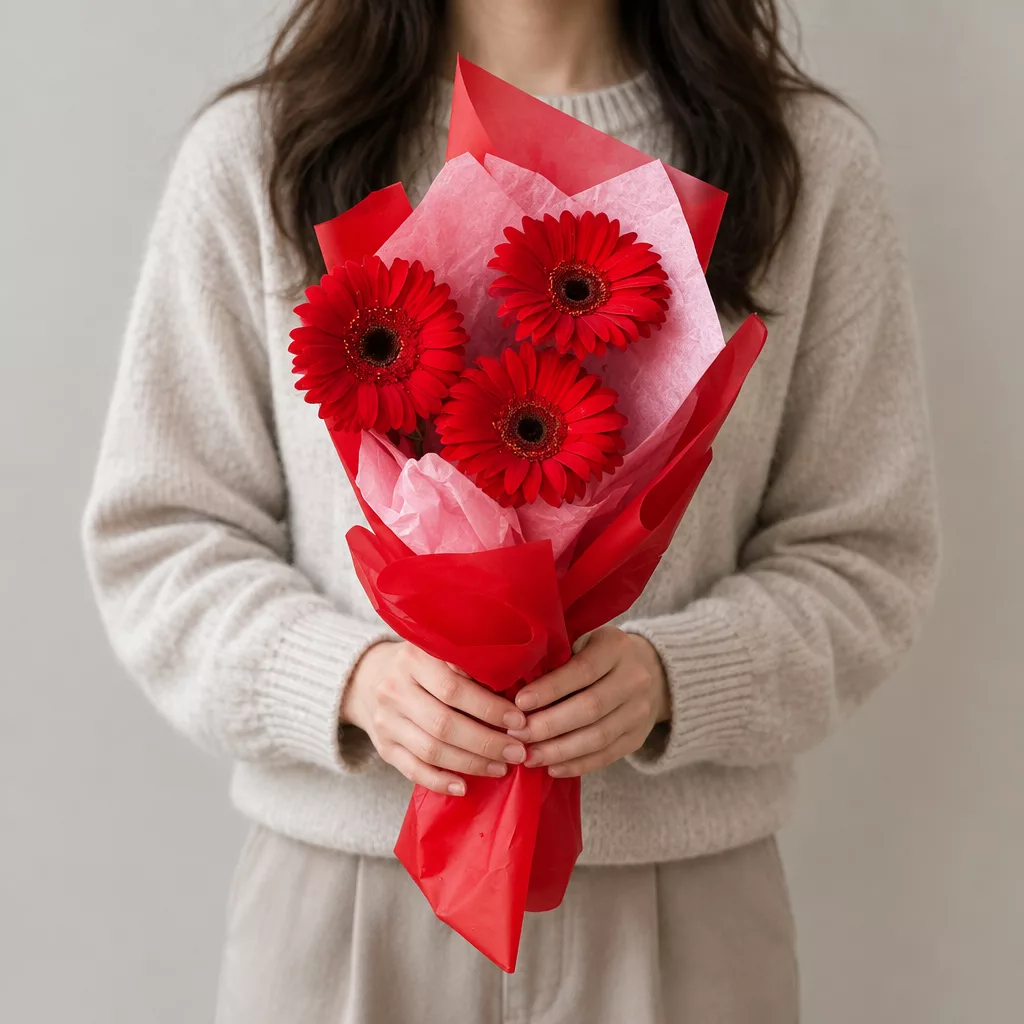
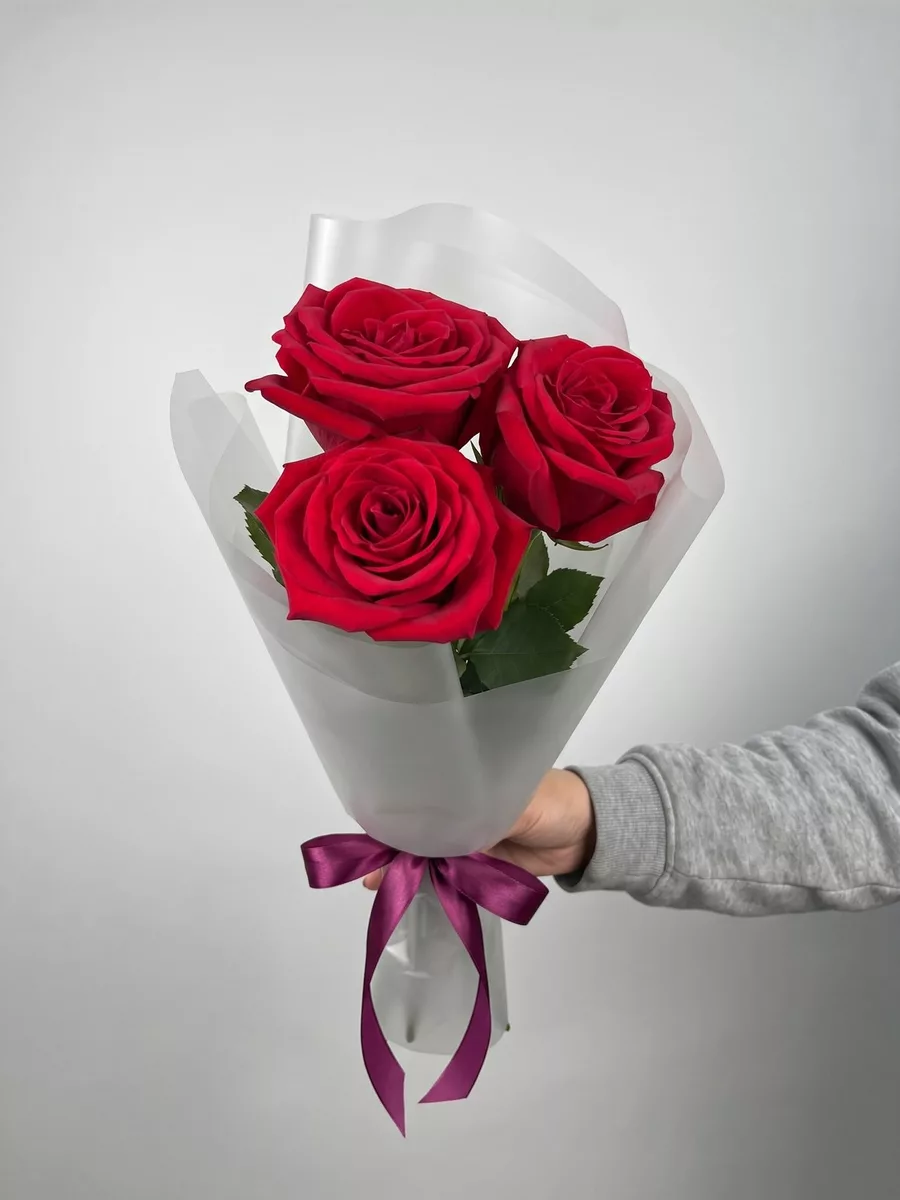
Bouquets we can deliver


Size and stem count: the Russian rules
In Russia, the number of stems matters. Odd numbers are given for happy occasions, and even numbers are associated with funerals and memorials. For a bouquet of one type of flower, choose 5, 7, 11, 15 or 25 stems rather than 6, 10 or 12. The rule is followed less strictly for large bouquets of over a dozen mixed flowers, where nobody counts, but for a small mono bouquet it is worth respecting, especially if the recipient is older.
Bigger is not always better. A bouquet of 101 roses makes a striking photo, but it is heavy, needs a very large vase and is difficult to carry. For most occasions, a well-composed bouquet of moderate size is more elegant and more practical. If you are unsure what counts as generous in Russia, our article on bouquet size norms gives concrete numbers for different occasions.
Height is the other dimension people forget. A tall bouquet with long stems needs a tall vase; a compact round bouquet fits a standard jar or jug. If you know the recipient lives in a small flat, a lower, rounder shape will be easier to place on a table or windowsill.
Seasonal flowers worth choosing
Roses, chrysanthemums, eustoma and alstroemeria are available all year, which is why they form the backbone of most bouquets. Other flowers have a season, and choosing them at their peak gives you better quality and a bouquet that feels of its moment.
In spring, tulips are the defining flower in Russia, especially around 8 March, International Women's Day, when they are everywhere. Late spring and early summer bring peonies, which are short-lived in the vase but spectacular while they last. Summer is the time for hydrangeas, sunflowers, garden roses and field-style mixes. Autumn suits warm tones: dahlias, chrysanthemums, berries and dried accents. In winter, bouquets lean towards roses, ranunculus, eucalyptus and festive greenery around the New Year.
If you have a particular flower in mind for a specific date, mention it when you order. Some flowers, such as peonies outside their season, are hard to find, and it is better to agree an alternative in advance than to be surprised.
Caring for a bouquet so it lasts
The first hour decides how long a bouquet will live. Take off the wrapping, remove any leaves that would sit below the waterline, and cut each stem by one or two centimetres at an angle with a sharp knife or secateurs. Put the bouquet into a clean vase with cool water straight away. Woody stems such as hydrangea and lilac benefit from a short vertical split at the base so they can drink more easily.
Change the water every day or two, rinse the vase and trim the stems again each time. Keep the bouquet away from radiators, direct sunlight and fruit bowls; ripening fruit releases ethylene, a gas that makes flowers age faster. A cool spot is always better than a warm one, and a bouquet left in a cooler room overnight will hold its shape for longer.
As the days pass, remove any flower that has faded so it does not affect the rest. Roses with drooping heads can often be revived by recutting the stem under water and leaving them in deep, cool water for a couple of hours. Tulips keep growing in the vase and bend towards the light, so turning the vase once a day keeps them standing straight.
Sending a bouquet to someone in Russia
If the person you want to surprise lives in Russia, you can order from abroad and we deliver the bouquet ourselves. City delivery costs 500 RUB; for remote districts and suburbs, the operator confirms the price when confirming the order. You pay online on the site with a bank card, SBP or Yandex Pay.
In large cities we can deliver 1-2 hours after the order is confirmed, at an exact time give or take 30 minutes, or in a time window: 09-12, 12-15, 15-18 or 18-21. You can also order 1-30 days ahead, which is wise before busy dates. The courier calls the recipient about 15 minutes before arrival, and if nobody is in, we agree a second delivery the same day or, with your consent, leave the flowers with a neighbour or concierge.
Delivery is anonymous by default, and a card with your text is free. To choose a bouquet, agree the card text or see a photo of the bouquet before it leaves, write to our manager on WhatsApp. We deliver bouquets across Russia in 1–2 hours.
Frequently asked questions
How many flowers should be in a bouquet?
For a bouquet of one flower type given in Russia, choose an odd number such as 7, 11 or 15. Even numbers are associated with funerals; in large mixed bouquets the count is not important.
How long does a flower bouquet last?
Most bouquets last from five days to a week or more with good care. Fresh water, trimmed stems and a cool spot away from radiators and fruit make the biggest difference.
What is the most universal bouquet?
A medium-sized bouquet in soft pink, white or cream tones suits almost any recipient. It works for birthdays, thank-you gifts and family occasions without any unintended meaning.
Can I send a bouquet to Russia from abroad?
Yes. Choose a bouquet in our catalogue, enter the recipient's address and phone, and pay online. We deliver it ourselves; city delivery costs 500 RUB.
Will the recipient know who sent the bouquet?
Only if you sign the card. The courier does not name the sender, so delivery is anonymous unless you choose otherwise.
Ready to send flowers?
Pick the city, choose the bouquet, and a local florist takes it from there.
Choose a city →