Gerbera Daisies in Russia: Bright, Affordable, and Long-Lasting
There is a moment when you want to send something genuinely cheerful — not formal, not understated, but openly joyful. Gerbera daisies do exactly that. Their wide, flat faces and saturated colours read as warmth the second someone opens the door, and they do it without asking you to spend a fortune. Across Russia, from Saint Petersburg to Novosibirsk, gerberas are one of the most reliably available cut flowers in every season, which makes them a practical choice as much as an emotional one.
Why Gerberas Work in Every Russian Season
Russia has long, cold winters and a flower import calendar that makes some blooms scarce and expensive between November and March. Gerberas are a consistent exception. Because the majority sold in Russia come from Dutch and Kenyan greenhouse operations with year-round growing cycles, supply stays steady even when local fields are frozen solid. You will find the same coral, crimson, yellow, and white heads in January that you find in June.
This matters more than it might seem. When you are ordering flowers for a birthday in February or a graduation in December, you do not want to hear that your first choice is out of season. With gerberas, that conversation rarely happens. The wholesale supply into major Russian cities, including Saint Petersburg and Moscow, is replenished multiple times a week, so freshness is not compromised by long storage.
Summer brings a slight shift: domestically grown gerberas from greenhouse operations in the Krasnodar region and the Moscow suburbs become available alongside imports, which can mean even better stem quality at that time of year. The heads are often slightly larger and the stems firmer because transport distances are shorter. If you are ordering in July or August, that regional availability is worth knowing — it tends to mean the flowers arrive standing straight rather than needing to recover from a long refrigerated journey.
Bouquets we can deliver

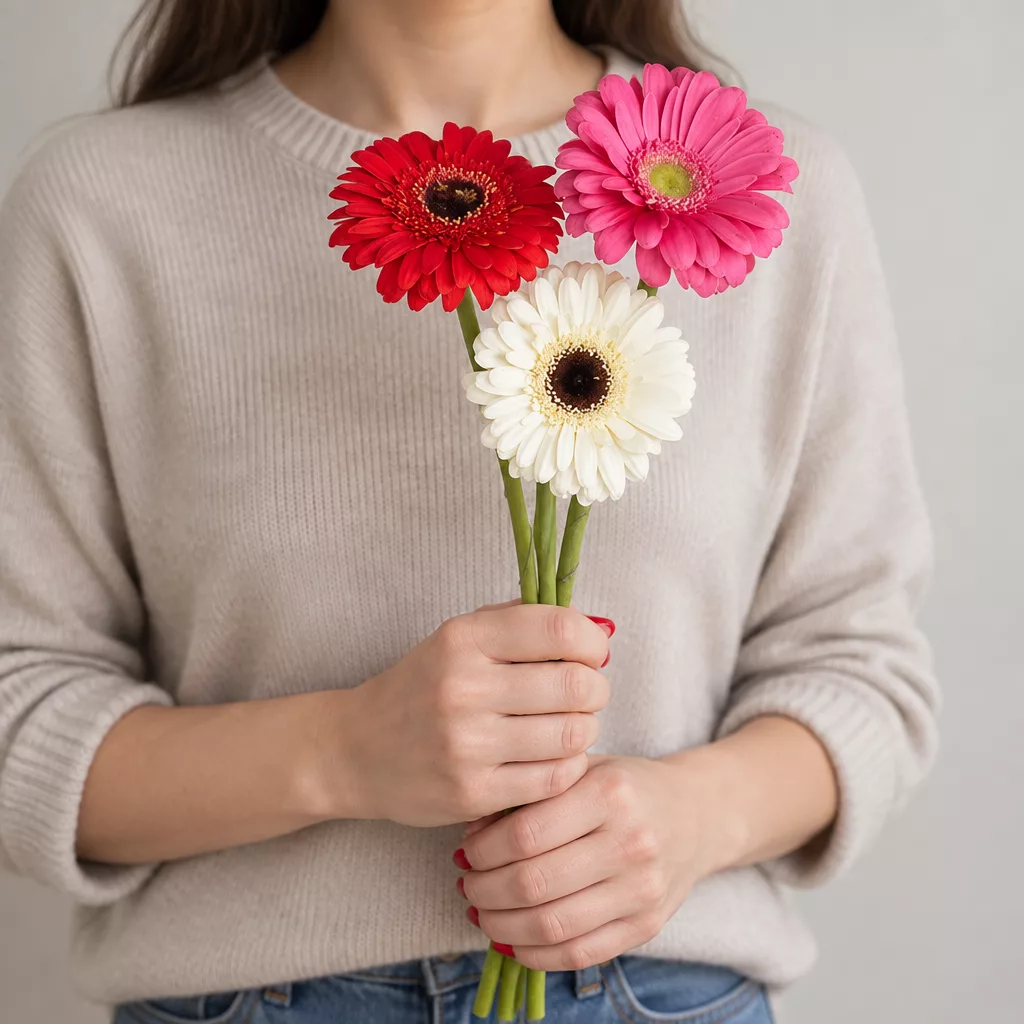

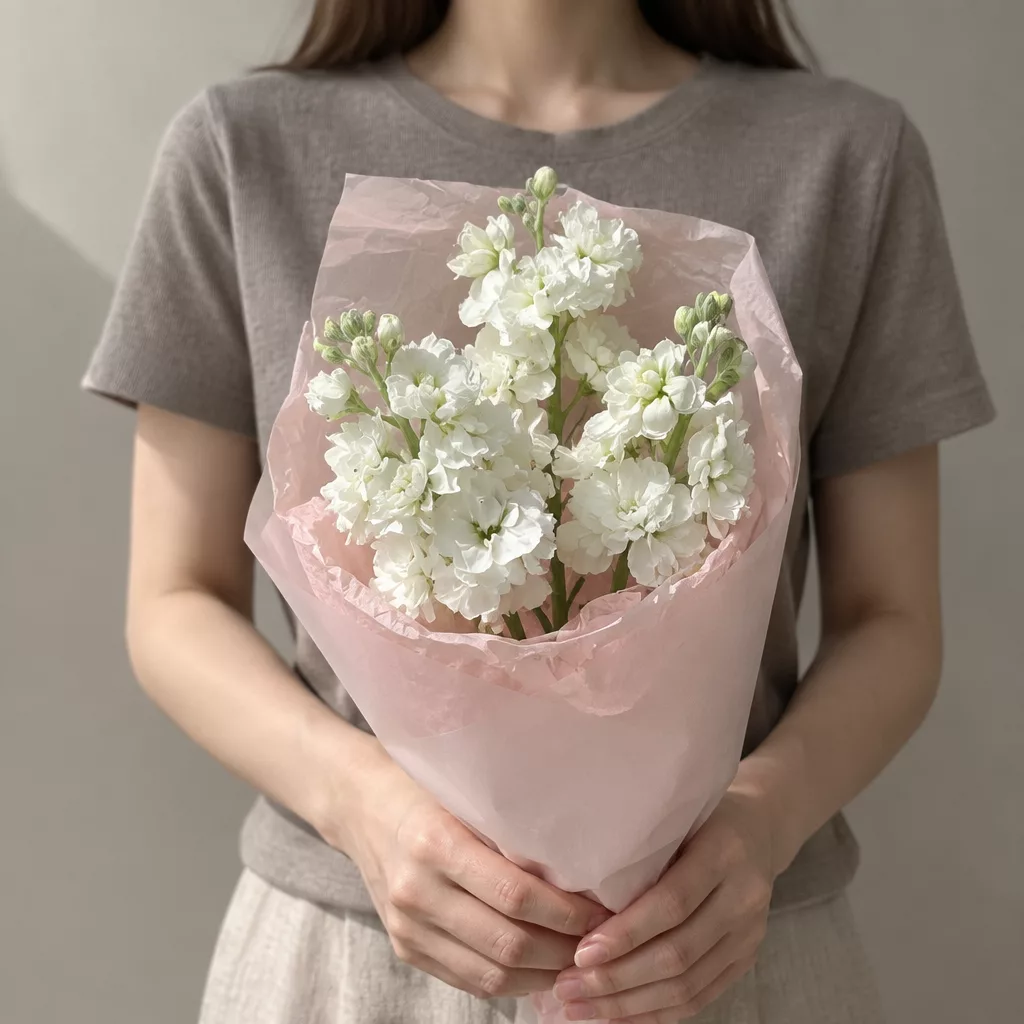
Choosing Gerberas for the Person, Not Just the Occasion
Before you think about colour or quantity, think about who is receiving the bouquet. Gerberas carry a distinct personality — they are energetic, unpretentious, and visually generous. They suit people who respond to colour and brightness rather than formal elegance. A colleague who keeps a lively desk, a grandmother who fills her balcony with potted plants, a friend who always arrives in something vivid — these are gerbera people.
For someone more restrained in taste, gerberas can still work beautifully, but they need a different framing. Mixed with white lisianthus or soft eucalyptus, a bold gerbera becomes the accent rather than the statement. The surrounding greenery and neutral tones borrow sophistication from the arrangement while the gerbera provides the emotional warmth. This is a combination florists use often when the recipient's aesthetic is quieter but the sender still wants impact.
Children's celebrations are one of the strongest matches for gerberas in Russia. At school graduations — particularly the end of the academic year in late May, when students present flowers to teachers — bright mixed gerbera bouquets are extremely common and genuinely appreciated. Teachers receive dozens of bouquets on those days, and a well-composed gerbera arrangement stands out precisely because of its colour confidence. The same logic applies to birthdays for younger recipients: the flower reads as festive and generous without the stiffness that roses or lilies can carry in an informal setting.
Colour Combinations That Make Gerberas Shine
Gerberas are sold in a range of colours that spans from pale cream and soft peach all the way to deep burgundy, electric orange, and near-black centres on bicolour varieties. The most popular in Russian retail are the warm tones — red, orange, coral, and yellow — because they photograph well and read as celebratory in almost any context. Pink gerberas, particularly the deeper magenta shades, sell strongly around March 8th, which is International Women's Day and one of the biggest floral holidays in Russia.
When building a combination, contrast is more interesting than matching. Orange gerberas with deep purple statice and silver-grey dusty miller create something that looks intentional and rich. Yellow gerberas paired with white gypsophila and a few stems of blue delphinium give a fresh, summery result that works for both indoor and outdoor celebrations. Red gerberas alongside dark green ruscus and a single white lily make a bold, festive composition suitable for a significant birthday.
One combination to approach carefully is mixing gerberas of many different colours in equal quantities. It can tip into a chaotic look if there is no tonal anchor. A better approach is to choose one dominant colour — say, coral — and support it with one or two colours that sit close on the colour wheel, such as yellow and peach. Adding a neutral like white or soft green as a buffer keeps the arrangement feeling curated rather than random. A working florist thinks about this balance every time, even when the brief is simply 'something bright and cheerful.'
Budget-Friendly Without Looking Budget
Gerberas are among the most affordable cut flowers available in Russia, and this is one of their genuine advantages rather than a compromise. The price point means you can order a larger, more visually generous bouquet for the same spend you might put toward a modest rose arrangement. Volume matters in flowers — a full, rounded bouquet of twenty gerberas makes a stronger impression than a sparse grouping of ten roses at a similar or higher cost.
The key is presentation. Gerberas benefit enormously from being arranged with care rather than bundled loosely. When stems are cut to slightly different lengths and the heads are layered — some forward, some angled back — the bouquet gains depth and looks considerably more expensive than it is. Adding foliage that has texture, such as monstera leaves or leather fern, frames the gerbera heads and gives the arrangement a finished quality.
For corporate gifting, gerberas work particularly well because they do not carry the romantic associations that roses do. Sending a bright, well-composed gerbera arrangement to a business contact on their birthday or to a team on a project milestone reads as warm and thoughtful without crossing into personal territory. In Russian professional culture, flowers are given more freely than in some Western contexts — it is not unusual to receive flowers from a colleague or a client — and gerberas fit that register comfortably. They say celebration without saying anything more complicated than that, which is often exactly what a sender needs.
Vase Life: What Gerberas Actually Need to Last
A healthy gerbera, properly cared for, will last between ten and fourteen days in a vase. That is a strong performance for a cut flower, but it requires a few specific conditions that many people skip. The most important is water depth. Gerberas have hollow stems that collapse easily if submerged too deeply. Keep the water level at no more than five to eight centimetres — just enough to cover the base of the stem. Deeper water causes the stems to rot and the heads to droop within two or three days.
Cut the stems at an angle with a sharp knife, not scissors, every two days. Scissors crush the stem tissue and restrict water uptake. Recut under running water if possible, as this prevents an air bubble from forming in the stem the moment it is cut. Remove any leaves that would sit below the waterline — they decompose quickly and cloud the water with bacteria that shorten vase life significantly.
Temperature is the other major factor. Gerberas dislike heat. Keep them away from radiators, sunny windowsills, and the tops of televisions or appliances. In a Russian apartment during winter, this can be tricky because central heating runs hot and rooms can be quite warm. A spot near an interior wall, away from heat sources, is ideal. If you have a cool hallway or an unheated room that stays above five degrees Celsius, that is an excellent overnight location for the vase. Refreshing the water every two days rather than every three makes a noticeable difference in how long the colour stays vivid.
Common Mistakes That Shorten Gerbera Life
The most frequent mistake people make with gerberas is treating them like roses. Roses tolerate deep water and full stem submersion. Gerberas do not. If you receive a gerbera bouquet and immediately place it in a tall vase filled to the brim, the stems will begin to soften and bend within twenty-four hours. This is not a sign that the flowers were poor quality — it is a care error that happens constantly and is entirely preventable.
Another common problem is placing gerberas near fruit. Ripening fruit releases ethylene gas, which accelerates ageing in cut flowers. A bowl of apples or bananas on the same kitchen counter as your gerbera vase will visibly shorten their life. Move one or the other — it sounds like a small detail but the effect is real and measurable over a few days.
Direct sunlight is frequently misunderstood. People assume that bright flowers want bright light. In fact, cut gerberas in a sunny window will fade and wilt faster than those kept in indirect light. The colour bleaches, the petals lose their firmness, and the stems weaken from the heat. Bright ambient light is fine and actually helps the heads stay open and upright, but direct sun through glass is damaging.
Finally, the flower food sachets that sometimes accompany bouquets are worth using. They contain a mild biocide that slows bacterial growth and a small amount of sugar that feeds the flower. Many recipients discard them without thinking. Dissolving the sachet in the vase water according to the instructions is a simple step that can add two or three days to vase life — which, across a two-week lifespan, is a meaningful extension.
Occasions Where Gerberas Are the Right Call
Gerberas are occasion-flexible in a way that fewer flowers are. They are festive without being formal, which opens them to a wide range of sending contexts. Birthdays are the clearest fit — the colour energy matches the celebratory mood, and the long vase life means the recipient enjoys them well beyond the day itself. A bouquet that still looks beautiful a week later is a gift that keeps giving, and recipients notice that.
In Russia, March 8th — International Women's Day — is the single largest flower-giving occasion of the year, larger than Valentine's Day by volume. On this day, flowers are given not only to romantic partners but to mothers, grandmothers, colleagues, teachers, and friends. The demand is enormous and the sentiment is broad rather than romantic. Gerberas are perfectly suited to this occasion: they feel celebratory and warm without implying anything beyond genuine appreciation and affection.
New baby celebrations are another strong match. When a family welcomes a child, friends and relatives in Russia typically visit with flowers and gifts. Soft pink or white gerberas, perhaps mixed with pale yellow solidago or white waxflower, create an arrangement that feels tender and joyful without the formality of lilies. The brightness signals happiness, and the approachable nature of the flower suits the informality of a home visit.
Housewarming occasions also work well. When someone moves into a new apartment — a significant life event in Russia, often marked with a gathering of close friends — a bold gerbera arrangement in a warm colour is a welcoming gesture. It fills a new space with colour and life immediately, which is a generous and practical gift at once.
Gerberas earn their place in a florist's repertoire not through rarity or prestige but through reliability and genuine emotional effect. They are available when other flowers are not, they last longer than most people expect, and they communicate warmth and celebration without requiring a complicated message. Whether you are sending across Saint Petersburg on a winter afternoon or arranging a birthday delivery to a recipient in Kazan, a well-composed gerbera bouquet is one of the most dependable choices you can make — for the recipient, for the occasion, and for the lasting impression it leaves long after the door closes. We deliver bouquets across Russia in 1–2 hours.
Frequently asked questions
Are gerbera daisies available for delivery in Russia during winter?
Yes, gerberas are available year-round in Russia because the majority are grown in Dutch and Kenyan greenhouses with continuous production cycles. Supply into major Russian cities is replenished several times a week regardless of season, so winter availability and freshness are not significantly different from summer.
How long will gerberas last in a vase after delivery?
With proper care — shallow water of five to eight centimetres, stems recut every two days, and placement away from heat and direct sunlight — gerberas typically last ten to fourteen days. Using the flower food sachet included with a bouquet can extend vase life by an additional two to three days.
What occasions are gerberas most suitable for in Russia?
Gerberas suit birthdays, International Women's Day on March 8th, school graduations, new baby celebrations, and housewarmings particularly well. They are energetic and celebratory without being formal, which makes them appropriate for a wide range of personal and professional gifting contexts in Russian culture.
Can gerberas be combined with other flowers, or do they work better alone?
Gerberas combine very well with other flowers. Pairing them with lisianthus or eucalyptus softens their boldness for more restrained recipients. Gypsophila adds lightness, while ruscus or leather fern provides a structured frame. The key is choosing one dominant gerbera colour and supporting it rather than mixing too many colours in equal proportions.
Why do gerbera stems bend and droop so quickly sometimes?
Drooping usually happens because the vase water is too deep. Gerberas have hollow stems that rot when submerged more than five to eight centimetres. Placing them in a tall, full vase — the way you might treat roses — causes rapid stem collapse. Shallow water and a sharp angled cut every two days prevents this entirely.
Ready to send flowers?
Pick the city, choose the bouquet, and a local florist takes it from there.
Choose a city →