Sending Flowers to a Sick Russian Colleague: What to Choose and What to Avoid
You want to do something kind for a Russian colleague who is unwell, and flowers feel like the right gesture — warm, personal, and immediate. But if you are not familiar with Russian customs around blooms and numbers, a well-meaning bouquet can accidentally send the wrong signal. This guide walks you through exactly what works, what to skip, and how to make the delivery feel genuinely thoughtful rather than awkward.
Why Flowers Matter Differently in Russia Than You Might Expect
In many Western countries, get-well flowers are chosen almost entirely by colour and size. In Russia, the choice carries a layer of social meaning that goes beyond aesthetics. Certain flowers are closely associated with funerals, certain colours carry weight, and even the number of stems in a bouquet communicates something specific to the recipient. None of this is superstition in a dismissive sense — it is simply a living part of the culture, and your Russian colleague will notice the details whether they mention it or not.
The good news is that the rules are not complicated once you know them. A few clear principles cover most situations, and within those principles there is still plenty of room to choose something genuinely beautiful. Russian florists work with these conventions every day, so leaning on that expertise is exactly the right approach.
It is also worth understanding that a get-well gesture in Russia is taken seriously. Flowers sent to a sick person are read as a sign of real care, not a routine formality. That means the bouquet you choose reflects your relationship with that person. A small, considered arrangement made with the right flowers will land far better than a large generic bunch assembled without thought. Start with intention, and the rest follows naturally.
Bouquets we can deliver


The Number Rule: Always Send an Odd Number of Stems
This is the single most important practical rule, and it is non-negotiable in Russian flower culture. Even numbers of flowers — two, four, six, eight — are reserved for funerals and mourning. Sending an even-numbered bouquet to someone who is already unwell would be genuinely distressing for many Russian recipients, even those who consider themselves unsentimental about such things. The association is that deeply embedded.
Always choose an odd number: three, five, seven, nine, eleven, or more. Most professional arrangements are built around odd counts by default, but it is worth confirming this when you place your order, especially if you are customising a bouquet or adding single stems to an existing design.
The rule applies to the main flowers, not to every individual element. If a bouquet contains seven roses and a scattering of small gypsophila sprigs, nobody will count the gypsophila. The focal flowers are what matters. So when you order, specify the number of the primary blooms — seven tulips, nine spray roses, five gerberas — and you are covered.
One practical note: if you are ordering a pre-designed arrangement and the description does not specify a stem count, ask. A good florist will either confirm the count is odd or adjust it for you without any fuss. At Turboflora we build all get-well arrangements around this convention automatically, but it is always sensible to double-check when the occasion is sensitive.
Flowers to Avoid: What Carries the Wrong Association
Yellow flowers occupy a complicated space in Russian culture. Traditionally, yellow blooms — particularly yellow roses and yellow chrysanthemums — were associated with separation, infidelity, and loss. This association is softening among younger Russians in larger cities, but it is still strong enough that sending yellow flowers to a sick colleague carries real risk of misreading. When in doubt, leave yellow out entirely, or use it only as a very minor accent within a predominantly different-coloured bouquet.
Chrysanthemums deserve a specific mention. In Western Europe and North America, chrysanthemums are cheerful, long-lasting, and widely used in get-well arrangements. In Russia, they are primarily a funeral flower. A large bunch of white or yellow chrysanthemums sent to a hospital room would genuinely alarm most Russian recipients. Avoid them entirely in this context.
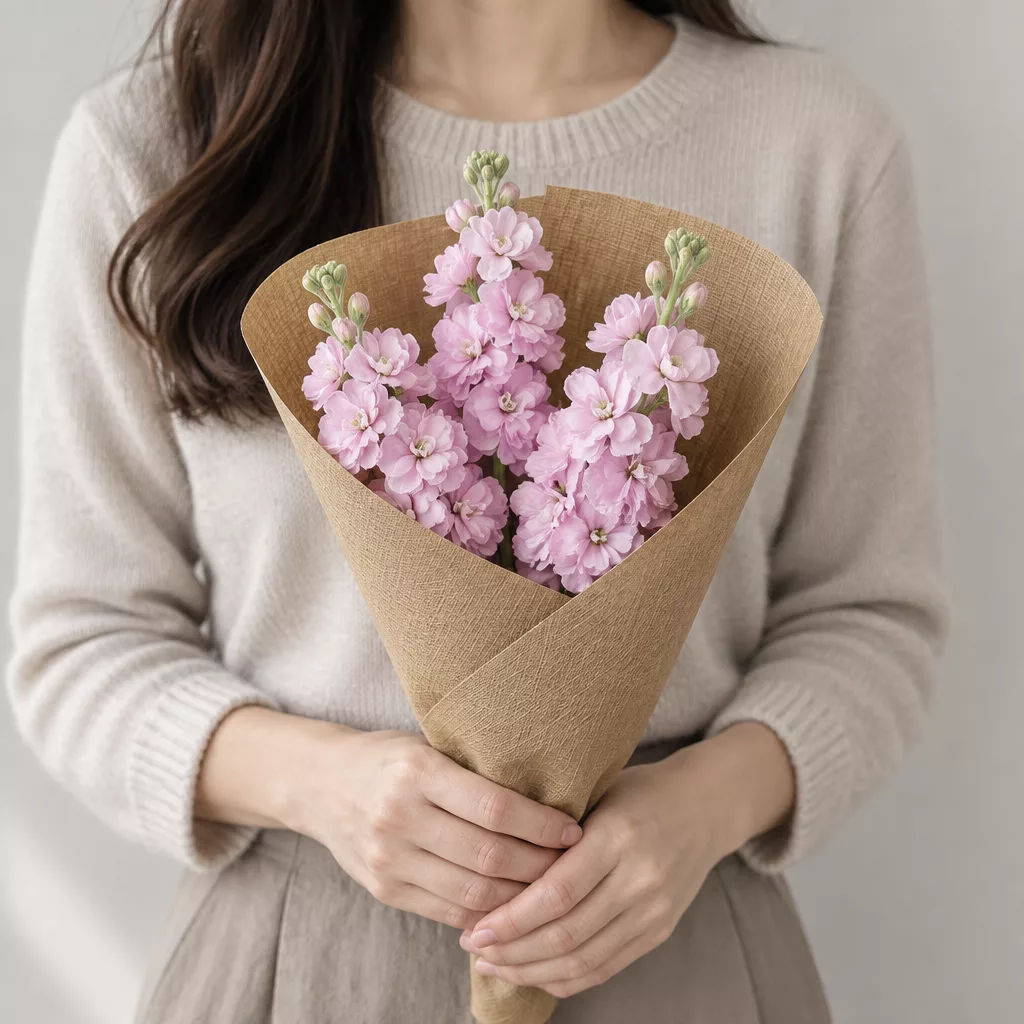
White flowers as a solo colour can also feel cold or ceremonial to Russian sensibilities, though this is less absolute than the chrysanthemum rule. A bouquet that is entirely white — white roses, white lilies, white tulips — may read as austere rather than warm. Mixing white with soft pink, peach, or pale lavender immediately changes the emotional register.
Lilies are beautiful and popular in Russia, but heavily scented varieties like Oriental lilies can be overwhelming in a small room or a hospital environment where the recipient may already feel sensitive to strong smells. If you want to include lilies, choose Asiatic varieties, which are nearly scentless, or use them sparingly.
Flowers That Work Beautifully as a Get-Well Gesture
Roses in soft, warm tones — blush pink, coral, peach, cream — are genuinely hard to get wrong. They read as caring and considered without any cultural complications. A bouquet of seven or nine garden-style roses in these shades, loosely arranged with some greenery, is one of the most reliably well-received options you can choose. Spray roses, which produce multiple small blooms per stem, add a sense of abundance even in a smaller bouquet.
Tulips are another excellent choice, particularly in spring. They feel fresh and optimistic, which is exactly the emotional note you want to strike for someone who is unwell. Pink, purple, and peach tulips all work well. Avoid deep red tulips, which can feel too romantic for a colleague relationship, and yellow tulips for the reasons already discussed.
Gerberas in warm shades — orange, coral, soft red — bring a brightness that feels genuinely cheerful without being overwhelming. They are sturdy flowers that hold well at room temperature, which matters if the bouquet is being delivered to a home rather than a hospital where conditions are more controlled.
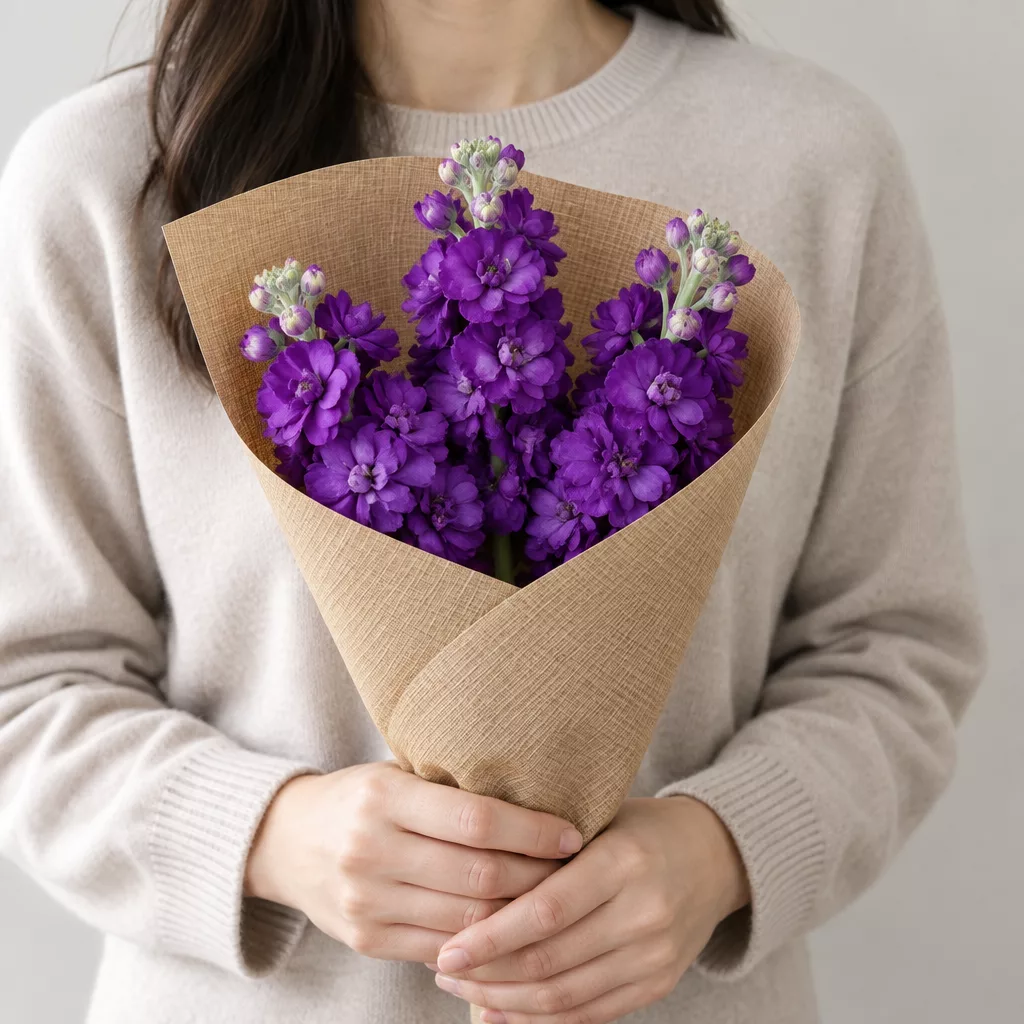
Freesias are worth considering if the recipient enjoys fragrance. They are lightly and pleasantly scented rather than heavy, and they come in purple, white, pink, and yellow. Used as a secondary flower alongside roses or tulips, they add a delicate sophistication. A combination of five blush roses and a handful of purple freesias, for example, is both culturally safe and genuinely lovely.
Choosing by the Situation: Home Recovery Versus Hospital Room
The delivery location shapes your choice more than most people realise. A colleague recovering at home has space, a vase, and control over their environment. You can send something a little more structured and generous — a hand-tied bouquet of nine stems with some volume, or a small arrangement in a low ceramic vessel that does not need a vase at all. Flowers in a vessel are particularly thoughtful because the recipient does not have to manage anything while they are feeling unwell.
A hospital room is a different environment. Space is limited, nursing staff may have restrictions on strong scents or loose pollen, and the recipient may be moving between rooms or going home sooner than expected. In a hospital context, choose compact, lower-pollen flowers — Asiatic lilies rather than Oriental, spray roses rather than large-headed garden roses. Avoid anything with heavy fragrance. A small, tight bouquet of five or seven stems is more practical than something sprawling.
Temperature matters too. Flowers delivered in Russian winter — and Saint Petersburg winters run from November through March — need to be transported in properly insulated packaging. Delicate flowers like anemones or ranunculus can suffer in transit if temperatures drop below freezing even for a short period. Sturdier choices like roses and gerberas handle cold transport far better. When you order, mention that the delivery is going to a home or hospital so the packaging can be appropriate for the conditions that day.
Presentation and the Small Details That Make a Real Difference
The wrapping and presentation of a get-well bouquet in Russia tends to be neat and considered rather than extravagant. Loud cellophane and oversized bows can feel impersonal, as though the bouquet came off a supermarket shelf. A clean kraft paper wrap, a ribbon in a complementary colour, and a small card go much further in signalling genuine care.
The card message is worth thinking about. Russian colleagues will appreciate warmth and directness — something like wishing them a speedy recovery and expressing that they are missed. Avoid anything too formal or corporate-sounding, which can feel cold in this context. If you are writing in Russian, a simple phrase is always better than an elaborate one translated awkwardly. If you are writing in English to a colleague who speaks it, that is perfectly acceptable and often appreciated as a personal touch.
If the bouquet is going to a home address, consider whether the recipient lives alone. A flower food sachet included with the bouquet is a small but useful addition — it extends vase life by several days and means the recipient does not have to think about it. Most professional florists include this as standard. At Turboflora, every bouquet goes out with care instructions and a flower food sachet so the flowers last as long as possible.
Timing the delivery thoughtfully also matters. Mid-morning arrivals tend to work best for someone at home recovering — early enough to brighten the day, late enough not to disturb rest.
Care Tips to Pass On: Helping the Flowers Last
A get-well bouquet should last long enough to genuinely lift the mood during recovery, not wilt within two days. The difference is almost entirely in how the flowers are handled on arrival. Passing on a few simple care tips — either on the card or in a brief message — is a thoughtful addition that most recipients genuinely appreciate.
Fresh water and a clean vase are the starting point. Stems should be cut at an angle under running water before going into the vase — this opens the stem's water channels and makes an immediate difference to longevity. The cut should be about two centimetres from the bottom, at roughly a forty-five-degree angle. Removing any leaves that would sit below the waterline prevents bacterial growth that shortens vase life.
Flowers in a warm room will fade faster than those kept in a cooler spot. A bedroom or living area away from direct sunlight and radiators is ideal. During Russian winters, a slightly cooler room is actually an advantage — roses and tulips can last ten days or more in the right conditions. Changing the water every two days and re-cutting the stems each time will extend life noticeably.
For tulips specifically, it helps to know that they continue to grow in the vase and will lean toward light sources. Rotating the vase occasionally keeps the arrangement looking balanced. Gerberas benefit from shallow water — about five centimetres — rather than a full vase, as their stems can rot if submerged too deeply. These small details make the difference between a bouquet that lasts five days and one that lasts nearly two weeks.
Sending flowers to a sick Russian colleague is a genuinely kind gesture, and getting it right is not complicated once you understand the core conventions. Keep the stem count odd, steer away from chrysanthemums and strongly yellow arrangements, choose warm and soft tones, and think about where the flowers are going before you finalise your choice. The effort you put into those details is exactly what your colleague will sense when the bouquet arrives — that someone thought carefully about them, not just about sending something. We deliver bouquets across Russia in 1–2 hours.
Frequently asked questions
Is it appropriate to send flowers to a Russian colleague in hospital?
Yes, it is a well-established gesture of care in Russia. Choose compact, low-scent flowers like Asiatic lilies or spray roses, keep the arrangement small enough for a bedside table, and confirm the hospital allows flowers before ordering. Some wards have restrictions on scent or pollen, so it is worth a quick check.
Can I send a white bouquet as a get-well gift in Russia?
An entirely white bouquet can feel austere or ceremonial in Russian culture. It is not taboo in the way chrysanthemums are, but mixing white with soft pink, peach, or pale lavender makes the arrangement feel warmer and more personal. A little colour goes a long way in shifting the emotional tone of an otherwise white bouquet.
Why do Russian people count flower stems, and does it really matter?
Even numbers of flowers are associated with funerals in Russia, so an even-numbered bouquet sent to someone who is ill can cause real distress. The association is cultural and deeply ingrained. Always choose an odd number of main stems — five, seven, nine — and your bouquet will be received exactly as you intended it.
How long will a get-well bouquet last if the recipient follows basic care steps?
Roses and tulips kept in clean water, away from direct sunlight and heat sources, typically last seven to ten days. Gerberas last five to seven days. Cutting stems at an angle every two days and changing the water extends vase life noticeably. Including a flower food sachet with the delivery gives the flowers the best possible start.
What flowers are cheerful and culturally safe to send a Russian colleague who is recovering?
Blush pink or coral roses, peach or purple tulips, orange or coral gerberas, and lightly scented freesias in purple or pink all work well. Combine two of these in warm tones for a bouquet that feels bright and optimistic. Keep the count odd, avoid chrysanthemums and yellow as a dominant colour, and the gesture will land warmly.
Ready to send flowers?
Pick the city, choose the bouquet, and a local florist takes it from there.
Choose a city →