Sending Flowers to a VIP Client in Russia? Choose Grade and Size Carefully
A bouquet arriving at a senior executive's office in Saint Petersburg or Moscow says something before a single word is spoken. It tells them how seriously you take the relationship, how well you read the culture, and whether you understand that in Russia, scale and quality are not vanity — they are respect made visible. Getting this right is not complicated, but it does require knowing a few things that most guides skip entirely.
Why Quantity Carries Weight in Russian Business Culture
In many Western contexts, a tight posy of twelve roses reads as tasteful and restrained. In Russian professional culture, that same bouquet can read as underwhelming, even dismissive. Generosity with flowers is not considered excessive here — it is considered appropriate to the occasion and the person. A VIP client who receives a small arrangement may not say anything, but they will notice.
The baseline expectation for a meaningful business gift starts at around twenty-five stems for a bouquet, and more often sits at thirty-five to fifty-one. Odd numbers are traditional in Russia for living recipients — even numbers are reserved for mourning, and sending an even count to a valued client is one of the most common and costly mistakes foreign companies make.
Beyond stem count, the visual volume of the bouquet matters. Russian recipients read a full, generous arrangement as a sign of genuine investment. This is why florists working with corporate clients tend to build outward — adding complementary greenery, secondary blooms, and layered wrapping — rather than presenting a spare, minimalist bundle. The goal is abundance that feels intentional, not accidental. When a courier arrives at a business address with a bouquet that fills the doorway slightly, that impression lands before the card is even opened.
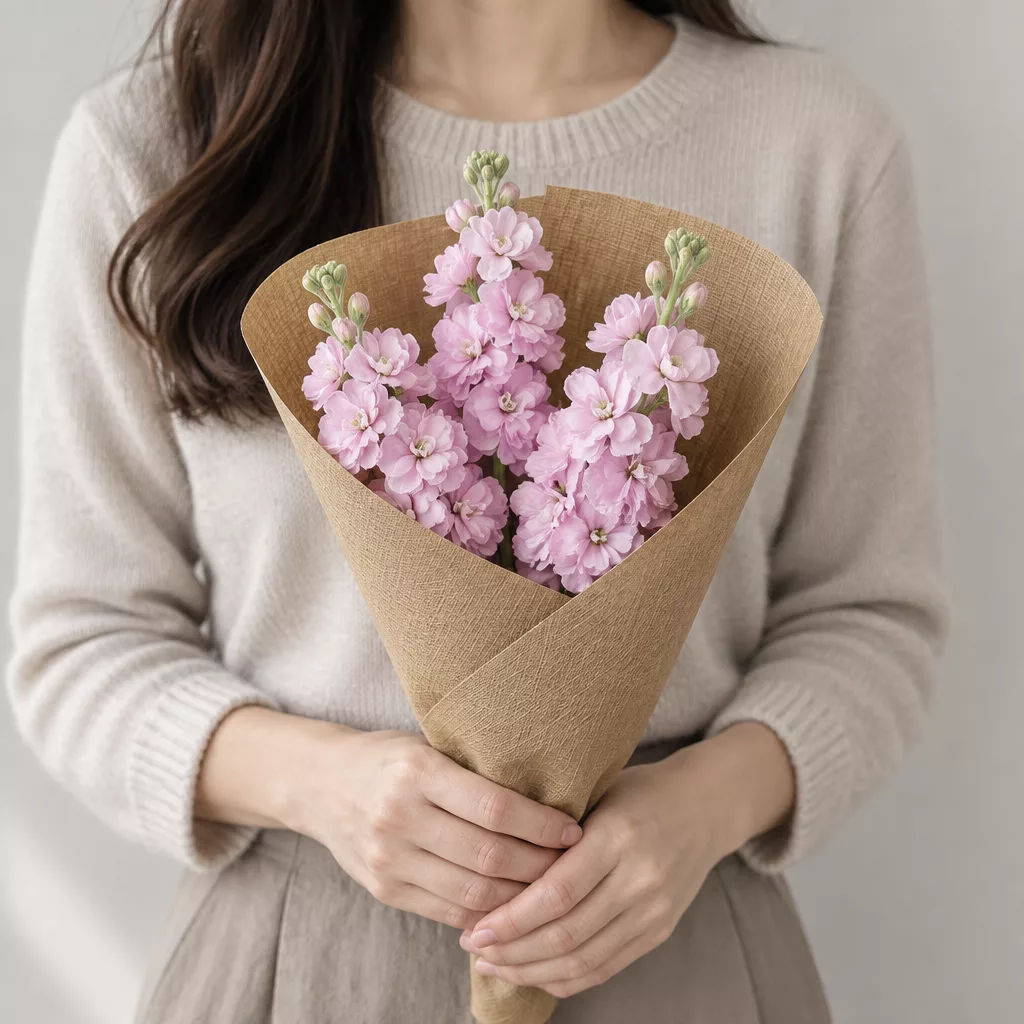
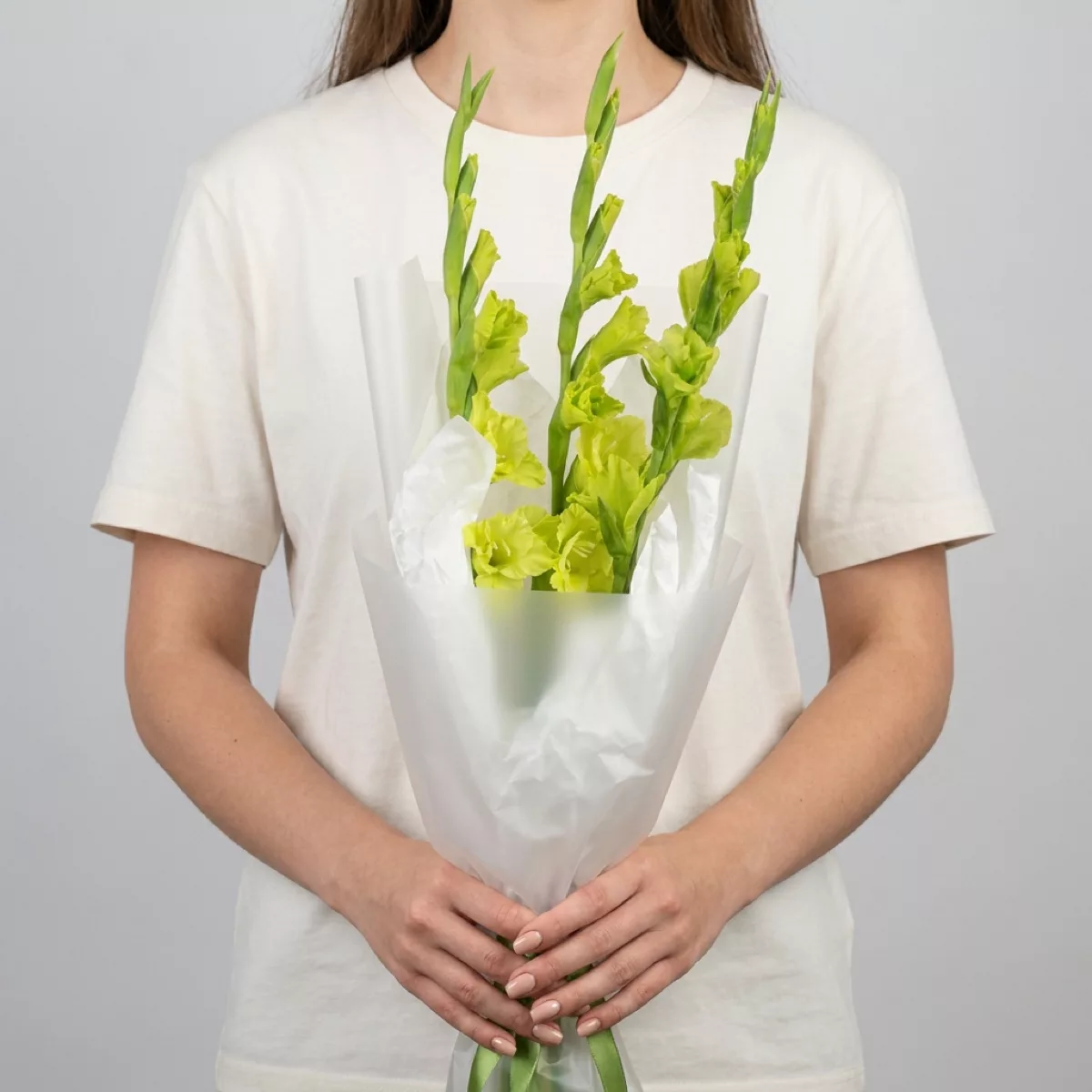
Bouquets we can deliver


Understanding Flower Grades: What Premium Actually Means
Flowers are graded by stem length, head size, and the consistency of the growing conditions that produced them. For roses, the most commonly gifted flower in Russian corporate contexts, grade is expressed in stem length: forty centimetres is a standard supermarket rose, sixty centimetres is a solid retail grade, and eighty to one hundred centimetres is where premium territory begins. A one-hundred-centimetre Ecuadorian rose has a head roughly the size of a tennis ball and a stem that stays rigid for days. That physical presence is immediately obvious to a recipient who knows flowers — and many Russian executives do.
For peonies, which are enormously popular for gifting between May and July, grade is about bud development and petal density. A premium peony bud should feel slightly soft when pressed — firm enough to survive transport, open enough to bloom within twenty-four hours of arrival. Ranunculus, which have become a favourite for sophisticated arrangements over the past several years, should have layered, papery petals with no browning at the edges.
Freesia is worth mentioning because it is often used as filler in lower-budget work, but high-grade freesia with multiple open florets per stem and a strong fragrance actually elevates a bouquet significantly. The scent in a closed office or reception area becomes part of the gift. Choosing grade is not about showing off — it is about ensuring the flowers still look exceptional on day three, not just day one.
Matching the Bouquet to the Client's Status and Role
Not every VIP client occupies the same position, and the bouquet should reflect that understanding. A regional director of a mid-sized company and the chairman of a major holding group both deserve premium treatment, but the scale and composition should differ. Sending identical arrangements regardless of hierarchy can actually signal that you have not thought carefully about the individual.
For senior executives and founders, think in terms of a statement piece: fifty-one long-stem roses, or a grand mixed arrangement anchored by garden roses, lisianthus, and eucalyptus, with a stem count that makes it genuinely difficult to carry in one hand. The wrapping should be substantial — layered kraft and matte film, tied with satin ribbon — because the unboxing or unwrapping is itself part of the experience.
For department heads, key account managers, or clients you are cultivating rather than celebrating, thirty-five stems of a single premium variety, presented cleanly, works well. Monobouquets — one variety, one colour, impeccable grade — read as confident and considered rather than budget-conscious. A monobouquet of forty white peonies in full bud is one of the most striking things you can send to an office, and it photographs beautifully, which matters in an era when gifts often appear on social media or internal communications.
Always consider whether the recipient is male or female. Russian gifting culture does make this distinction: men receive flowers far more readily than in many Western countries, but the palette tends toward darker, more architectural arrangements — deep burgundy roses, tropical anthuriums, graphic protea.
The Best Varieties for Corporate Gifting and Why They Last
Longevity matters enormously in a corporate context. A bouquet in an office is seen by colleagues, visitors, and the recipient themselves over multiple days. Flowers that wilt by the second afternoon undermine the impression entirely, no matter how beautiful they were on arrival.
Roses from Ecuador and Kenya, particularly varieties like Explorer, Mondial, and Red Naomi, are workhorses of premium corporate gifting for good reason. Grown at altitude in controlled conditions, they have dense petals that resist bruising during courier delivery and a vase life of ten to fourteen days when conditioned properly. They arrive in bud and open gradually, which means the bouquet looks different — and keeps rewarding attention — across a full working week.
Garden roses, such as David Austin varieties like Juliet or Keira, are a more contemporary choice and signal real floral knowledge on the sender's part. They have a softer, more romantic silhouette than hybrid tea roses, and their fragrance is considerably stronger. They are more delicate in transit, which is precisely why choosing a florist who delivers quickly and in climate-controlled conditions matters — these roses should travel at between two and five degrees Celsius and be placed in water within an hour of cutting.
For winter months, when Russian clients are particularly likely to receive flowers as a gesture of warmth, amaryllis and tulips offer dramatic scale. A bunch of forty Dutch tulips in a single colour, delivered in tight bud, opens into something spectacular over forty-eight hours. Hyacinths add fragrance to winter arrangements in a way that few other flowers match.
Presentation and Packaging: The Part That Speaks First
Before any flower is seen, the packaging is. In Russian corporate gifting, the outer presentation is treated as a direct indicator of care and investment. Arriving in a plain sleeve or a supermarket-style cellophane wrap, regardless of what is inside, creates an immediate impression of carelessness. The packaging should feel like part of the gift.
For premium corporate bouquets, layered wrapping is the standard: a base layer of matte or kraft paper, a second layer of translucent or coloured film that allows the flowers to show through, and a wide ribbon tied in a full bow or a structured knot. The colour palette of the wrapping should complement the flowers — ivory and sage for white and blush arrangements, deep charcoal or burgundy for bold red compositions.
Hat boxes and flower boxes have become increasingly popular for delivery to offices because they are easier to receive at a reception desk and easier to display. A box arrangement also controls the visual composition completely — the flowers are presented exactly as the florist intended, not jostled during transit. For very senior recipients, a box lined with preserved moss or decorative paper, with a handwritten card tucked inside rather than attached to the outside, adds a layer of intimacy that feels personal rather than transactional.
The card itself deserves attention. A printed label looks like an afterthought. A handwritten card, even a brief one, signals that a human being made a considered choice. If you are ordering remotely, provide the exact wording you want — florists can transcribe it carefully.
Timing the Delivery: When Flowers Arrive Matters as Much as What Arrives
Timing a flower delivery to a VIP client requires thinking about their day, not just your schedule. Flowers arriving at eight in the morning, before staff are present, may sit unattended. Flowers arriving at six in the evening may miss the recipient entirely. The sweet spot for most corporate deliveries is between ten in the morning and two in the afternoon — the office is fully staffed, the day is underway, and the arrival creates a moment rather than an inconvenience.
For occasion-based gifting — a contract signing, a company anniversary, a birthday — the delivery should land on the day itself, ideally within the first half of the working day. Russian business culture places real value on punctuality and precision; a birthday bouquet arriving a day late is worse than no bouquet at all, because it signals disorganisation.
If you are gifting for a major holiday — March 8th, International Women's Day, is the single largest flower-giving occasion in Russia and carries enormous significance in professional relationships — order well in advance and confirm the delivery window explicitly. Demand on that date is extraordinary, and same-day ordering is a risk not worth taking for a VIP relationship.
Season also affects what you can offer. Peonies peak between May and early July. Tulips are at their best from February through April. Roses are available year-round at premium grade, which is one reason they remain the default choice for corporate gifting — they are reliable regardless of when the occasion falls.
Common Mistakes That Undermine an Otherwise Generous Gift
Even well-intentioned flower gifts can miss the mark, and the mistakes tend to cluster around a few predictable areas. The most damaging is the even-number error already mentioned — sending twelve, twenty, or fifty roses to a living recipient. This is not a minor cultural quirk; it is a deeply embedded convention, and violating it creates genuine discomfort for the recipient even if they are too polite to say so. Always confirm stem count before placing an order.
The second common mistake is choosing mixed colour palettes without considering what the colours communicate. Red roses signal romantic feeling in Russia far more strongly than in some other cultures. Sending a bouquet of red roses to a female client can create an ambiguous impression. For professional relationships, white, cream, coral, and soft pink roses read as respectful and celebratory without any romantic undertone. For male clients, deep burgundy, orange, and purple arrangements work well.
A third mistake is under-investing in a relationship that warrants generosity. Sending a modest bouquet to a client who has just signed a significant contract, or who has referred substantial business to you, reads as proportionally inappropriate. The bouquet does not need to be extravagant in a showy way, but it should be clearly premium — the grade of the flowers and the fullness of the arrangement should be visible evidence of your regard.
Finally, forgetting to include a card, or including a generic printed message, wastes much of the goodwill the flowers create. A specific, personal message — referencing the occasion, the relationship, or something particular to the recipient — transforms a beautiful object into a meaningful gesture.
Flowers sent to a VIP client in Russia are not decoration — they are a form of communication, and they should be as carefully considered as any other element of a high-value relationship. The right grade, the right count, the right timing, and the right presentation work together to say something that emails and formal correspondence cannot. When all of those elements align, the bouquet becomes a moment the recipient remembers, and that memory attaches itself to you and your business in exactly the way you intended. We deliver bouquets across Russia in 1–2 hours.
Frequently asked questions
What is the minimum stem count considered appropriate for a VIP client gift in Russia?
For a senior business contact, twenty-five stems is a reasonable floor, but thirty-five to fifty-one is more typical for genuinely important relationships. The count should always be odd — even numbers carry associations with mourning in Russian tradition and should be avoided entirely when gifting to living recipients in professional or personal contexts.
Are roses always the right choice for corporate flower gifts, or are there better options?
Roses are reliable because premium grades are available year-round and their quality is immediately recognisable. However, peonies in late spring and early summer, garden roses for a more personal feel, and monobouquets of tulips or ranunculus can all make a stronger impression precisely because they show more specific thought than a default rose arrangement.
How do I choose between a traditional bouquet and a box arrangement for office delivery?
Box arrangements are often more practical for office settings — they arrive structured, require no vase immediately, and display well on a desk or reception table. A hand-tied bouquet feels more personal and celebratory. For very senior recipients or major occasions, a bouquet with premium wrapping tends to create a stronger visual moment when it arrives.
What colours should I avoid when sending flowers to a Russian business contact?
Avoid pure red roses for female clients unless the relationship is also personal, as they carry strong romantic associations. Yellow flowers are sometimes linked to separation or infidelity in Russian popular belief, though this varies by generation and region. White, cream, coral, blush pink, and burgundy are consistently safe and elegant choices for professional gifting.
How far in advance should I order flowers for March 8th delivery to a VIP client?
For March 8th, International Women's Day, order at least three to five days in advance and specify an exact delivery window. This is the highest-demand date in the Russian flower calendar, and same-day or next-day ordering carries real risk of delays or reduced availability at premium grades. Confirming the delivery address and recipient contact details early also helps significantly.
Ready to send flowers?
Pick the city, choose the bouquet, and a local florist takes it from there.
Choose a city →