Gvozdika flower: a practical guide to carnations
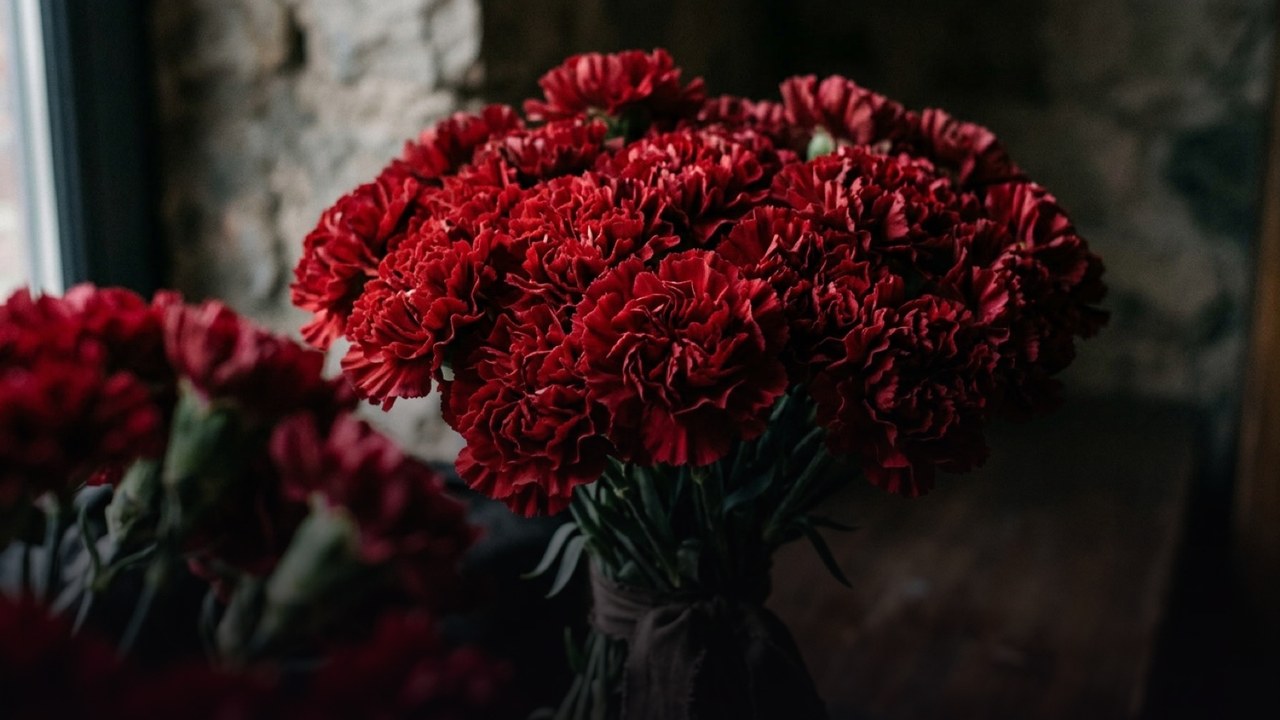
The gvozdika flower is the carnation: in Russian, gvozdika is the everyday name for this familiar flower with frilled petals, usually referring to Dianthus caryophyllus and its cultivated varieties. The same Russian word can also mean the spice clove, so the context matters when you encounter it in a translation or search.
If you are choosing carnations for someone in Russia, the occasion matters as much as the colour. These flowers appear in personal gifts, celebrations and acts of remembrance, so a useful choice starts with who will receive them and what you want to express. Here is how to recognise carnations, choose an appropriate arrangement and help cut stems stay in good condition.
How to recognise a carnation
A typical carnation has a rounded flower head made of overlapping petals with finely toothed or ruffled edges. Its slender stem has noticeable joints and narrow, grey-green leaves. Some varieties look tightly gathered and formal; others open into a softer, looser shape. Those differences are normal and do not, by themselves, tell you whether a flower is fresh.
Standard carnations usually carry one main flower head on each stem, while spray carnations branch into several smaller blooms or buds. This distinction is useful when you compare bouquets: ten branching stems can create a very different outline from ten single-headed stems. Look at the arrangement as a whole, including the scale of its blooms, rather than judging fullness by stem count alone.
Carnations and cloves share a name in Russian, but they are different plants. The cooking spice consists of dried flower buds from a tropical tree; a carnation belongs to the genus Dianthus. A reference to a bouquet, petals or a vase points to the flower, while a recipe mentioning whole buds or ground spice points to cloves. Some carnations have a spicy scent, but its strength varies.
What carnations mean in Russia
Carnations do not carry one fixed message. Red carnations have a strong place in Russian commemorative traditions, including remembrance ceremonies and Victory Day observances. That association can be especially noticeable in a simple arrangement of red stems. For a personal celebration, consider the recipient's own taste and the overall design before relying on a colour's supposed universal meaning.
Pink, white and mixed-colour carnations can suit affectionate or celebratory gifts, but colour symbolism is a guide rather than a reliable code. A recipient may associate a shade with a family memory, a favourite garden or a particular event. If your message matters, say it plainly in the card: a short personal sentence communicates more clearly than expecting the flowers to explain your intention.
For gifts in Russia, an odd number of flowers is the customary choice when individual stems are counted; even numbers are traditionally associated with mourning. The convention is most visible in small, simple bouquets. With branching stems or mixed arrangements, counting can become less obvious, so explain that the bouquet is for a birthday, a thank-you or another celebration when discussing your choice.
Bouquets we can deliver




Choosing a bouquet that feels right for the recipient
Start with the person, then choose the palette. Someone who enjoys restrained arrangements may appreciate one colour and a clear outline, while a recipient who likes lively flowers may prefer several complementary shades. If you are unsure about red carnations because of their commemorative associations, discuss a different palette. There is no need to force a symbolic interpretation onto a colour the recipient simply enjoys.
Think about where the flowers will stand. A compact arrangement is easier to place on a crowded table, while longer stems need a suitably tall, stable vase. If you know little about the recipient's space, prioritise a manageable shape over sheer size. You can use the bouquets catalogue as a starting point, then describe the occasion and your preferences when asking for help.
For a mixed bouquet, carnations can provide rounded shapes alongside flowers with more open or upright forms. The useful question is whether the colours, proportions and textures work together. Do not assume a particular carnation variety or shade is available from a general article; base your decision on the bouquet you are considering and clarify any essential detail before completing the order.
How to care for cut carnations at home
Begin with a clean vase and fresh water. Remove any leaves that would sit below the waterline, then use clean, sharp scissors or secateurs to make a fresh cut at the base of each stem. Keep the flower heads supported while you handle the bunch, because bending or crushing the stems can damage them. If flower food is supplied, follow the instructions on its packet.
Check the water each day and top it up as needed. Replace it if it becomes cloudy, washing the vase before refilling it; refresh the stem ends with a clean cut when you change the water. Remove faded flowers and any leaves that have slipped into the vase. These small steps limit decaying material in the water and make it easier to notice problems early.
Choose a position away from direct sun, heaters and ripening fruit. Carnations are sensitive to ethylene, a gas released by ripening produce that can hasten flower ageing. Their vase life depends on the flowers' starting condition and the conditions in your room, so avoid treating a fixed number of days as a promise. In mixed bouquets, some other flowers may fade sooner than the carnations.
Matching the occasion and planning the arrival
For a birthday or a personal thank-you, focus on the recipient's preferences and include a message that names the occasion. For remembrance, use a restrained approach and check any requirements of the ceremony or venue before choosing an arrangement. If you are sending from abroad, do not assume that flower customs at home transfer directly to Russia, particularly when it comes to stem numbers.
Plan around the recipient's day at the delivery address. Turboflora delivers flowers across Russia, with express delivery in large cities taking 1–2 hours after the order is confirmed. You can also arrange delivery at an exact time with a tolerance of plus or minus 30 minutes, or choose a window: 09–12, 12–15, 15–18 or 18–21. Orders can be placed 1–30 days ahead.
Delivery is anonymous by default: the courier does not name the sender. If you want the recipient to know who sent the flowers, include your name in the free card text. The courier calls the recipient about 15 minutes before arrival, so keep that practical contact in mind when planning a surprise. Choose a time when the recipient is likely to be able to answer and receive the bouquet.
How to order flowers to Russia from abroad
Prepare the destination city, full address, recipient's contact details, preferred delivery time and card text. If carnations are central to your idea, explain the occasion and the colour or style you have in mind. Contact a manager on WhatsApp for help choosing a bouquet, agreeing the time and address, and arranging a photo of the bouquet before delivery.
City delivery costs 500 RUB. For remote districts and suburbs, the operator confirms the delivery price when confirming the order. Check the destination details before making plans around the total, particularly if you are unfamiliar with the area's boundaries. The delivery and payment information is a useful reference when you are organising the order from another country.
Online checkout uses CloudPayments; check the payment options displayed there, as acceptance of every foreign card cannot be guaranteed. If the recipient is absent, we agree a second delivery the same day or handing the flowers to a neighbour or concierge with the sender's consent. Clear contact details and a realistic arrival time help resolve those practical decisions while keeping your intended message intact.
Frequently asked questions
What is gvozdika flower in English?
Gvozdika means carnation when the context is flowers. In a recipe, the same Russian word can mean clove, which comes from a different plant.
Are carnations appropriate for a birthday in Russia?
Carnations can be appropriate if they suit the recipient's taste. For a small bouquet of individually counted flowers, choose an odd number and consider the strong commemorative associations of red carnations.
How do I keep carnations fresh in a vase?
Use a clean vase, recut the stem ends and remove leaves below the waterline. Check the water daily and keep the flowers away from direct sunlight, heaters and ripening fruit.
Can I send carnations to Russia without naming myself?
Delivery is anonymous by default, and the courier does not name the sender. If you want to identify yourself, add your name to the free card text.
Can I pay for a flower delivery with a foreign card?
Online checkout uses CloudPayments, and you should check the payment options shown at checkout. Acceptance of every foreign card is not guaranteed.
Ready to send flowers?
Pick the city, choose the bouquet, and a local florist takes it from there.
Choose a city →