How long do lilies live, in a vase or in the garden?
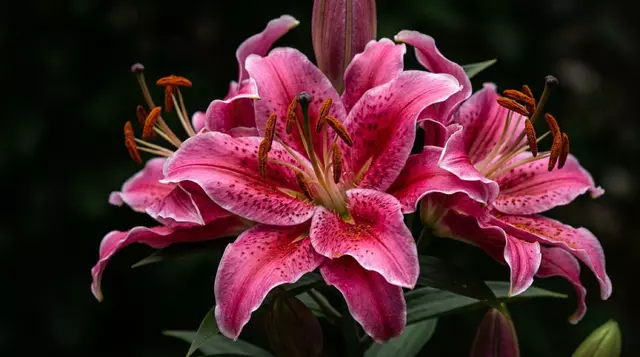
Cut lilies typically last about 7–14 days in a vase, depending on their freshness, variety and care; each individual flower lasts only part of that time. In the garden, true lilies are perennial bulbs that can live for years, although their flowers appear for a much shorter seasonal display.
If you searched for “how long do lillies live”, the usual spelling is “lilies”, and the answer depends on whether you mean a bouquet, one flower or the whole plant. A stem carrying several buds can keep changing as older flowers fade and new ones open. Understanding that sequence helps you choose a gift, judge its condition and give the remaining buds a better chance.
A lily flower, a cut stem and a bulb have different lifespans
An individual lily flower often stays attractive for several days, commonly around 3–7, rather than for the full life of the bouquet. Flowers on the same stem usually open in succession. You may therefore see one bloom beginning to wilt while another looks fresh and a third remains closed; that mix alone does not mean the whole stem is finished.
For cut stems, the useful measure is vase life: the period during which enough of the flowers and foliage still look appealing. Roughly one to two weeks is a reasonable expectation, not a promise for every arrangement. Time already spent open, drying during transport, a hot room and dirty vase water can all shorten the display.
A growing lily is different because its bulb stores resources for another season. Established true lilies can return for many years when their growing conditions suit them. A clump may give a display lasting a few weeks, but flowering times vary by variety and conditions. Planting varieties with different flowering periods can extend the overall season without making each flower last longer.
Choose buds that give you the display you need
For a bouquet you want to enjoy gradually, look for a mixture of open flowers and plump, developing buds, ideally with some petal colour showing. Very tight green buds are harder to assess and may fail to open. Avoid judging freshness by closed buds alone: check for firm stems, healthy foliage and petals without extensive browning or translucent, damaged patches.
For a gift that will be photographed or presented immediately, some open flowers help the bouquet look ready on arrival. If the recipient would enjoy watching it develop over several days, more coloured buds may suit them better. Neither choice fixes the lifespan precisely, and an already open flower has less of its flowering period left than one just beginning to unfold.
The type of lily matters too. Oriental lilies are often strongly scented, while many Asiatic varieties have little or no fragrance; individual cultivars differ. Ask about the actual flowers before choosing for someone sensitive to scent. If you are browsing our bouquets catalogue, tell the manager whether immediate impact, a gentler scent or a developing display matters most.
Bouquets we can deliver




Make the first vase preparation count
Start with a clean vase and fresh water. Wash away residue from previous bouquets, since a quick rinse may leave a film behind. Remove any leaves that would sit below the waterline, keeping healthy leaves above it. Submerged foliage breaks down and encourages microbial growth, which can interfere with the stems taking up the water their flowers need.
Use clean, sharp scissors or secateurs to trim roughly 1–2 cm from each stem, then place the stems in water promptly. Make a clean cut without crushing the stem ends. If flower food came with the bouquet, mix it using the packet’s stated water volume; stronger is not better. Avoid improvised mixtures of sugar, bleach or other household products.
Check the water daily, especially while several flowers are opening. Top it up as needed, and replace it when it becomes cloudy; washing the vase and refreshing the stem ends at water changes can help. Keep the bouquet away from direct sunlight, radiators, heating vents and ripening fruit. Choose a comfortable, cooler part of the room without exposing the flowers to cold draughts.
Care for open flowers, pollen and fading stems
As a flower opens, you can gently remove its pollen-bearing anthers before they release loose pollen. Hold the anther with a tissue and avoid rubbing it against the petals. This helps protect fabrics and the flower’s surface from stains, but it does not guarantee extra days of vase life. Leave tight buds alone rather than pulling the petals apart to reach inside.
If dry pollen lands on fabric, resist rubbing it or adding water straight away, which can spread the stain. Carefully lift loose pollen with sticky tape where suitable for the fabric, then follow the item’s care instructions. Place the vase where open blooms will not brush clothing, curtains or upholstery, and where the arrangement is unlikely to be knocked over.
Remove individual wilted flowers while leaving healthy buds and foliage on the stem. A fading bloom does not require throwing away the entire bouquet, but slimy stems, mould or an unpleasant smell need prompt attention and fresh vase preparation. True lilies and daylilies are highly toxic to cats, including their pollen and vase water. For a household with cats, choose a bouquet without these lilies and seek veterinary help immediately after suspected exposure.
Help garden lilies return after flowering
Once garden lilies finish flowering, remove spent flower heads if you do not want seed production, but keep the green stem and leaves. That foliage continues making food that replenishes the bulb for future growth. Cutting the whole plant down as soon as the petals fall removes that opportunity. Wait until the foliage has naturally yellowed and died back before clearing it.
Good drainage is central to keeping bulbs healthy: soil that remains waterlogged can encourage rot. During active growth, water when needed according to the soil and weather, rather than following a rigid daily schedule. Container-grown lilies need particular attention because a pot can dry out while the surrounding garden remains moist; it must also have working drainage holes.
Check the plant’s identity before applying lily advice. Daylilies are Hemerocallis, while calla lilies and peace lilies are different plants again, with different care needs. Nerines, sometimes called Guernsey lilies, are also distinct; our guide to Guernsey lilies explains their care. If a garden lily fails to return, inspect the site and bulb condition before assuming it simply reached the end of a fixed lifespan.
Time a lily gift to Russia around the recipient
For a birthday, visit or celebration, arrange delivery for when the recipient can receive the flowers and put them in water. Lilies can express affection, admiration or remembrance, depending on colour and cultural context; there is no universal meaning that overrides the occasion. White lilies also have funeral associations in some settings, so a clear, personal card message can help convey your intention.
We deliver flowers across Russia. City delivery costs 500 RUB; for remote districts and suburbs, the operator confirms the price when confirming the order. In large cities, express delivery is available 1–2 hours after order confirmation. Other options include an exact time within ±30 minutes, windows of 09–12, 12–15, 15–18 or 18–21, and pre-ordering 1–30 days ahead. See delivery and payment when planning.
Contact a manager on WhatsApp to help choose a bouquet, agree the address, time and free card text, or arrange a photo before delivery. Delivery is anonymous by default, so the courier does not name the sender. The courier calls about 15 minutes before arrival; if the recipient is absent, we agree a second delivery that day or a handover to a neighbour or concierge with the sender’s consent. Checkout uses CloudPayments; check the displayed payment options rather than assuming a foreign card will be accepted.
Frequently asked questions
Can cut lilies last longer than two weeks?
Some stems may remain attractive beyond two weeks, particularly when their buds open gradually, but you should not count on it. Freshness at purchase, the variety and conditions in your home all affect the result.
Why are my lily buds not opening?
Buds may have been cut too immature, damaged or affected by poor water uptake. Check the vase water and stem ends, keep the bouquet away from heat, and avoid forcing the petals apart.
Do lilies die after flowering in the garden?
The flowers fade and the above-ground growth eventually dies back, but a healthy true lily bulb can remain alive and grow again. Keep green foliage intact after flowering so it can replenish the bulb.
Does removing pollen make lilies safe for cats?
No: removing the anthers does not make true lilies or daylilies safe for cats. Other plant parts and vase water can also be dangerous, so keep these flowers out of homes with cats.
Should I send lilies in bud or already open?
A mixture of open flowers and coloured buds usually balances presentation with a display that develops over time. For an immediate presentation, ask for some open blooms; very tight green buds may not open successfully.
Ready to send flowers?
Pick the city, choose the bouquet, and a local florist takes it from there.
Choose a city →