How Much Should You Fill a Vase for Flowers?
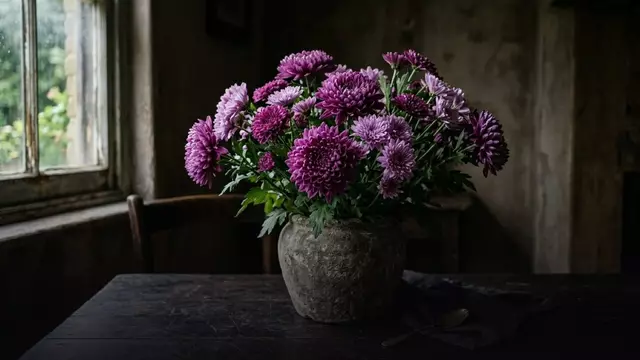
For most mixed bouquets, start by filling a clean vase about halfway to two-thirds full, keeping every cut stem end submerged and all leaves above the water. Adjust the level to suit the vase and flowers: the useful measure is the depth around the stems, rather than how close the water comes to the rim. If the bouquet comes with specific care instructions, follow those first.
A vase can look generously filled while a short stem inside it still sits above the water. Equally, filling right to the top can soak foliage, make handling awkward and leave little room for the water displaced by the bouquet. A good setup gives every stem access to clean water, keeps the arrangement steady and leaves you enough space to lift it out for cleaning.
Set the water level with the flowers in place
Wash the vase with washing-up liquid, rinse it thoroughly and add water before putting in your flowers. Half full is a useful starting point because the level rises as the stems go in. Lower the bouquet into position, let the stems settle, then check the actual water line. Add more only after you can see where the cut ends and lowest leaves sit.
For many everyday arrangements, roughly 8–12 cm of water is a workable starting depth, provided every cut end is comfortably submerged. This is a guide, not a universal requirement: a short posy may need less, while a tall arrangement may need a larger reservoir. Leave a gap below the rim so you can move the vase without spilling.
Look through the side of a clear vase and find the shortest stem, which may belong to a small flower or a piece of greenery. Its cut end needs to remain underwater as the level falls. In an opaque vase, gently lift the bouquet to check the ends against the water line, then return it to its original position without crushing the stems.
Choose a vase that makes the water easy to manage
Vase shape changes how much water is available at a given depth. A broad vessel holds more water than a narrow cylinder filled to the same height. That means a slim vase may need topping up sooner, even when it looks quite full. Choose enough room for water to circulate around the stems and for the bouquet to sit without being tightly wedged in.
A tall vase creates a different problem: filling it two-thirds full may put far more stem underwater than necessary. Use the position of the cut ends and leaves to judge the level instead. If the flowers disappear into the vessel or foliage would have to sit in water, use a shorter vase or adjust the stem lengths before arranging them.
Water adds weight, but it cannot reliably correct an arrangement that is too tall or heavy for its container. Choose a stable base and a neck that supports the stems without squeezing them. If a bouquet leans sharply or threatens to tip over, change the vase or shorten the stems; adding water to the brim leaves the underlying problem unresolved.
Bouquets we can deliver




Prepare stems and foliage before the final fill
Unwrap the bouquet enough to inspect the lower stems, then remove any leaves that would sit below your chosen water line. Submerged foliage can break down and make the water dirty. Keep healthy leaves higher up the stems where they contribute to the arrangement. Our guide to which rose leaves to remove explains this step in more detail.
Use clean, sharp scissors or secateurs to make a fresh cut at the bottom of each stem, removing roughly 1–2 cm where the stem length allows. Avoid crushing the ends with blunt blades, and put the flowers into water promptly afterwards. Check the arrangement again after trimming: shortening one stem can change where its leaves meet the water.
If flower food is supplied, mix it according to the packet instructions, using the stated amount of water. Measure that water in a jug if the vase has no markings; judging the dose by the apparent fullness of the vase is unreliable. Avoid adding sugar, household cleaners or other improvised mixtures, which make the concentration difficult to control.
Adjust for the flowers, rather than following one fixed depth
Roses and many mixed bouquets usually suit the halfway-to-two-thirds starting point, as long as their lower stems are clear of leaves. Several stems together can use enough water to lower the level noticeably between checks. Start with a practical reservoir and inspect it regularly rather than assuming that a large bouquet needs water right up to the flower heads.
Tulips and other soft-stemmed flowers may come with instructions for a shallower water level. Follow those directions and check more frequently, because a small reservoir leaves less margin before the cut ends become exposed. In a mixed bouquet, any flower-specific advice supplied with the arrangement should take priority over a general fraction of the vase.
For routine care, use clean, cool tap water unless the supplied instructions specify otherwise. Avoid ice or very hot water as a general treatment for a tired bouquet; temperature extremes are not a substitute for checking the stems and water. If you are caring for roses, our guide to water for roses covers the choice in more detail.
Top up daily and replace water before it deteriorates
Check the water at least once a day, and check again later if the vase is small, the bouquet is large or the room is warm. Add prepared water before the level approaches the shortest cut end. Do not wait for the flowers to droop: a clear gap between a stem and the water already tells you that the arrangement needs attention.
Replace the water every one to two days, or sooner if it becomes cloudy, smells unpleasant or contains fallen plant material. Lift the flowers out, empty and wash the vase, rinse it, then refill with fresh water and correctly diluted flower food if available. Simply topping up dirty water leaves the debris and residue in place.
While the bouquet is out, remove damaged leaves and check for soft or deteriorating stem ends. Trim affected ends with a clean tool where enough healthy stem remains, and remove flowers that are breaking down. Keep the vase away from direct sun, radiators and ripening fruit; its position matters alongside the amount of water you provide.
Help a recipient in Russia get the bouquet into water
If you are sending flowers to someone in Russia, a useful practical detail is whether they will have a suitable vase available when the bouquet arrives. You can browse our bouquets catalogue and contact a manager on WhatsApp for help choosing flowers, agreeing the address, delivery time and card text, and arranging a photo of the bouquet before delivery.
We deliver flowers across Russia. City delivery costs 500 RUB; for remote districts and suburbs, the operator confirms the price when confirming the order. In large cities, express delivery is available in 1–2 hours after confirmation. You can also arrange an exact time with a tolerance of ±30 minutes, choose a 09–12, 12–15, 15–18 or 18–21 window, or pre-order 1–30 days ahead.
The courier calls the recipient about 15 minutes before arrival. Delivery is anonymous by default, so the courier does not name the sender; a card with your text is free. If you want the recipient to know who sent the flowers, sign the message. A short care note can also help: “Place in a clean vase, keep leaves above water, and check the water daily.”
Online checkout uses CloudPayments; check the payment options displayed there rather than assuming a particular foreign card will be accepted. If the recipient is absent, we agree a second delivery that day or, with the sender’s consent, hand the flowers to a neighbour or concierge. When choosing a time, allow for someone to receive the bouquet and put the stems into water promptly. Availability and timing of delivery across Russia are confirmed for the chosen city, address, date and bouquet.
Frequently asked questions
Should I fill a flower vase all the way to the top?
Usually, no: start around halfway to two-thirds full, then adjust with the flowers in place. Keep every cut end submerged, remove leaves below the water line and leave space beneath the rim.
Is a few centimetres of water enough for a bouquet?
It may suit some flowers with specific shallow-water instructions, but it gives an ordinary mixed bouquet a small reserve. Check that every stem reaches the water and inspect the level frequently.
Should I add fresh water or replace all the water?
Top up when the level falls and the water is still clean. Replace it every one to two days, or sooner if it becomes cloudy or smells, washing the vase before refilling.
Why are my flowers wilting when the vase is full?
Check whether every cut end actually reaches the water, and inspect the stems and water for deterioration. Clean the vase, refresh the water and recut suitable stems; wilting can also reflect age or damage, so a higher water level alone may not help.
How do I measure flower food for a partly filled vase?
Measure the water in a jug and follow the dilution stated on the packet. Vase height does not tell you the volume, especially when the vessel narrows or widens.
Ready to send flowers?
Pick the city, choose the bouquet, and a local florist takes it from there.
Choose a city →