How to Care for Fresh Cut Peonies at Home
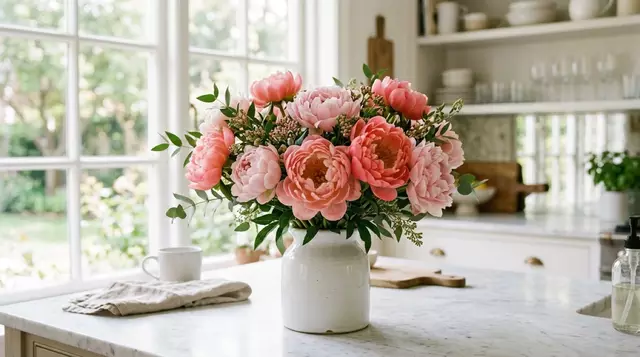
To care for fresh cut peonies, put freshly trimmed stems into a clean vase of fresh water, remove any leaves below the waterline and keep the flowers away from direct sun and heat. Check the water daily, replace it when it becomes cloudy and use cut-flower food according to its packet instructions.
Peonies change noticeably in a vase: a rounded bud can become a broad, loosely layered flower that needs much more room. Your aim is to keep the stems supplied with clean water while giving the opening heads space and support. The condition of the flowers when you receive them also matters, so judge each stem individually instead of expecting every bud to open at the same pace.
Unwrap, inspect and prepare the stems
Unwrap the bouquet carefully, supporting the flower heads as you loosen the paper. If the stems are tied together, check whether the tie is holding the arrangement in shape or squeezing the stems; loosen it if necessary. Avoid pulling stems through a tight binding, which can scrape their surfaces and damage leaves.
Use sharp, clean secateurs or flower scissors to remove roughly 1–2 cm from each stem, cutting at a slight angle. A clean cut matters more than a dramatic angle: do not crush the ends with blunt kitchen scissors or split them with a knife. Transfer the trimmed stems promptly into the prepared vase so the cut surfaces do not sit exposed while you finish arranging.
Strip off leaves that would sit beneath the water, leaving healthy foliage higher up if it fits comfortably in the arrangement. Submerged leaves deteriorate and make the vase harder to keep clean. Remove visibly damaged foliage too, but avoid stripping every leaf simply for neatness. Handle the heads gently; peony petals can crease when squeezed.
Choose a stable vase and keep the water clean
Wash the vase with washing-up liquid, rinse thoroughly and check the inside for slippery residue before filling it. Choose a stable vessel with enough height to support the stems without crowding them at the neck. A narrow bottle may look suitable for closed buds but become awkward once the heads expand and lean outward.
Add enough fresh water to keep the cut ends well submerged, with no foliage beneath the surface. If cut-flower food is supplied, measure both the water and the product as directed rather than guessing a dose. Do not add sugar, aspirin, coins or a homemade bleach mixture: a properly measured commercial product is easier to use consistently.
Check the level every day and top it up before the ends become exposed. Replace the water promptly if it turns cloudy or develops a smell; otherwise, refresh it about every two days. At a water change, rinse the vase, inspect the stem ends and recut a small amount if they have deteriorated. Our vase care guide explains the same cleaning routine for other cut flowers.
Help tight peony buds open gently
Start by looking at the bud rather than trying to force it open. A bud with some visible petal colour and a little give may be further along than a small, hard, tightly closed one, although varieties differ. These are useful clues, not a guarantee: some immature or damaged buds may fail to develop even with careful vase care.
Give unopened stems fresh water and a place at normal room temperature, away from direct sun. If the bouquet has been standing somewhere particularly cool, moving it into a comfortable living room may help development. Avoid hot water, hairdryers, radiators and sunny windowsills as opening shortcuts; they make it harder to control the flowers' condition.
Some peony buds feel sticky. If surface residue appears to be holding the outer petals together, gently dab it with a clean, damp cloth while supporting the bud underneath. Do not soak the whole head, pry the centre apart or peel away healthy petals. After that, leave the flower to develop and reassess it during your next water check.
Peony bouquets
Give open flowers room, support and a suitable position
Place your peonies where you can enjoy them without exposing them to direct sunlight, heaters or hot appliances. Avoid a strong draught from an open window or air-conditioning outlet, and keep the vase away from ripening fruit. A cooler spot in the home can help slow development, but a domestic fridge may contain fruit and leave too little space for the heads.
As the flowers open, gently spread the stems so neighbouring heads do not press into one another. If several large blooms lean heavily, shorten their stems a little and use a more supportive vase, or divide the arrangement between two vessels. Make these adjustments while holding the stems; lifting a peony by its head can damage the connection beneath the bloom.
An open peony often looks loose and nodding, so a lowered head alone does not prove that it has wilted. Look at the whole stem: soft foliage, a slack stem and petals losing firmness call for a water and stem-end check. Remove fallen petals from the table and vase opening, and take out deteriorating stems so you can care for the remaining flowers easily.
Troubleshoot wilting and plan around the flowers' stage
If a stem droops unexpectedly, first check whether its end is actually in the water. Then clean the vase, replace the water, trim the stem with a clean tool and return it to a cool position away from sun. Give it time to take up water before deciding whether it has recovered. This can help a dehydrated stem, but it cannot reverse broken tissue or advanced deterioration.
Keep wet petals and damaged blooms under observation. Brown, soft patches, an unpleasant smell or visible mould are reasons to remove the affected flower rather than leave it pressed against healthy heads. Do not mist the bouquet as a substitute for watering the stems. Water sitting between densely packed petals can linger, while the stem ends still need an adequate supply below.
For a dinner table or gift presentation, allow for the difference between attractive buds and fully open flowers. You cannot reliably schedule every cut peony to open on a particular morning, and buying very tight buds does not guarantee a longer display. If appearance at a specific moment matters, discuss the desired stage before ordering and allow flexibility in the arrangement.
Send peonies to Russia with useful delivery instructions
If you are choosing a gift from abroad, start with the bouquets catalogue and check the current selection rather than assuming peonies are available. Contact a manager on WhatsApp for help choosing a bouquet and agreeing the address, delivery time and card text. You can also arrange a photo of the bouquet before delivery; describe your preferred opening stage as a request, without treating it as a guarantee.
Turboflora delivers flowers across Russia. City delivery costs 500 RUB; for remote districts and suburbs, the operator confirms the price when confirming the order. In large cities, express delivery is available 1–2 hours after confirmation. Other options are an exact time within a 30-minute margin, the windows 09–12, 12–15, 15–18 or 18–21, or pre-ordering 1–30 days ahead. Choose a time when someone can receive the flowers and put them in water.
Delivery is anonymous by default, and a card with your text is free; sign the message if you want the recipient to know who sent it. The courier calls about 15 minutes before arrival. If the recipient is absent, we agree a second delivery that day or a handover to a neighbour or concierge with the sender's consent. Online checkout uses CloudPayments: check the payment options displayed there rather than assuming a foreign card will be accepted. See delivery and payment for planning your order.
Frequently asked questions
How often should I change the water for cut peonies?
Check the level daily and refresh the water about every two days, sooner if it becomes cloudy or smells unpleasant. Clean the vase at the same time and keep all leaves above the waterline.
Why are my cut peony buds staying closed?
They may need more time, or they may have been cut too immature to develop fully. Recut the stems, provide fresh water and keep them at normal room temperature away from direct sun; avoid forcing the petals apart.
Should I remove all the leaves from peony stems?
Remove leaves that would be submerged and any that are damaged or deteriorating. Healthy leaves above the waterline can stay, provided they do not crowd the arrangement.
Can I make peonies open faster for an event?
Moving hydrated stems from a cool position to a room at a comfortable temperature may encourage opening, but the timing remains uncertain. For a particular event, discuss the desired opening stage before ordering instead of relying on heat or manual opening.
How long will fresh cut peonies last?
There is no dependable lifespan for every bouquet: variety, maturity, condition on arrival and the room environment all affect it. Clean water, sound stem ends and a position away from heat help you make the most of the flowers you have.
Ready to send flowers?
Pick the city, choose the bouquet, and a local florist takes it from there.
Choose a city →