How to Open a Rose Bud Without Damaging the Petals
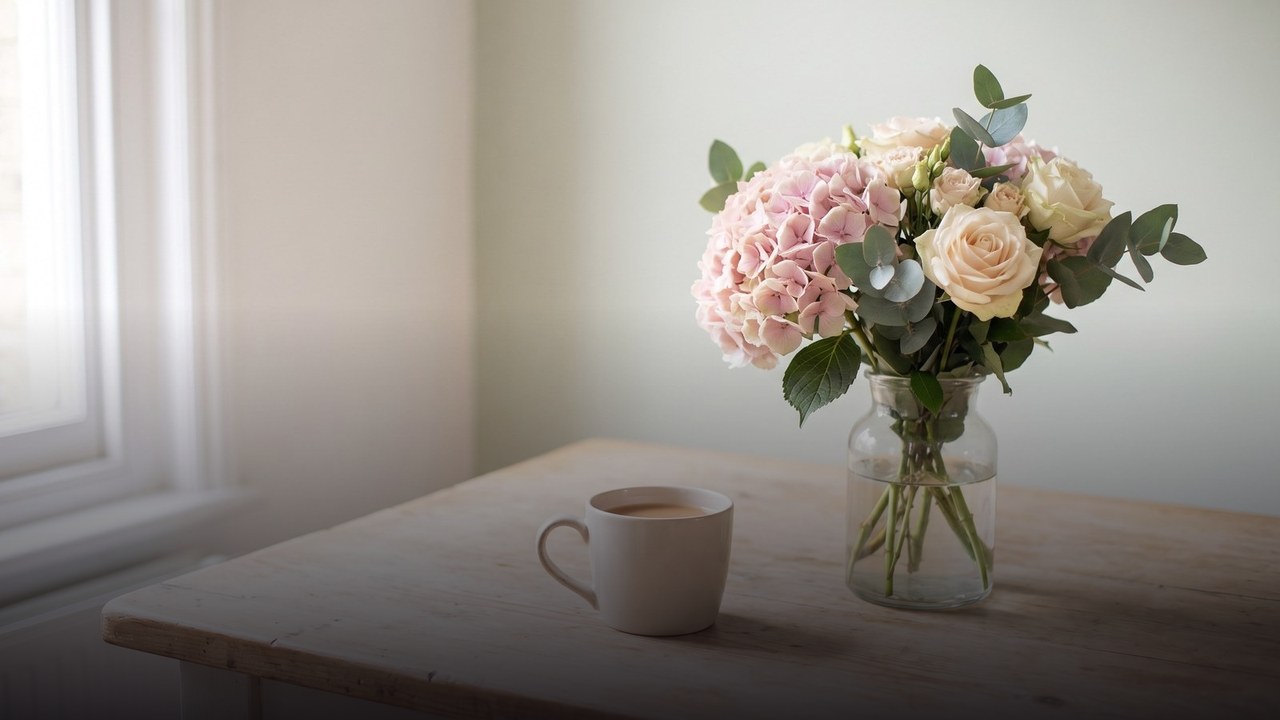
To help a cut rose bud open, trim the stem with a clean, sharp tool, remove leaves that would sit underwater, and place it in a clean vase with fresh water and cut-flower food used as directed. Keep the rose at a comfortable room temperature, away from direct sun and heaters, and give it several hours to hydrate. Avoid pulling the petals apart: a firm, immature or damaged bud may never open fully.
The useful distinction is between encouraging a living flower to develop and physically spreading its petals. Water uptake and the bud's maturity determine how much progress is possible; force only changes its shape and can leave bruises. Start with the stem and vase, then watch how the flower responds before trying anything else.
1. Check whether the bud is ready to open
Look at the whole rose before treating the closed head as a problem. A promising bud usually has visible petal colour, a firm stem and petals that are beginning to loosen at the edges. Some rose varieties naturally keep a deep, cupped centre, so an open flower does not always become a flat rosette. Compare its condition over time rather than expecting a particular shape.
A very small, hard bud with tightly wrapped green sepals may have been cut before it developed enough to open well in a vase. Brown, stuck-together petals, grey fuzzy growth or a soft, collapsing base suggest damage or decay instead. Keep a visibly mouldy stem away from the other flowers; extra warmth and handling will not restore damaged tissue.
Notice the neck just below the flower head. If it bends while the bud droops, water uptake may be struggling, so begin with a fresh cut and clean water. A head that stands upright but remains tightly closed presents a different situation: it may simply need time, or its maturity may limit further opening. Neither appearance gives you a reliable deadline.
2. Prepare the vase and restore water uptake
Wash the vase thoroughly and rinse away any detergent before filling it with fresh drinking-quality water. Use enough water to keep the lower stems submerged, while leaving foliage above the waterline. A narrow vase can crowd stems and press flower heads together; choose one that supports the bouquet without squeezing the buds or forcing stems into sharp bends.
With clean, sharp secateurs or a floral knife, remove roughly 1–2 cm from each stem at a slight angle, then put the rose straight into water. The aim is a clean, open cut, not a crushed end. Do not hammer, split or scrape the stem. Remove submerged leaves carefully, but leave healthy foliage above the water unless it makes the arrangement overcrowded.
If you have a packet of cut-flower food, mix it with the amount of water stated on the packet. Adding a whole sachet to a tiny vase can make the solution too concentrated. If you have no flower food, use clean water and maintain it carefully; improvised mixtures of sugar, bleach, vinegar or aspirin are easy to get wrong and are unnecessary for this first step.
Bouquets we can deliver




3. Give the rose gentle warmth and enough time
Set the vase in a room with a stable, comfortable temperature and indirect light. Roses brought in from cool transport may need time to adjust and take up water before their petals relax. A radiator, sunny windowsill or hairdryer introduces uneven heat and drying, which can damage the petal edges before the centre has had a chance to develop.
Check after several hours for small changes: outer petals may lift, the bud may look fuller, or a drooping head may become more upright. Some roses develop noticeably within a day; others need longer, and some remain closed. Our guide to how long rose buds take to open explains why a fixed countdown is unreliable.
If you need flowers for a dinner or photograph, prepare them as early as practical and allow flexibility in how you arrange them. You cannot reliably turn a tight bud into a fully open rose in a few minutes. Once the flowers reach a shape you like, move the vase to a cooler suitable spot, away from draughts and heat, to slow further development.
4. Know when to leave the petals alone
The outermost petals, often called guard petals, can look tougher, greener or more creased than those inside. They protect the flower and do not automatically need removing. If one is clearly torn or brown, you can gently ease that single petal away at its base while supporting the head. Stop if it resists or starts pulling neighbouring petals with it.
Removing healthy outer petals is not a reliable way to make the centre mature. Likewise, rolling a bud between your palms, prising it open with your thumbs or repeatedly flicking the edges can bruise delicate tissue. A flower may look wider immediately yet develop translucent marks or brown edges later. For a gift, gentle hydration gives a more dependable result.
Avoid dunking the flower head in hot water, holding it over steam or spraying the centre to make it unfold. Wet petals can mark and may stay damp inside a dense bud. Keep water care focused on the vase and stems. If the rose still looks fresh but closed, leave it to develop rather than escalating through increasingly forceful techniques.
5. Troubleshoot a bud that stays closed
If there is little change by the following day, inspect the water and stem before blaming the bud. Cloudy water, a slippery stem surface or an unpleasant smell calls for a cleaned vase, fresh water and another small stem trim. Check that the water level has not fallen below the cut ends, especially when several thirsty stems share a vase.
A rose that stays upright, firm and fresh can remain attractive even if it never opens widely. Give it time while maintaining clean water, but avoid promising yourself a full bloom by a particular hour. If the petals become dry and brittle or the head begins to collapse, further opening is unlikely to improve its appearance. Remove deteriorating flowers from the arrangement.
For several closed roses, assess each stem separately: one flower's progress does not establish a timetable for the rest. Tight harvesting, differences between varieties and damage can all affect the result. Read more about why tight rose buds stay closed if you need help distinguishing a healthy compact bloom from a bud that is no longer developing.
6. Plan a rose gift to Russia around the occasion
If the bouquet is for an occasion in Russia, explain whether the recipient will enjoy watching buds develop or whether the flowers are intended for a particular gathering. Contact a manager on WhatsApp for help choosing a bouquet and agreeing the address, delivery time and card text, or to arrange a photo before delivery. A photo shows its current appearance; it cannot establish exactly when each rose will open.
We deliver flowers across Russia. City delivery costs 500 RUB; an operator confirms the price for remote districts and suburbs when confirming the order. Express delivery in large cities takes 1–2 hours after order confirmation. You can also arrange an exact time within ±30 minutes, choose 09–12, 12–15, 15–18 or 18–21, or pre-order 1–30 days ahead. See delivery and payment details when planning.
Delivery is anonymous by default, so the courier does not name the sender; add your name to the free card if you want the recipient to know who sent the roses. The courier calls about 15 minutes before arrival. Online checkout uses CloudPayments: check the payment options displayed there rather than assuming a particular foreign card will work. Give the recipient simple vase-care advice so they can enjoy the flowers as they develop.
Frequently asked questions
Can I open a rose bud with my fingers?
You can physically spread petals, but this can bruise or tear them and does not make an immature bud develop. Start with clean water, a fresh stem cut and time to hydrate.
Does warm water make rose buds open immediately?
No water temperature guarantees immediate opening. Use fresh water and comfortable room conditions; avoid hot water, which can damage the flower.
Should I remove all the guard petals?
No, healthy guard petals can stay in place. Remove only an obviously damaged outer petal if it comes away gently without disturbing the rest of the flower.
Why does one rose open while another stays closed?
Individual stems can differ in maturity, hydration and condition, even within one bouquet. Assess each rose separately and keep the vase clean rather than forcing the slower bud.
Can I make a closed rose open for an event tonight?
Freshly cutting the stem and letting it hydrate may help, but full opening by tonight is uncertain. Prepare it early and plan an arrangement that also looks good with partially open roses.
Ready to send flowers?
Pick the city, choose the bouquet, and a local florist takes it from there.
Choose a city →