What Is a Mussy Tussy Bouquet? A Guide to the Small Posy
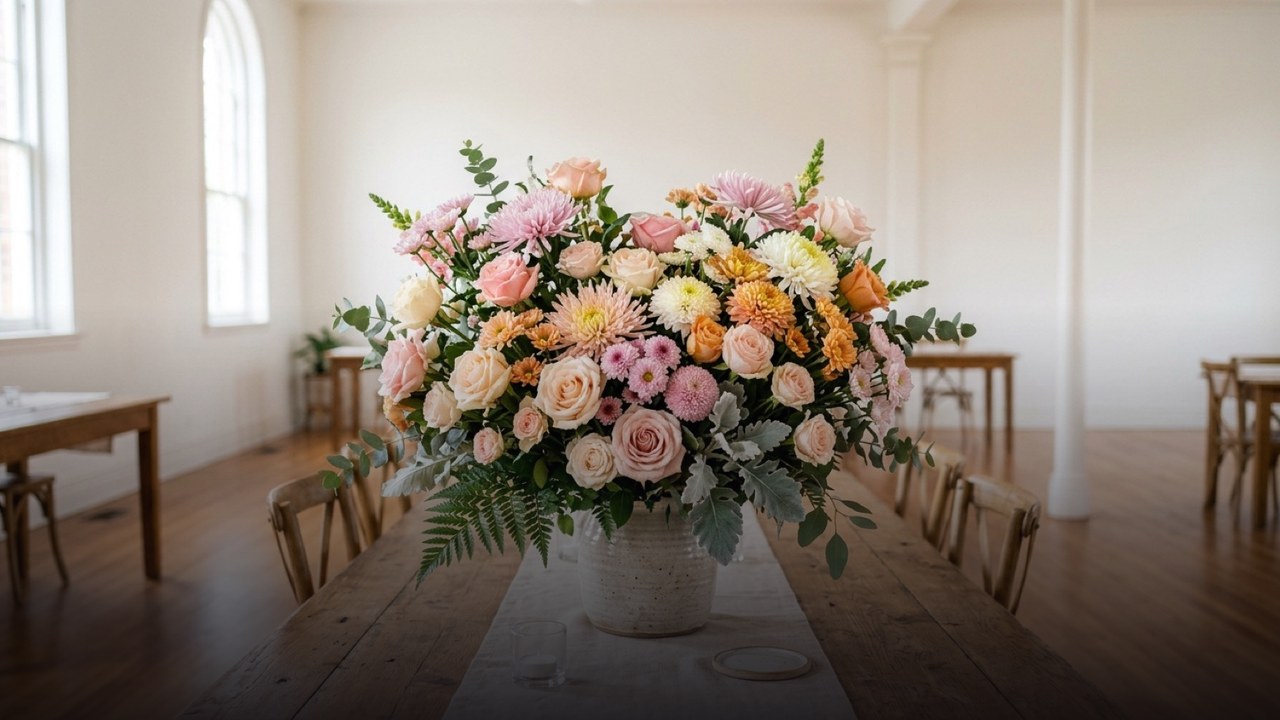
A mussy tussy bouquet, more commonly called a tussy-mussy, is a small, compact posy traditionally made with fragrant flowers and foliage. It usually has a rounded outline and is held in one hand; the term can also refer to the decorative holder used for the flowers.
If you are searching for this style, the useful distinction is its scale: a neat cluster of flowers with short, manageable stems, rather than a wide, spreading arrangement. You can choose it for its scent, its restrained appearance or a personal association with particular flowers. When discussing one with a florist, describe the size, shape and fragrance you want, because the name alone may not communicate the same design to everyone.
Tussy-mussy, nosegay or posy: what the names mean
You will encounter several spellings, including tussy-mussy and tussie-mussie; “mussy tussy” is a reversed version of the name. A posy is simply a small bunch of flowers, while nosegay traditionally suggests a fragrant bunch. These terms overlap in ordinary use, so a photograph and a clear description are more useful for ordering than insisting on one spelling.
The tussy-mussy is closely associated with Victorian flower giving and the language of flowers. Its history also connects with the carrying of scented flowers and herbs. Today, you do not need to reproduce a historical arrangement: a compact hand-tied posy can express the same idea, with the emphasis on proportion, fragrance and a few carefully chosen ingredients.
Some historical examples sit in small metal bouquet holders, which may also be called tussy-mussies. A holder is an accessory, not an essential part of a modern floral posy. If you are looking at an inspiration image, check whether its appeal comes from the flowers or from an ornate handle, ribbon or container; those are separate details to discuss.
How to choose flowers for a balanced small bouquet
Start with one flower type you want to notice first, then choose supporting flowers with smaller heads or a lighter texture. Small-headed roses, spray carnations and suitable seasonal flowers can provide a rounded outline. These are design examples, rather than a statement of current availability. Ask which flowers can achieve the shape you want for your chosen date.
A small posy benefits from a limited palette. Cream with soft pink gives a gentle effect; deeper pink with burgundy creates stronger contrast. Repeating a colour helps the arrangement read as one shape instead of several unrelated stems. A narrow edge of foliage can frame the flowers, but too much greenery may hide the blooms and make a little bouquet feel bulky.
Decide how much scent the recipient would enjoy before choosing fragrant ingredients. Sweet peas, scented roses and some herbs can contribute fragrance, but scent varies between flowers and varieties. For a shared office, dining table or someone sensitive to perfume, request little or no fragrance. A traditional association with scent does not mean every tussy-mussy needs to smell strong.
Bouquets we can deliver




Meaning and etiquette: make the message easy to understand
Victorian flower symbolism is interesting, but there is no single universal dictionary that every recipient will recognise. Meanings vary between sources and cultures. You can use a flower's association as a starting point, yet a personal connection is often clearer: a favourite colour, a flower from a family garden or a combination that recalls an occasion you shared.
The modest scale suits a thank-you, a thoughtful visit or a romantic gesture when you want something easy to hold and display. Consider the setting as well as the occasion. Someone travelling home after an event may appreciate compact flowers, while someone expecting a large celebration bouquet could interpret the same size differently. Explain the intention through your choice and card.
For a recipient in Russia, an odd number of clearly countable main flowers is customary for celebratory gifts; even numbers are traditionally associated with mourning. Discuss the count when ordering a simple posy with distinct stems. With branching flowers or mixed designs, clarify what is being counted rather than assuming every visible flower head represents a separate stem.
Keep the card direct: “A little bouquet in your favourite colours” communicates more than an unexplained reference to flower symbolism. Delivery with Turboflora is anonymous by default, and the courier does not name the sender. If you want the recipient to know who sent the flowers, include your name in the card text; a card with your message is free.
How to describe the style when ordering flowers to Russia
Begin with a visual brief: “A small, rounded posy with short stems, a tidy outline and minimal wrapping.” Add your preferred colours, whether fragrance is welcome, and any flowers you want to avoid. If a particular stem count matters, state it explicitly. An inspiration photograph can help explain the proportions, but ask what can be made before treating the image as an agreed specification.
Browse the bouquets catalogue for a starting point, then contact a manager on WhatsApp to discuss the bouquet, delivery address, timing and card text. You can also discuss a photo of the bouquet before delivery. Ask whether the compact style can be arranged for your destination and date; do not assume the historical name identifies a listed product.
If you are ordering from abroad, make the delivery city and intended local date clear at the start. Write out the month if a numerical date could be misread, and explain whether the flowers are for a birthday, a visit or another occasion. This gives the manager the information needed to agree the details without relying on your current time zone or an ambiguous date format.
Delivery timing and payment: what to arrange
We deliver flowers across Russia. City delivery costs 500 RUB; for remote districts and suburbs, the operator confirms the price when confirming the order. Express delivery in large cities is available in 1–2 hours after the order is confirmed. When timing matters, discuss the destination and schedule before relying on an express arrival.
You can arrange delivery at a specified time with a tolerance of ±30 minutes, choose a window of 09–12, 12–15, 15–18 or 18–21, or preorder 1–30 days ahead. For a dinner or presentation, choose timing that leaves the recipient a practical opportunity to put the flowers in water. The delivery and payment page is a useful reference when planning your order.
The courier calls the recipient about 15 minutes before arrival. If the recipient is absent, we agree a second delivery the same day or, with the sender's consent, hand the flowers to a neighbour or concierge. Online checkout uses CloudPayments. Check the payment options displayed at checkout, especially when paying from abroad, because acceptance of every foreign card is not guaranteed.
How to keep a compact posy fresh
Prepare a clean vase with fresh water before unwrapping the bouquet. Remove any leaves that would sit below the waterline and trim the stem ends with a clean, sharp tool. A small posy often suits a narrow vase, but check that the opening supports the stems without squeezing them tightly. Keep wrapping and decorative ribbon out of the water.
Check the water level daily: a small vessel holds less water and can empty sooner than you expect. Refresh the water regularly and clean the vase if it becomes cloudy or develops a slippery film. If flower food is supplied, follow the packet directions. Remove fading flowers and submerged debris so the remaining stems sit in clean water.
Display the bouquet away from direct sun, radiators and ripening fruit. Keep it somewhere it will not be repeatedly brushed by passing hands or clothing. If the posy has been out of water during an event, return it to water promptly and recut the stems as needed. Different flowers age at different rates, so judge individual stems rather than expecting the whole bouquet to last equally long.
Frequently asked questions
Is a mussy tussy bouquet the same as a tussy-mussy?
Usually, yes: “mussy tussy” is a reversed form of the more familiar name tussy-mussy. The intended style is generally a small, rounded posy, sometimes associated with a decorative bouquet holder.
Does a tussy-mussy have to contain roses?
No, roses are one possible ingredient rather than a requirement. The defining features are the compact scale and clustered shape; discuss suitable flowers and availability for your date.
Can I give a small posy as a romantic gift?
Yes, particularly if the recipient likes understated flowers or has a favourite colour you can incorporate. Add a personal card message so the meaning does not depend on historical flower symbolism.
Can I arrange this bouquet for delivery in Russia from abroad?
We deliver flowers across Russia; contact the manager to agree whether the requested style can be arranged for your city and date. Payment at checkout uses CloudPayments, and you should check the displayed options for your card.
Will the recipient be told who sent the flowers?
Delivery is anonymous by default, and the courier does not name the sender. If you want to identify yourself, include your name in the free card message.
Ready to send flowers?
Pick the city, choose the bouquet, and a local florist takes it from there.
Choose a city →