Sending New Year Flowers to Russian Clients? Start Here
The last two weeks of December in Russia move fast. Offices close early, inboxes fill with greetings, and a well-chosen flower arrangement on a client's desk says something a carefully worded email simply cannot. If you manage relationships with Russian business contacts and want to mark the New Year with a living gift that actually arrives fresh and on time, this article walks you through every practical decision — from choosing the right flowers for a director's reception desk to placing a bulk order that lands before the holiday rush peaks.
Why Flowers Work as a Corporate Gift in Russia
In Russian business culture, New Year — not Christmas — is the main festive occasion. It falls on January 1st, but the celebration and gift-giving happen in the final days of December, roughly from the 25th onward. Flowers fit this moment naturally because they carry no religious connotation and are universally welcomed across industries, from manufacturing to finance to retail.
A bouquet or a potted plant signals that you thought about the person, not just the transaction. Russian clients, especially senior ones, notice the difference between a generic branded pen and something living that brightens a room. Flowers are also neutral enough to give across gender lines and seniority levels without any awkwardness.
For the recipient, receiving an arrangement at the office creates a small public moment. Colleagues see it, comment on it, and associate your name with something pleasant. That social dimension is part of why flowers outperform most other corporate gifts in terms of lasting impression. A well-composed arrangement of white roses, eucalyptus and winter berries sitting on a reception desk for ten days does quiet, continuous work for your relationship.
Bouquets we can deliver



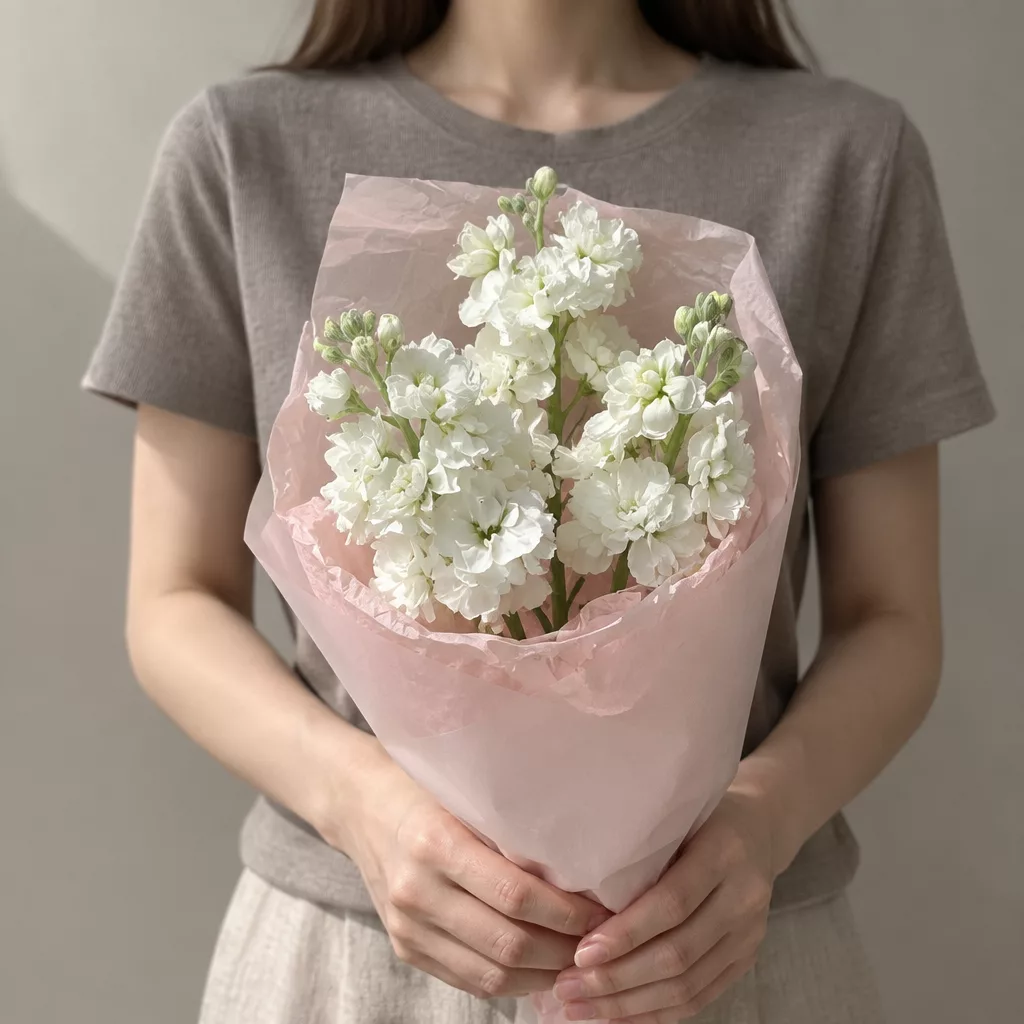
Choosing Flowers That Feel Festive Without Being Overwhelming
Corporate settings call for restraint. An arrangement for an office should look elegant and considered, not like a wedding centerpiece. The goal is festive warmth — something that reads as New Year without demanding attention from everyone in the room.
White, cream, and deep red roses are the most reliable base for this season. Pair them with silver-leafed eucalyptus, white spray chrysanthemums, or lisianthus in pale violet and you get depth without visual noise. For clients who run more creative or design-oriented businesses, adding a few stems of amaryllis in burgundy or a branch of waxflower brings personality without breaking the professional register.
Avoid all-yellow arrangements for Russian corporate gifts. In Russian tradition, yellow flowers carry associations with separation and bad luck, and while younger recipients may not think twice about it, older or more traditional clients may notice. Similarly, an even number of flowers is associated with mourning, so always confirm that bouquets are composed in odd numbers.
For large open-plan offices or reception areas, a tall arrangement in a clear vase — white tulips, eucalyptus branches and white snapdragons — commands the space without feeling excessive. For a personal desk, a compact low arrangement or a single-variety bouquet of ten to fifteen stems in a tied presentation is more appropriate. The size of the space really should guide the scale of the gift.
Plants as an Alternative: What Survives an Office Winter
Potted plants are an excellent corporate gift for clients you know well enough to want to give something lasting. They signal a longer-term relationship and, practically speaking, they stay beautiful for months rather than days. In Russian offices during winter, the central heating runs high and the air gets very dry, so plant choice matters more than it might in other climates.
Zamioculcas, commonly called ZZ plant, handles low light and dry air without complaint — it is genuinely hard to kill and looks sculptural on a desk or windowsill. Sansevieria, or snake plant, has the same resilience and comes in compact varieties that suit a desk rather than a floor corner. Spathiphyllum, known as peace lily, is widely loved in Russia and blooms indoors through winter, which makes it feel festive.
If you want something that reads more as a seasonal gift than a permanent office plant, a cyclamen in deep red or white is a beautiful choice for December. It blooms through the cold months and is small enough to sit beside a monitor. Orchids, specifically Phalaenopsis, are also popular corporate gifts in Russia — they look luxurious, last six to eight weeks in bloom, and require almost nothing beyond weekly watering.
Presentation matters as much as the plant itself. A plain nursery pot undermines even a beautiful plant. Ask for ceramic or woven basket covers in neutral tones — white, grey, terracotta — and add a simple branded ribbon rather than a large bow.
Planning Deadlines: When to Order and Why It Matters
December 25th to 31st is the busiest delivery window of the year for flowers in Russia. Demand spikes sharply from the 27th onward as offices hold their final working days before the long New Year holiday. If you are sending to multiple clients across the city, placing your order before December 20th gives you the most flexibility on delivery slots and arrangement options.
For bulk corporate orders — ten recipients or more — we recommend confirming your list and delivery addresses by December 18th. This allows time to source sufficient quantities of the key varieties, particularly roses, which move fastest in the final week. Lisianthus and amaryllis also need to be ordered from growers in advance for large volumes.
If you are sending to clients in cities outside Saint Petersburg, factor in transit time. Turboflora delivers across Russia, and for same-day delivery in remote cities, orders need to be placed before noon local time. For New Year gifts arriving on December 29th or 30th, place those orders at least 48 hours ahead to guarantee freshness on arrival.
One common mistake with corporate orders is leaving the recipient list incomplete. A delivery that arrives with a wrong name on the card — or no card at all — loses most of its impact. Prepare your list in a simple spreadsheet: recipient name, company, delivery address, floor and office number if relevant, and any note you want on the card. Handing that over when you place the order saves time and prevents errors on both sides.
Bulk Orders and Budget: How to Think About Scale
Corporate flower gifting works best when the gifts feel considered rather than mass-produced. The practical challenge is maintaining that feeling across twenty or fifty recipients while keeping the budget rational. The answer is usually a tiered approach rather than one identical arrangement for everyone.
Define two or three tiers based on relationship importance. Key clients — those with the highest revenue or longest history — receive a larger arrangement or a plant with a handwritten card. Mid-tier contacts receive a compact bouquet in a consistent color palette. New contacts or those you are nurturing receive a single-variety tied bunch, still elegant but appropriately modest. This structure lets you allocate budget where it matters most without the awkwardness of some clients receiving nothing.
For bulk orders, the per-arrangement cost decreases meaningfully when you standardize the composition across a tier. If twenty clients all receive the same white rose and eucalyptus arrangement, sourcing and preparation become efficient and quality stays consistent. Mixing too many different compositions across a large order increases the chance of errors and delays.
Budget planning should include the card, packaging, and delivery fee alongside the flowers themselves. A beautiful arrangement in a plain plastic sleeve with no card reads as an afterthought. Ribbon, kraft paper or a simple gift box, and a printed or handwritten card are not extras — they are part of the gift. When you request a quote for a bulk order, ask for the total cost per recipient including packaging and delivery so you are comparing real numbers.
Writing the Card: What to Say to a Russian Business Contact
The card that comes with a corporate flower gift carries more weight than most senders realize. In Russian business culture, a warm but professional tone is the right register — neither coldly formal nor overly familiar. A message that acknowledges the year you have had together and expresses genuine good wishes for the next one lands better than a generic seasonal greeting.
Write in the language of your relationship. If you have always communicated in Russian, a card in Russian feels personal. If your relationship is conducted in English, an English card is perfectly appropriate and even signals that you see the client as an international partner. If you are unsure, a bilingual card — a few lines in Russian followed by the same in English — covers both bases gracefully.
Avoid superlatives and hyperbole. Phrases like "our most valued partner" applied to twenty different clients feel hollow if they ever compare notes. Instead, reference something specific: the project you completed together, the city where you met, or the industry challenge you both navigated. Even one specific detail transforms a printed message into something that feels written for that person.
Keep the message short — three to five sentences is ideal. Open with a warm greeting using the recipient's first name and patronymic if you know it, since using both is a mark of respect in Russian professional settings. Close with a clear, genuine wish for the New Year rather than a company tagline. Sign with your own name rather than just the company name whenever the relationship is personal enough to warrant it.
Keeping Flowers Fresh After Delivery: What to Tell Recipients
A corporate flower gift that wilts in three days reflects poorly on the sender, even if the flowers were fresh on arrival. Including simple care instructions — either on a small card or verbally through the delivery — extends the life of the arrangement and keeps your name associated with something beautiful for longer.
Roses and tulips need fresh water every two days and a clean cut at the stem base when they are first placed in a vase. Trim about two centimeters at a diagonal with a sharp knife, not scissors, which can crush the stem. Remove any leaves that sit below the waterline, as they rot quickly and cloud the water. Office tap water is fine — there is no need for special additives if the water is changed regularly.
Winter heating is the main enemy of cut flowers in Russian offices. Rooms can reach 24 to 26 degrees Celsius, which shortens vase life significantly. Placing the arrangement away from radiators and out of direct sunlight from windows buys several extra days. If the office has a cool corridor or entrance hall, moving the arrangement there overnight is a simple trick that works well.
For potted plants delivered in winter, the journey from van to building is the most stressful moment. Temperatures in Saint Petersburg and across Russia in late December can drop to minus fifteen or lower. Turboflora wraps plants in insulating sleeves for transit, but recipients should unwrap them promptly once indoors and avoid placing them near a cold window immediately after arrival. Give the plant a day at room temperature before moving it to its permanent spot.
A well-planned corporate flower gift at New Year does something that most business communication cannot — it creates a moment of genuine warmth in a relationship that is usually conducted through screens and spreadsheets. The decisions that make it work are not complicated: the right varieties for the season and the setting, a delivery that arrives when the office is still open and the recipient is still at their desk, a card that says something real, and flowers that stay beautiful long enough to be remembered. Plan the order early, think in tiers, and give the card as much attention as the arrangement itself. That combination is what separates a gift that people talk about from one that is forgotten by January 2nd. We deliver bouquets across Russia in 1–2 hours.
Frequently asked questions
How far in advance should I place a bulk corporate flower order for New Year?
For ten or more recipients, place your order by December 18th. This gives enough lead time to source sufficient quantities of roses and seasonal varieties, confirm all delivery addresses, and schedule staggered delivery slots across the final working days of December. Leaving it until December 27th or later risks limited availability and rushed arrangements.
Are there any flowers I should avoid when sending to Russian business contacts?
Yes — avoid all-yellow bouquets, as yellow flowers are traditionally associated with separation and misfortune in Russian culture. Also make sure bouquets contain an odd number of stems, since even numbers are reserved for mourning occasions. These customs are more observed by older and more traditional recipients, but it is safer to follow them across the board.
Can Turboflora deliver corporate flower gifts to cities outside Saint Petersburg?
Yes, Turboflora delivers fresh flowers and plants across Russia. For same-day delivery to cities outside Saint Petersburg, orders must be placed before noon local time. For New Year gifts targeting December 29th or 30th arrival, we recommend placing those orders at least 48 hours in advance to guarantee that flowers arrive in full fresh condition.
What is the best potted plant to send to a Russian office in winter?
Zamioculcas, sansevieria, and Phalaenopsis orchids are the most reliable choices. All three handle the dry, warm air of centrally heated Russian offices well. Orchids look luxurious and bloom for six to eight weeks. Cyclamen in red or white is a beautiful seasonal option that flowers through winter and suits a desk rather than a floor or shelf.
Should the card be written in Russian or English for a Russian business client?
Match the language you normally use with that client. If your relationship is conducted in Russian, a Russian card feels personal and respectful — using the recipient's first name and patronymic is a particularly warm touch. If you communicate in English, that is perfectly appropriate. A short bilingual card works well when you are unsure or want to signal an international partnership.
Ready to send flowers?
Pick the city, choose the bouquet, and a local florist takes it from there.
Choose a city →