Flowers for Russian Employees on Professional Holidays: Timing, Quantities, and What to Send
Russia celebrates more professional appreciation days than almost any other country, and for many employees, receiving flowers on those dates is not a bonus — it is an expectation. If you manage a team, run a company, or simply want to thank the doctors, teachers, or engineers in your life, understanding the calendar and the customs will save you from the two most common mistakes: ordering too late, and choosing flowers that wilt before the workday is over.
Why Professional Holidays Matter So Much in Russia
The tradition of professional appreciation days in Russia stretches back to the Soviet era, when the state formally recognised entire industries with dedicated calendar dates. That culture never disappeared — if anything, it deepened. Today there are official holidays for teachers, doctors, nurses, geologists, builders, programmers, and many others, and workplaces across the country mark them with speeches, small gifts, and almost always flowers.
For someone unfamiliar with Russian office culture, this can feel surprising. In many Western countries a bouquet for a colleague is reserved for a farewell or a birthday. In Russia, arriving at the office on Teacher's Day or Defender of the Fatherland Day without acknowledging the occasion would read as indifferent or even rude. The gesture is collective as much as personal — it signals that the team and the organisation see the people inside it.
This matters practically for anyone ordering in bulk. You are not sending a single sentimental arrangement; you are coordinating a workplace ritual. The flowers need to arrive together, look consistent, and hold up through an eight-hour working day of being carried around, photographed, and eventually placed on a desk. Choosing the right varieties and placing your order well in advance are not optional steps — they are what separates a memorable gesture from a logistical headache.
Bouquets we can deliver


The Key Dates You Need to Mark in Your Calendar
The Russian professional holiday calendar is dense, and several dates cluster in ways that can catch you off guard. February alone contains Defender of the Fatherland Day on the 23rd, which honours current and former military personnel and is widely extended to all male employees in many workplaces. A week later, International Women's Day on March 8th follows — meaning florists see their two busiest weeks of the year back to back, and wholesale supplies of roses, tulips, and spray chrysanthemums tighten sharply.
Teacher's Day falls on the first Sunday of October, though school administrations typically celebrate on the nearest Friday so students and staff can participate. Doctor's Day is June 16th. Nurse's Day is May 12th. Programmer's Day lands on the 256th day of the year — September 13th in a standard year, September 12th in a leap year — and has grown into a genuine workplace celebration in tech companies. Builder's Day is the second Sunday of August. Police Day is November 10th.
Knowing these dates in isolation is only half the task. You also need to account for how Russian companies actually celebrate: often the flowers are presented at a morning gathering before work begins, which means delivery must be completed before 9 a.m. or even earlier in some organisations. Planning your order at least three to five days ahead for medium quantities, and seven to ten days ahead for large corporate orders, gives you the margin you need when demand across the city spikes simultaneously.
Choosing Flowers That Suit a Professional Setting
A corporate flower gift lives a different life from a romantic bouquet. It will sit on a reception desk, be carried on public transport, be set down next to a keyboard, and still need to look presentable at the end of the day. That shapes variety selection in very concrete ways.
Roses remain the default choice for formal occasions, and for good reason: a well-conditioned rose bud that has not yet fully opened will last five to seven days with basic care. For bulk orders, garden roses and spray roses are worth considering alongside standard hybrid tea roses — they offer more visual texture without a significant price jump, and they photograph beautifully in the group shots that inevitably end up on company social media.
Alstroemeria is one of the most practical flowers for professional settings. It is robust, comes in a wide range of colours from cream through coral to deep burgundy, and a single stem carries multiple blooms, giving even a modest bunch a generous appearance. Chrysanthemums — particularly the single-headed santini and cushion types — are similarly resilient and carry well without water for several hours.
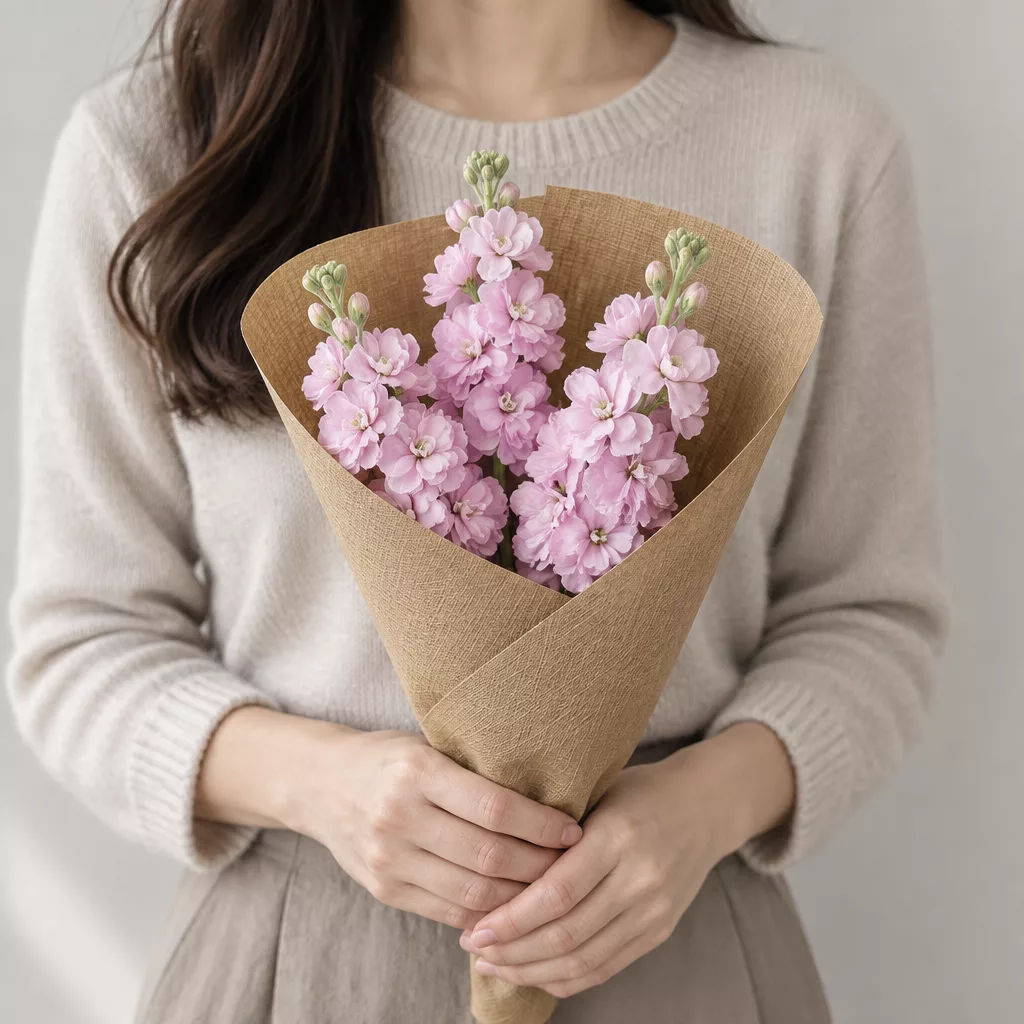
What to avoid: open garden peonies in warm weather, as they drop petals quickly once fully open; heavily fragrant lilies in enclosed office spaces, where the scent can overwhelm; and any flower that has been pre-arranged in foam, which dries out fast. Stems wrapped simply in kraft paper or a clean sleeve, with a water sachet attached, arrive in better condition and look more considered than elaborate packaging that has been compressed in transit.
Scaling Up: How to Approach Bulk Orders Without Losing Quality
Ordering flowers for twenty people is a fundamentally different task from ordering for two. The temptation when scaling up is to default to the cheapest single variety in the largest quantity — typically carnations or standard chrysanthemums — and call it done. The result is predictable: employees notice the lack of thought, and the gesture lands flat despite the expense.
A better approach is to anchor the order with one reliable, mid-range flower and add one accent element that elevates it. For example, a bundle of white alstroemeria with a few stems of eucalyptus and a single spray rose per bunch looks intentional and costs only marginally more per unit than a plain single-variety bouquet. Eucalyptus in particular has become widely available in Russian flower supply chains and adds both fragrance and a professional, contemporary feel.
When placing a bulk order, specify the stem count per recipient rather than leaving it open. Five to seven stems per person is a common and comfortable quantity for a professional setting — substantial enough to feel generous, compact enough to carry on a commute. Also specify bud stage: for same-day delivery, you want flowers that are half-open rather than fully bloomed, so they look fresh at the moment of presentation and continue opening through the day.
For very large orders — fifty recipients or more — discuss the delivery window explicitly. Staggered delivery across two or three hours to different floors or departments is often more practical than a single simultaneous drop, and it gives each team its own moment rather than one chaotic pile in the lobby.
February and March: Surviving the Double Rush
The fortnight between February 23rd and March 8th is the most intense period in the Russian flower calendar, and it deserves its own section. Defender of the Fatherland Day and International Women's Day fall just thirteen days apart, and most companies celebrate both — meaning many HR managers and office administrators are placing two separate large orders in rapid succession.
Supply pressure during this window is real. Tulips, which are the signature flower of March 8th in Russia, are imported in enormous quantities but still sell out at the retail level because demand is so concentrated. Red roses, which are popular for both holidays, see similar pressure. If you want tulips in a specific colour — white, purple, or bicolour varieties tend to be more distinctive than the standard red and yellow — order them at least a week before March 8th.
For February 23rd, the palette tends toward more restrained, neutral tones: white, cream, green, and burgundy read as appropriately professional for what is, at its core, a civic rather than romantic occasion. A bunch built around white spray chrysanthemums, green button poms, and a few stems of waxflower has a clean, respectful look that suits the day without veering into Valentine's territory.
One practical mistake to avoid: do not schedule both orders for morning delivery on the holiday itself. For February 23rd, a late afternoon delivery on the 22nd often works better, especially if the company plans a morning event. For March 8th, confirm delivery timing with the office administrator rather than assuming — some companies celebrate on the 7th to avoid the public holiday logistics.
Care Instructions Worth Passing Along to Recipients
When you send flowers to a workplace, you are sending them into an environment that is rarely set up for floral care. There is usually no vase, the water in the kitchen is not always changed regularly, and the heating or air conditioning runs continuously — both of which shorten vase life significantly. A small care card with the delivery can make a real difference to how long the flowers last and how the gesture is remembered.
The basics are straightforward but often overlooked. Stems should be recut at an angle under running water before being placed in a vase — even a clean glass or a large mug works — with fresh, cool water. The cut exposes more surface area and allows the stem to draw water more efficiently. Any leaves that would sit below the waterline should be removed, as they decompose quickly and cloud the water, encouraging bacterial growth that shortens vase life.
Keep flowers away from direct sunlight and from the air stream of a heating vent or air conditioner. The ideal temperature for most cut flowers is between 15 and 20 degrees Celsius. A windowsill in February might seem like a good spot, but the cold radiating from the glass at night can damage petals. A desk away from windows and heating units is usually the best position in a typical Russian office.
Water should be changed every two days, and stems should be recut by a centimetre each time. Alstroemeria and chrysanthemums respond particularly well to this routine and can easily reach ten days of vase life with basic attention. Roses in a warm office are more demanding — expect five to six days under good conditions, three to four if the room runs hot.
Making the Gesture Feel Personal at Scale
The challenge with any bulk flower order is that it can feel impersonal — a box arriving in the lobby rather than a considered gift. A few small decisions at the ordering stage can shift that perception entirely, even when you are sending to fifty people at once.
First, consider differentiation by role or seniority rather than sending identical bunches to everyone. A department head might receive a slightly larger arrangement or one with a more distinctive focal flower — a garden rose or a stem of lisianthus — while the rest of the team receives a consistent, well-made smaller bunch. This signals awareness without creating awkwardness.
Second, the message card matters more than most corporate buyers realise. A generic printed card that says "Happy Teacher's Day from the Administration" is adequate. A card that names the specific quality being celebrated — "Thank you for your patience and expertise this year" — is memorable. If you are ordering for multiple departments, ask whether individual cards can be included rather than one collective note.
Third, think about colour coordination with the occasion. For Doctor's Day and Nurse's Day, white and soft green combinations feel appropriate and have a quiet elegance. For Teacher's Day in October, the warm tones of autumn — amber chrysanthemums, rust-coloured alstroemeria, cream roses — echo the season and feel genuinely considered rather than generic. For Programmer's Day, a cooler palette of white, blue, and green reads as contemporary and slightly playful, which suits the culture of most tech workplaces.
These are not complicated decisions, but they are the ones that determine whether employees remember the flowers a week later or forget them by lunchtime.
Russia's professional holiday calendar is one of the most generous in the world when it comes to recognising the people who keep organisations running. Whether you are marking Teacher's Day in October, navigating the February-March double rush, or acknowledging your medical team on Doctor's Day in June, the approach is the same: plan early, choose flowers that last, and add enough personal detail that the gesture feels considered rather than obligatory. The employees who receive those flowers will notice the difference, and so will the culture of the workplace around them. We deliver bouquets across Russia in 1–2 hours.
Frequently asked questions
How far in advance should I order flowers for a professional holiday in Russia?
For orders of up to twenty bouquets, three to five days ahead is usually sufficient. For larger corporate orders of fifty or more, plan seven to ten days in advance, especially around February 23rd and March 8th when demand across the city is at its highest and popular varieties like tulips and red roses sell out quickly at the supply level.
Which flowers last longest in a typical Russian office environment?
Alstroemeria and cushion chrysanthemums are the most reliable choices for office settings — both tolerate warm, dry air and can reach ten days of vase life with basic care. Spray roses are a good middle option. Standard hybrid tea roses are beautiful but more sensitive to heat and require daily water changes to reach five to six days in a warm room.
Is it appropriate to send flowers to male employees on Defender of the Fatherland Day?
Yes, absolutely. February 23rd is widely observed as an appreciation day for all male employees in Russian workplaces, not only those with military service. Flowers, small gifts, and cards are all common. The palette tends toward neutral and restrained tones — white, cream, green, and burgundy — rather than the bright, celebratory colours typical of March 8th.
Can I request different bouquet sizes for different employees within one order?
Yes, and it is a good idea. Many companies differentiate by role or seniority — a slightly larger or more elaborate arrangement for department heads, a consistent well-made smaller bunch for the rest of the team. When placing your order, specify the breakdown clearly: how many of each size, which names or departments they correspond to, and whether individual message cards are needed.
What is the best delivery time for workplace flower gifts in Russia?
Most Russian companies hold morning gatherings for professional holidays, often before 9 a.m. or at the start of the working day. Confirm the timing with the office administrator rather than assuming. For some holidays, delivery the afternoon before is actually more practical — it avoids the morning rush and ensures the flowers are ready when the event begins.
Ready to send flowers?
Pick the city, choose the bouquet, and a local florist takes it from there.
Choose a city →