Tell Me About These Flowers: What to Look For and Ask
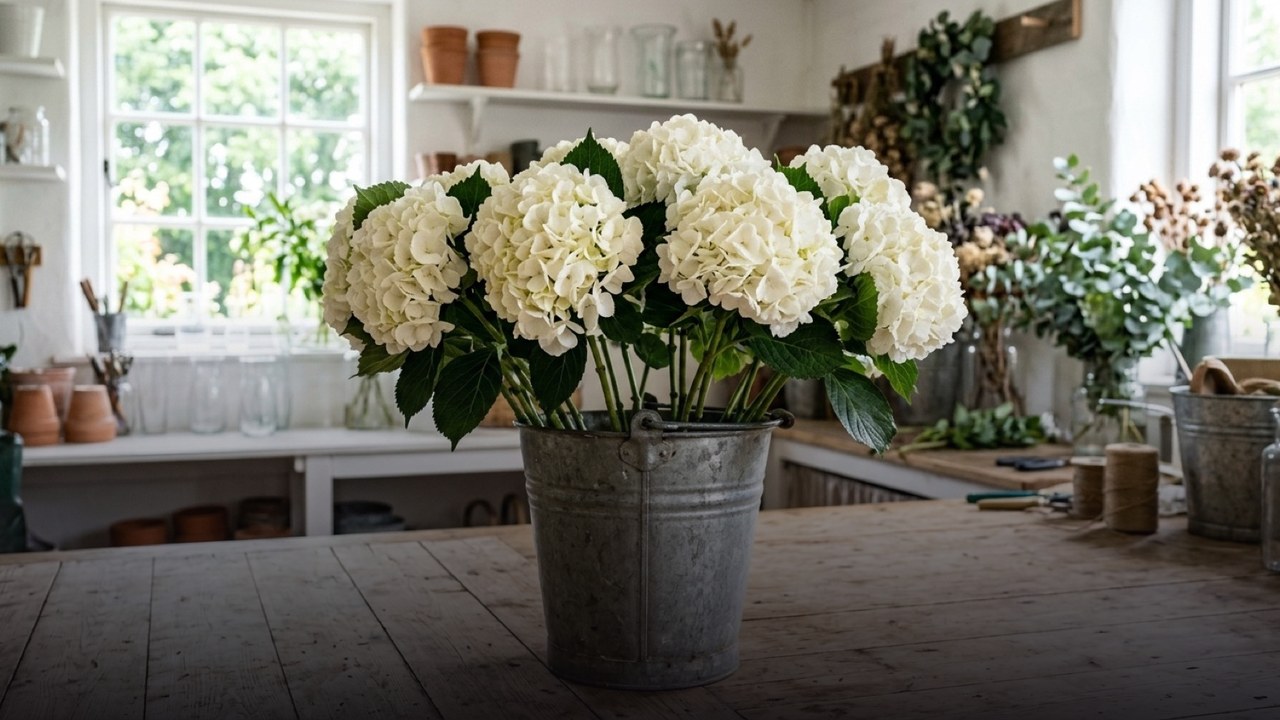
If you mean “tell me about these flowers”, start with their names, how open the blooms are and what care they need. A description without a photograph or flower names cannot identify a particular bouquet reliably, but it can help you ask useful questions about its appearance, suitability and care.
Perhaps you are looking at a bouquet online, trying to understand flowers you have received, or choosing a gift for someone in Russia. The practical questions are similar: what does the arrangement contain, will the recipient enjoy its colour and scent, and how should they look after it? Here is how to turn an attractive picture into an informed choice, without relying on rigid flower symbolism or assuming every bouquet behaves alike.
Start with identification: what are you actually looking at?
Look at individual flower heads before judging the whole arrangement. Roses usually have overlapping petals around a central bud; lilies have prominent individual blooms, often with visible stamens; peonies have rounded buds that can unfold into broad, many-petalled flowers. These are useful clues, but similar shapes occur in different plants, so a photograph alone may leave the identification uncertain.
Ask for the names of the main flowers and any smaller supporting stems. That matters beyond appearance: different flowers can have different scent levels, opening habits and care needs. A product title may describe a colour or mood without identifying every stem. When a particular flower is essential to your gift, confirm that detail instead of inferring it from the name.
Then consider the arrangement’s proportions. A close-up makes a flower head easy to see but may tell you little about the bouquet’s overall size. Check any stated dimensions and stem count, and ask about anything missing. You can use the bouquets catalogue to compare styles, while keeping the recipient’s table, desk or available vase space in mind.
Read freshness carefully, without expecting a photograph to prove everything
A useful freshness check considers petals, leaves and stems together. Look for reasonably firm flower heads, leaves without extensive yellowing and stems without obvious slimy areas. A few outer rose petals may look rougher than the petals inside; these protective outer petals are not, by themselves, proof that the whole flower is deteriorating. Widespread browning or collapsing tissue deserves a closer look.
The most closed bouquet is not automatically the best choice. Some flowers travel well in bud and open later, while others need to show more colour and development to give a satisfying display. If the flowers are for a dinner or celebration that evening, explain that you want the arrangement to look attractive on arrival. For a gift enjoyed over several days, ask how its appearance is likely to change.
A photograph cannot establish an exact remaining vase life. Species, maturity, transport, water hygiene and conditions in the recipient’s home all affect the result. If you are ordering with us, a manager can help arrange a photo of the bouquet before delivery. Use it to check the visible composition and presentation, rather than treating it as a guarantee of how long every stem will last.
Bouquets we can deliver




Choose meanings and colours around the person
Flower meanings are conventions, not a universal language. Red roses often suggest romance, but the same bouquet can feel affectionate, celebratory or overly intimate depending on your relationship. Start with what the recipient likes and the message you want to convey. A favourite colour or a reference to a shared memory usually gives you a firmer basis than a long list of symbolic meanings.
For a birthday, congratulations or a thank-you, consider whether the person prefers vivid contrasts or quieter colours. White flowers can look elegant, but they do not communicate exactly the same thing in every family or setting. Yellow flowers do not automatically mean separation. If you are unsure about a sensitive occasion, keep the card clear and personal so the flowers do not have to explain your intention alone.
For celebrations in Russia, an odd number of individual flowers is the customary choice; even numbers are traditionally associated with mourning. This is particularly relevant when choosing a clearly countable bouquet of one flower type. For a mixed arrangement, discuss the occasion and composition if the convention concerns you. Treat it as an etiquette consideration, while also respecting the recipient’s own preferences.
Check scent, pets and the setting before choosing
Think about where the bouquet will stand. Strongly scented flowers may be welcome in a spacious room but distracting beside a workstation or in a bedroom. Scent varies by flower and variety, so colour alone will not tell you what to expect. If fragrance causes the recipient discomfort, explain that when asking for help choosing, rather than assuming that all flowers of one colour will be suitable.
If the recipient has cats, true lilies and daylilies are a serious poisoning risk, including exposure to pollen and vase water. Choose a bouquet without them and check the remaining flowers and foliage individually; a lily-free arrangement is not automatically safe for every pet. If exposure is suspected, contact a vet promptly instead of waiting for symptoms or trying a home treatment.
Also consider how much handling the gift requires. Someone receiving flowers at work may need to carry them home, while someone hosting a meal may have little time to find and clean a vase. A manageable arrangement can be more thoughtful than a large one. Mention practical constraints when discussing your choice, and avoid assuming that the recipient has a tall vase or a spare display surface.
Give the flowers a clean start at home
For a hand-tied bouquet intended for a vase, use a clean container and fresh water. Remove any leaves that would sit below the waterline, then trim the stem ends with a clean, sharp tool before placing them in water. Avoid crushing woody or firm stems with blunt scissors. If flower food is supplied, follow its stated dilution rather than adding an unmeasured amount.
Check the water daily and replenish or change it as needed, cleaning the vase when the water becomes cloudy or residue appears. Remove fading flowers and submerged plant material promptly. Keep the bouquet away from direct sun, heaters and ripening fruit, which can shorten the display. A cool position helps, but a household refrigerator is not a suitable default storage solution.
Care depends on the arrangement as well as the flowers. A design in a water-holding base should not automatically be pulled apart and treated like loose stems; ask how its water should be replenished. Some visible changes are normal, including buds opening and the bouquet becoming fuller. For more specific guidance, our guide to lilies explains considerations that a general care routine cannot cover.
Arrange delivery to Russia with the important details settled
We deliver flowers across Russia. Before ordering from abroad, have the recipient’s city, delivery address, telephone number and preferred local delivery time ready. City delivery costs 500 RUB; for remote districts and suburbs, the operator confirms the price when confirming the order. Check these details against the recipient’s location, especially if you are planning from a different time zone.
In large cities, express delivery is available in 1–2 hours after the order is confirmed. You can also arrange an exact time with a tolerance of plus or minus 30 minutes, choose a window of 09–12, 12–15, 15–18 or 18–21, or pre-order 1–30 days ahead. Contact a manager on WhatsApp for help choosing the bouquet and agreeing the time, address, card text and photo before delivery.
Delivery is anonymous by default: the courier does not name the sender, so sign the free card if you want the recipient to know who sent it. The courier calls about 15 minutes before arrival. If the recipient is absent, we agree a second delivery that day or, with your consent, hand the flowers to a neighbour or concierge. Online checkout uses CloudPayments; check the payment options displayed there, as acceptance of every foreign card is not guaranteed. See delivery and payment for the relevant ordering information.
Frequently asked questions
Can you identify flowers from a bouquet photograph?
A clear photograph can help, especially if it shows individual blooms and leaves, but some varieties look alike. Confirm the flower names in the bouquet description or ask a manager when identification matters.
Does a closed bud always mean a fresher flower?
No: the appropriate opening stage depends on the flower, and a very immature bud may not open well. Consider the condition of the whole stem and when you want the bouquet to look its fullest.
Should I send an odd number of flowers to someone in Russia?
For a celebration, an odd number of individual flowers is the customary choice in Russia. Even numbers are traditionally associated with mourning, so explain the occasion when discussing a countable bouquet.
Can I send flowers without revealing my name?
Yes, delivery is anonymous by default and the courier does not name the sender. A card with your text is free; leave your name out of the message if you want to keep it anonymous.
Can I pay for delivery to Russia with a foreign card?
Online checkout uses CloudPayments, but acceptance of every foreign card is not guaranteed. Check the options displayed at checkout before relying on a particular card.
Ready to send flowers?
Pick the city, choose the bouquet, and a local florist takes it from there.
Choose a city →