Types of Roses: How to Choose the Right Rose for Your Bouquet
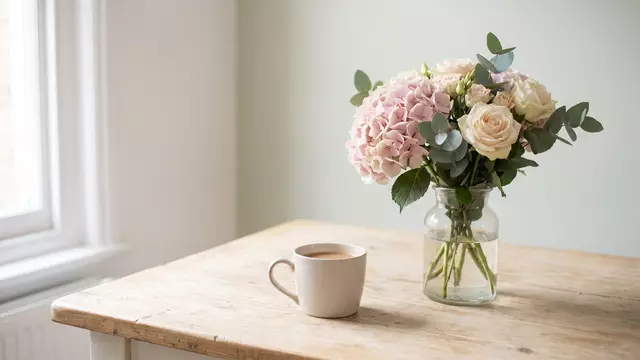
The main types of roses you will encounter in bouquets are standard roses, with one main flower per stem; spray roses, with several smaller blooms; and garden-style roses, valued for their layered, often rounded flowers. Gardening categories such as hybrid tea, floribunda, shrub and climbing roses describe a different system, so these names can overlap rather than identify separate, competing types.
For a gift, the useful question is how you want the bouquet to look and feel: crisp and structured, light and branching, or soft and densely petalled. You can then choose colour, overall size and the right presentation for the recipient. Here is how to read rose descriptions, recognise the differences that matter and choose flowers for someone in Russia without relying on a romantic-sounding variety name alone.
Standard and spray roses: the clearest starting point
A standard cut rose has one main bloom presented on each stem. This creates a clear outline: you can see individual flower heads, and repeated stems make a regular, balanced bouquet. Choose this format when you want the roses themselves to be the focus, whether that means a restrained arrangement in one colour or a more pronounced contrast between shades.
Spray roses carry several buds or flowers on branching stems. Their blooms are usually smaller than those of standard cut roses, and the branches add texture between larger flowers. A spray rose bouquet can feel detailed and informal, but its appearance depends on how closely the stems are arranged. It is not automatically loose or rustic.
Compare the whole arrangement rather than stem count alone. Several flowers on a spray stem do not make it equivalent to several standard stems: head size, branching and spacing all affect the result. Our guide to spray roses versus standard roses explains this choice in more detail. If you are matching a photograph, identify the flower size and outline as well as the colour.
Garden roses, rosettes and other flower shapes
Garden roses are often chosen for a full, layered appearance, with petals gathered into a cup or rosette. In flower descriptions, however, ‘garden rose’ is not a guarantee of one precise shape, scent or vase life. Some flowers have a visible central swirl; others open into flatter, broader heads. A photograph of the actual flower form tells you more than the label by itself.
A pointed, high-centred bloom has petals that spiral upwards towards a defined centre. A cupped rose holds its petals in a bowl-like shape, while a rosette shows many petals arranged across a more open face. These forms change as flowers open. A tight bud and a mature bloom of the same variety can look different, so choose with the expected open shape in mind.
‘Peony rose’ or ‘peony-style rose’ generally describes a resemblance to the rounded, densely petalled look of a peony; it does not mean the flower is a peony or a rose–peony cross. Likewise, a flower that looks richly petalled may have little noticeable fragrance. If scent matters to the recipient, ask about it separately and avoid assuming that a garden-style appearance proves a strong perfume.
Bouquets we can deliver




Garden classifications and origin labels: what they tell you
Hybrid tea, floribunda, shrub, climbing and miniature roses are terms you will often meet when choosing plants. Hybrid teas are associated with prominent individual flowers; floribundas commonly produce clusters. Shrub roses describe a broad group with bushy growth, while climbing roses produce long canes trained onto supports. These labels help gardeners understand growth habits, but do not fully describe a finished bouquet.
Old garden roses and modern roses are historical horticultural groupings, with further classes inside them. A modern rose can still have an old-fashioned, densely layered bloom. For a cut-flower gift, translate the classification into visible preferences: one large head or branching clusters, pointed or rounded flowers, compact or spreading arrangement. That gives you a more useful brief than asking for ‘old-fashioned roses’ without a reference.
Geographical descriptions answer another question: where roses were grown, rather than which botanical class they belong to. An origin label alone does not establish fragrance, freshness or how long a particular bouquet will last. If you encounter this terminology, our guide to equatorial roses provides further context. Keep origin, variety and bouquet format separate when comparing descriptions.
Choose colour and presentation for the relationship
Red roses commonly carry a romantic message, especially when presented alone in a formal bouquet. Pink can suit affection, appreciation or congratulations; white and cream often create a restrained, ceremonial impression. These are conventions rather than fixed translations. Consider what the recipient likes and what your relationship makes appropriate, particularly if an intensely romantic gesture could feel uncomfortable.
Yellow roses can look cheerful, but some recipients in Russia associate yellow flowers with separation. That does not make them unsuitable when you know someone loves yellow; it makes personal preference more useful than a universal colour chart. Peach, orange and mixed shades can also convey warmth without the same visual emphasis as an all-red arrangement. Let the occasion and the recipient guide the choice.
In Russia, an odd number of flowers is customary for celebratory gifts, while even numbers are traditionally associated with mourning. The convention is clearest with individually counted standard roses; branching spray stems make counting less intuitive. For a birthday, anniversary or thank-you, state the occasion when agreeing the bouquet. A short card message can make your intention explicit without asking the colour to explain everything.
Care for different rose forms once they arrive
Whatever the type, start with a clean vase and fresh water. Recut the stem ends with a clean, sharp tool, and remove leaves that would sit below the waterline. Use cut-flower food according to its instructions if you have it. Choose a vase that supports the stems without squeezing the flower heads together, particularly when rounded blooms need room to open.
With spray roses, check the lower branches as well as the main stems: small leaves or side shoots can end up submerged. Remove individual faded flowers carefully while keeping healthy branches intact. With densely petalled roses, avoid repeatedly handling or pressing the heads to test firmness. The outer guard petals can look less tidy than the centre; a slightly marked outer petal alone does not establish that the whole bloom has failed.
Keep the vase away from direct sunlight, heaters and ripening fruit. Check the water daily, top it up as needed, and replace it when it becomes cloudy, cleaning the vase at the same time. There is no reliable vase-life promise based solely on ‘standard’, ‘spray’ or ‘garden’ labels: variety, condition and care all matter. See our rose vase-life guide for a fuller routine.
How to choose and send a rose bouquet to Russia
Start with the recipient’s city, the occasion and the visual result you want. Browse the bouquets catalogue, then use WhatsApp to ask a manager for help choosing the bouquet and agreeing the address, delivery time and card text. You can also discuss a photo of the bouquet before delivery. Describe your preferred rose format and colour clearly; do not assume a named variety is available without checking.
We deliver flowers across Russia. City delivery costs 500 RUB; for remote districts and suburbs, the operator confirms the price when confirming the order. Express delivery in large cities takes 1–2 hours after order confirmation. You can also arrange delivery at an exact time with a tolerance of 30 minutes either way, choose 09–12, 12–15, 15–18 or 18–21, or pre-order 1–30 days ahead.
Delivery is anonymous by default: the courier does not name the sender, and a card with your text is free. The courier calls the recipient about 15 minutes before arrival. If the recipient is absent, we agree a second delivery that day or, with the sender’s consent, hand the flowers to a neighbour or concierge. Online checkout uses CloudPayments; check the payment options displayed there, as acceptance of every foreign card cannot be guaranteed. Check our delivery information; confirm the timing for your order.
Frequently asked questions
What are the main types of roses for bouquets?
The most useful starting categories are standard roses, spray roses and garden-style roses. Standard roses present one main flower per stem, spray roses have branching clusters, and garden-style descriptions usually refer to a layered, often rounded flower form.
Are garden roses and spray roses the same?
The terms describe different features: ‘spray’ refers to several flowers on a branching stem, while ‘garden-style’ usually describes the appearance of the bloom. A spray rose can therefore also have a densely petalled, garden-style flower.
Which type of rose lasts longest in a vase?
There is no dependable winner based on the broad type alone. The specific variety, the flowers’ condition and their care all affect longevity, so focus on clean water, freshly cut stems and a suitable place for the vase.
Do all garden roses have a strong fragrance?
No: densely layered petals do not guarantee a noticeable scent. If fragrance is central to your choice, ask about the particular roses being considered.
Can I order roses for someone in Russia while I am abroad?
You can choose a bouquet and agree delivery details with a manager on WhatsApp. Checkout uses CloudPayments; check the options shown at checkout rather than assuming your foreign card will be accepted.
Ready to send flowers?
Pick the city, choose the bouquet, and a local florist takes it from there.
Choose a city →