Spray Roses vs Garden Roses: Which Should You Choose?
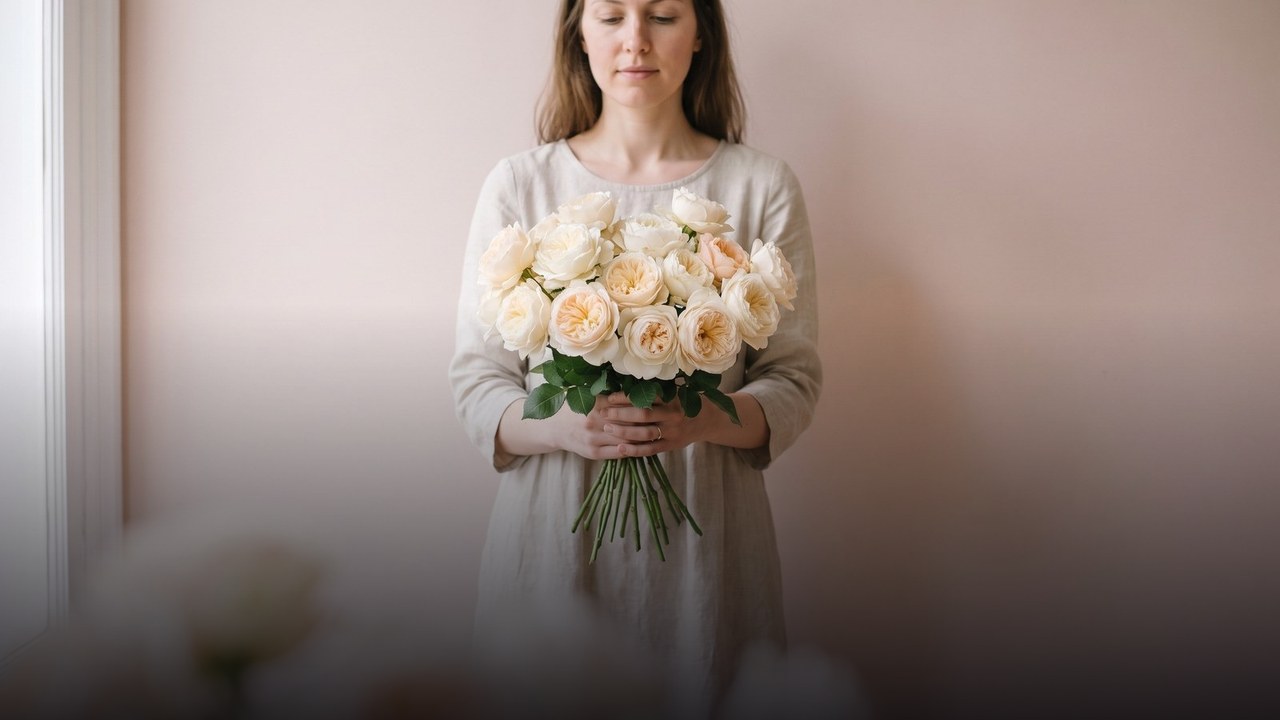
Spray roses carry several flowers on a branching stem, while garden roses are usually chosen for their full, layered or cupped blooms. The terms describe different qualities, so they can overlap: a spray rose can also have a garden-style flower. Choose spray roses for clusters and a varied outline, or garden roses when you want individual blooms to draw attention.
Neither name alone tells you how large a bouquet will be, how strongly it will smell or how long it will last. Those details depend on the variety, the stage at which the flowers are cut and their care. If you are choosing flowers for someone in Russia from abroad, start with the recipient’s taste and the finished bouquet’s appearance, then check the flower description.
What the two names actually tell you
A spray rose stem branches into several flower heads, often showing buds and more open blooms together. That structure creates small groups of flowers throughout an arrangement. The heads are commonly smaller than those of large single-flowered roses, but size varies by variety; 'spray' describes the branching habit, not a fixed flower diameter.
In cut-flower descriptions, 'garden rose' generally points to a flower with a lush, often old-fashioned appearance: cupped petals, a rosette centre or a densely layered bloom. It is not a precise promise of stem structure or fragrance. Nor does the name mean that a cut rose is suitable for planting; a bouquet stem is different from a rooted garden plant.
This is why the comparison is less clear-cut than it first appears. A branching spray rose may have deeply layered, garden-style flowers, while another may have simpler, more open heads. For a separate comparison of branching stems and single-flowered stems, see our guide to spray roses vs standard roses.
Compare the finished bouquet, not just the stem count
Spray roses distribute their flowers across branching stems, which can give a bouquet a relaxed, finely textured outline. Buds between open flowers add variation without introducing another flower type. They work well when you like a bouquet that reveals small details as you turn it, rather than a surface made up of equally sized flower heads.
Large garden-style blooms create stronger focal points. Their folds and layered centres are easier to appreciate individually, especially in a loose arrangement where neighbouring flowers do not hide them. A tightly packed bouquet can conceal those details, so the way the flowers are arranged matters as much as the rose category.
Stem counts are therefore a poor shortcut for comparing these two styles. One spray stem contributes several heads, but that does not make it equivalent in size or visual impact to several large garden roses. Look at the bouquet’s overall outline, the proportion of open flowers to buds and how much space each bloom has. A photograph is more useful than arithmetic alone.
Bouquets we can deliver




Fragrance, colour and the message you want to send
Do not choose garden roses solely because you expect a strong perfume. Some varieties are fragrant, while others have little noticeable scent; spray roses also vary. A photograph cannot establish fragrance. If scent matters to the recipient, ask about the flowers being considered, and avoid treating either label as a guarantee of a particular smell.
Colour and your relationship with the recipient usually communicate more than the distinction between spray and garden roses. Red often reads as romantic, while pale pink, cream and peach can feel gentler or more informal. These are conventions, not fixed rules: someone who loves deep red flowers may appreciate them from a friend just as much as from a partner.
For a gift in Russia, an odd number of flowers is customary in small, clearly countable celebratory bouquets; even numbers are traditionally associated with mourning. Branching stems can make a spray bouquet less straightforward to count visually. If this matters to your recipient, explain the occasion when choosing the arrangement rather than relying on a count of visible buds.
Choose for the occasion and the recipient’s space
For a birthday or a friendly thank-you, spray roses can suit someone who enjoys an informal arrangement with several small points of interest. Garden-style roses may appeal more to a recipient who notices petal shapes and likes generous, rounded flowers. Neither is automatically more appropriate or more thoughtful; choosing a familiar favourite colour is often the stronger personal gesture.
Think about where the flowers will stand. A bouquet for a desk or a small bedside table should be manageable in the recipient’s available vase. Branching stems need enough room to sit naturally, while large layered blooms benefit from space around their heads. Ask about the finished proportions instead of assuming that smaller individual flowers mean a smaller arrangement.
For an anniversary, the card can make the intention clear without forcing the flowers to carry the entire message. For a family gift, a shared memory or a simple personal greeting works equally well. Delivery is anonymous by default: the courier does not name the sender, so include your name in the free card text if you want the recipient to know who sent it.
Care for both types without promising a fixed vase life
Start with a clean vase, fresh water and clean cutting tools. Remove leaves that would sit below the waterline, then recut the stem ends before placing the roses in water. If you use cut-flower food, follow its dilution instructions. An extra-concentrated mixture is not a useful shortcut, and leaves left underwater make it harder to keep the vase clean.
With spray roses, check each branch rather than treating the whole stem as a single flower. Remove a spent head carefully while leaving healthy flowers and buds in place. Some buds may open further, but very tight buds do not always develop fully in a vase. Garden-style roses may change shape substantially as their petals loosen; a more open flower is not necessarily a failing one.
Keep the arrangement away from direct sun, heating appliances, strong draughts and ripening fruit. Check the water daily, replenish it as needed, and replace it if it becomes cloudy, cleaning the vase at the same time. Neither category reliably outlasts the other in every situation; variety, condition and handling all matter. Our rose vase-life guide explains what to watch as blooms develop.
How to choose and send your roses to Russia
Start with the bouquets catalogue and identify the features you want: clusters of smaller flowers, large layered blooms, a particular colour or an open, loose shape. Contact a manager on WhatsApp for help choosing, agreeing the address, delivery time and card text, and arranging a photo of the bouquet before delivery. Describe the desired appearance, since flower names alone can leave room for misunderstanding.
We deliver flowers across Russia. City delivery costs 500 RUB; for remote districts and suburbs, the operator confirms the price when confirming the order. Express delivery in large cities is 1–2 hours after order confirmation. You can also arrange an exact time with a tolerance of ±30 minutes, choose a 09–12, 12–15, 15–18 or 18–21 window, or pre-order 1–30 days ahead. When ordering from abroad, state the intended date and time in the recipient’s city.
Online checkout uses CloudPayments; check the payment options displayed there rather than assuming your particular foreign card will be accepted. The courier calls the recipient about 15 minutes before arrival. If they are absent, we agree a second delivery that day or, with the sender’s consent, hand the flowers to a neighbour or concierge. Choose a time when the recipient is likely to be available to receive the bouquet and put it in water. We deliver bouquets across Russia in 1–2 hours.
Frequently asked questions
Can a rose be both a spray rose and a garden rose?
Yes. 'Spray' describes several flowers on a branching stem, while 'garden rose' in cut-flower descriptions usually refers to the bloom’s layered or cupped appearance. A rose can combine both features.
Are garden roses always larger and more fragrant?
No. Many have large, full blooms, but size and scent vary by variety. Ask about the flowers being considered if either quality is central to your choice.
Do spray roses last longer than garden roses?
There is no reliable rule that one category always lasts longer. The variety, the flowers’ condition and vase care matter, and the individual heads on a spray stem may fade at different times.
Which type is better for a romantic bouquet?
Both can work: garden-style blooms emphasise layered individual flowers, while spray roses give a clustered, textured appearance. Choose the recipient’s preferred colour and use the card to make your message personal.
Can I order roses for someone in Russia from abroad?
You can order flowers for delivery across Russia and agree the recipient’s address, timing and card text with a manager. Checkout uses CloudPayments; check the options shown there, as acceptance of every foreign card is not guaranteed.
Ready to send flowers?
Pick the city, choose the bouquet, and a local florist takes it from there.
Choose a city →